Read More
Hopes are up for patients of chronic hepatitis B to be free from long-term medication, as researchers at the University of Hong Kong are conducting multiple clinical trials exploring pioneering gene-related therapy to eradicate the liver disease.
ADVERTISEMENT
SCROLL TO CONTINUE WITH CONTENT
These pioneering studies position Hong Kong as one of only three locations worldwide—alongside sites in Europe and New Zealand—testing the cutting-edge treatment.
Trials expected to enroll up 40 participants by 2026 year-end
Led by Yuen Man-fung, chair professor and chief of the Division of Gastroenterology and Hepatology at HKUMed, the research team began treating the first participant in March this year. Early results show promising effectiveness with no serious side effects.
“With an expected enrollment of 30 to 40 participants by the end of 2026, the future looks promising for those seeking respite from this persistent and deadly infection,” said Yuen.
Chronic hepatitis B is a leading cause of cirrhosis, liver cancer, and liver failure, affecting approximately 6.2 percent of Hong Kong’s population. While current antiviral therapies can control the virus, they cannot fully eliminate it, leaving patients on lifelong medication and still vulnerable to liver cancer.
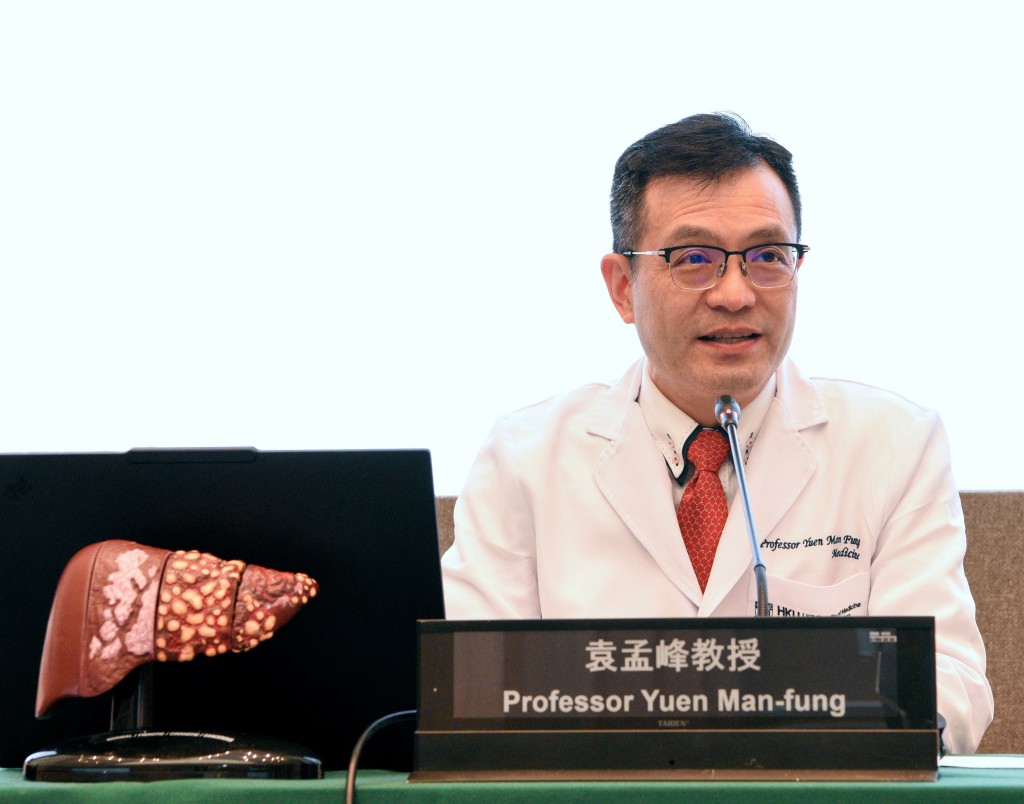
Lead researcher Yuen Man-fung, chair professor and chief of the Division of Gastroenterology and Hepatology at HKU
Urgency for innovation: Over 50 new compounds in development
“The urgency for innovation is clear, with over 50 novel compounds currently in development to combat viral persistence,” HKUMed clinical assistant professor Loey Mak Lung-yi said.
Gene-related therapy stands out as a potential revolution in hepatitis B treatment. “Unlike existing treatments, these innovative compounds aim to silence or remove the virus’s genetic material within infected liver cells without altering the human genome,” Yuen noted.
Since 2020, HKUMed’s Gastroenterology and Hepatology team has spearheaded 41 phase 1 to 3 hepatitis B disease treatment trials with 468 participants to date.
The latest gene therapy trials could not only pave the way for a functional cure but also reduce long-term healthcare costs by preventing severe liver complications, the research team noted.
(Cheng Wong)