Read More












HK movie producer Raymond Wong Pak-ming convicted of insider dealing
22-05-2026 17:10 HKT

Swire Properties wins compulsory auction for $2.02b Quarry Bay property
22-05-2026 20:36 HKT


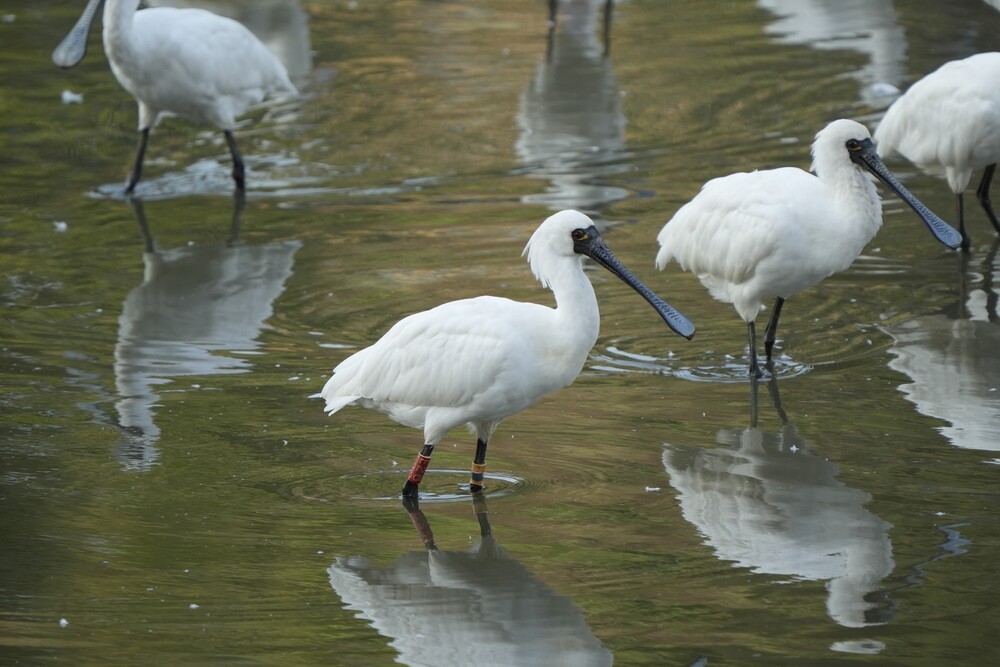
The Hong Kong Bird Watching Society (HKBWS) reported a decline in the population of the endangered Black-faced Spoonbill in Hong Kong compared to last year, according to its latest global census released on Wednesday.
In January, the society worked with 200 conservation experts and volunteers across 11 wintering regions, including Hong Kong, mainland China, Taiwan, South Korea, Japan and Vietnam to conduct its annual International Black-faced Spoonbill Census.
HKBWS found that the global population of Black-faced Spoonbills has surpassed 7,000 for the first time, reaching 7,081, a slight increase by 93, or 1.3 percent, from last year.
However, the number recorded in Deep Bay, one of the most important wetlands in Asia spanning across Hong Kong and Shenzhen, dropped by 12.5 percent from last year to just 328.
According to the society, Deep Bay, a critical hub in the East Asian-Australasian flyway, serves as both a major wintering ground and a vital stopover site for migratory birds.
HKBWS director Yu Yat-tung noted that the Deep Bay population growth has stagnated over the past decades and its global proportion has kept declining. He suggested that this was linked to the condition of wetland size and habitat quality in Hong Kong.
Yu expressed worry about Deep Bay’s future as a habitat for the endangered birds.
“If Hong Kong fails to expand its wetlands -- or worse, allows further habitat loss and degradation -- it may struggle to attract more wintering Black-faced spoonbills. In the worst-case scenario, Black-faced Spoonbills will choose other wintering sites instead of Deep Bay,” he said.
Yu continued: “Hong Kong hosts the largest wintering site for Black-faced spoonbills in the Greater Bay Area, we have both international and national responsibilities to protect their wetlands.”
The director also urged for not only halting wetland loss but also expanding wetland areas and actively restoring breeding and wintering habitats, highlighting the slowdown in growth rate in the three major wintering sites in Taiwan, mainland China and Japan.
(Jamie Liu)