Read More
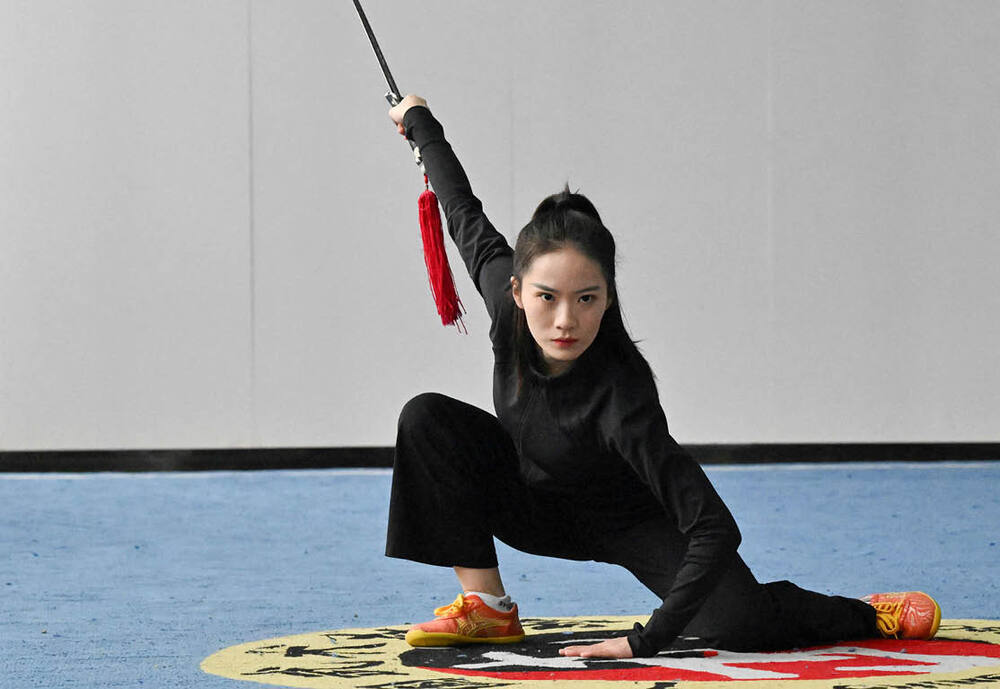
In front of a temple in southwestern China, Duan Ruru skillfully executes a series of chops and strikes, practicing kung fu techniques she has spent a decade mastering."Since I was little, I've had a love for martial arts I thought that girls learning martial arts was super swaggy," the 23-year-old Duan said.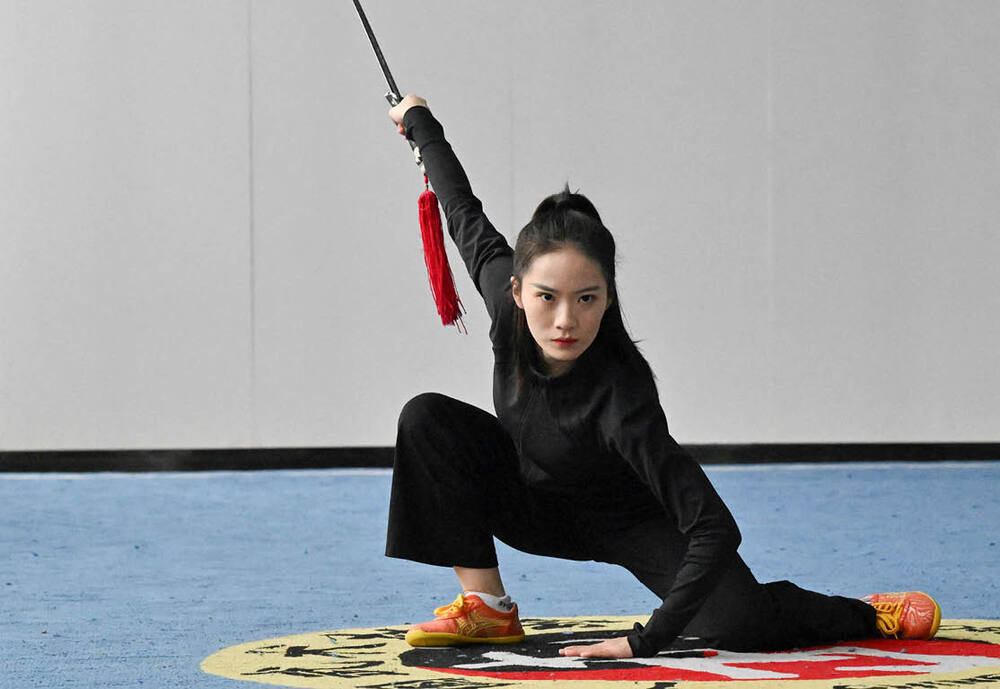
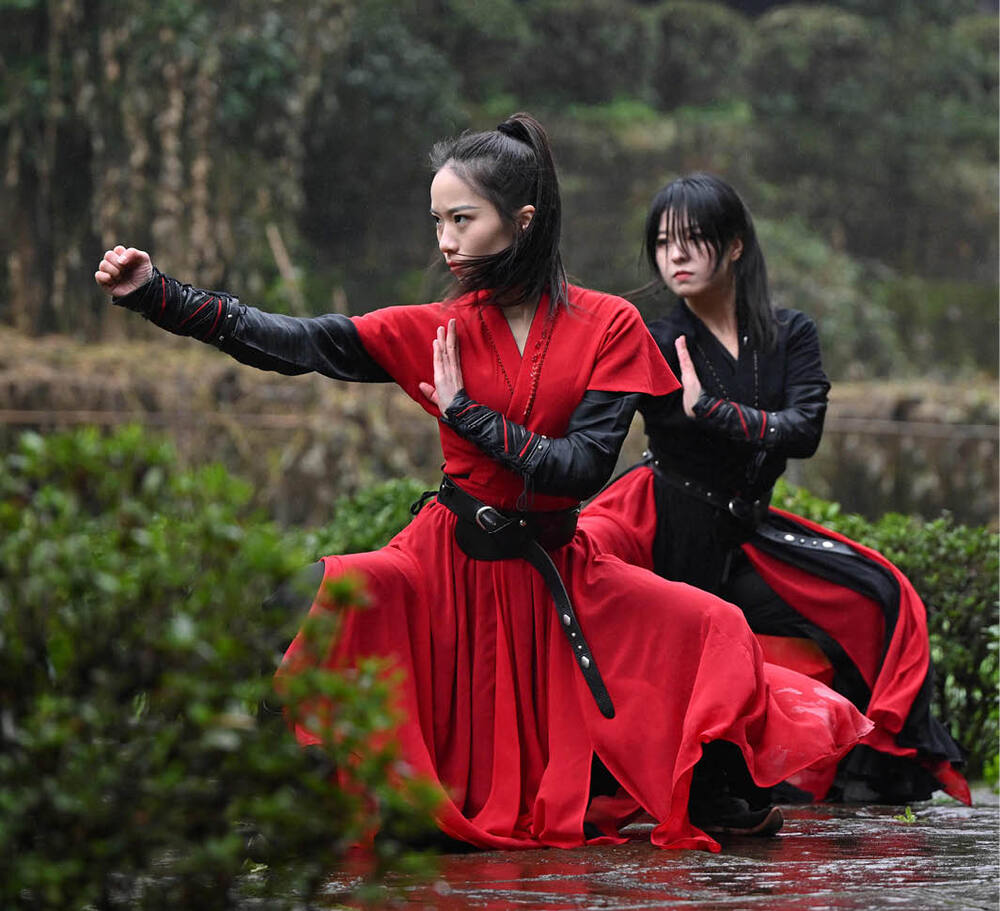
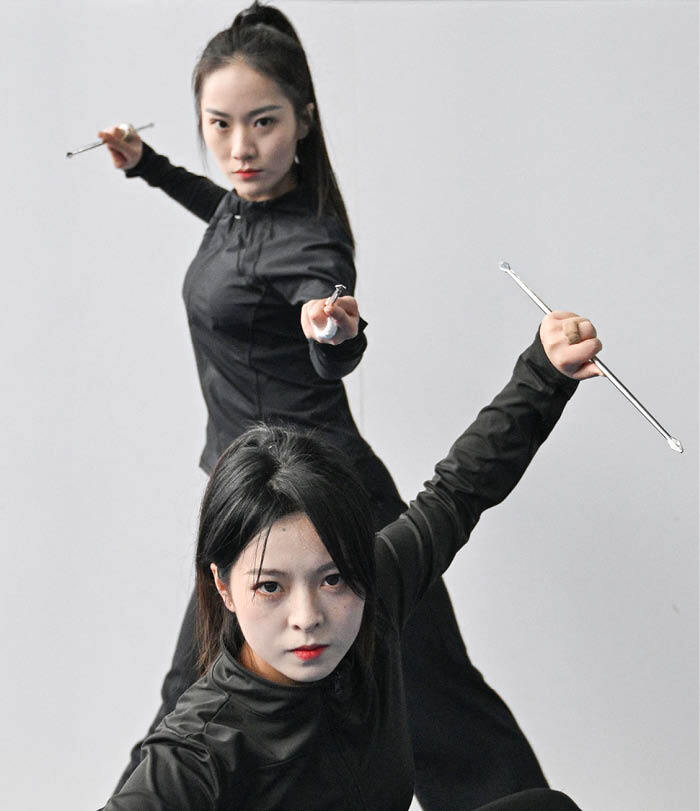
Chinese martial arts have long been considered a male-dominated sphere, but a cohort of Generation Z women such as Duan is challenging that assumption and generating publicity for their particular school of kung fu.
ADVERTISEMENT
SCROLL TO CONTINUE WITH CONTENT
The ancient Emei school where she trains in the mountains of Sichuan is thought to have historically welcomed a higher proportion of women and girls. But it has not achieved the same level of public fame as other kung fu schools like Shaolin.
That is starting to change, thanks in part to Duan's nine-woman troupe, Emei Kung Fu Girls, which meshes deft swordplay with social media savvy to help put the school back on the map.
In slick videos, the troupe performs everything from combat scenes to flips, often backed by booming hip-hop beats.
They also show off their moves alongside branded beverages or cars, though they declined to comment on whether they make money from advertising.Since their debut last April, they have amassed more than 23 million views and over a million followers on Douyin, China's version of TikTok.
The art form "has a place in history so I think it's something worth spreading," Duan said.Known across China for its misty peaks, Emeishan in Sichuan province has tried in recent years to cash in on its cultural bounty - with mixed results.
Local martial arts sects have their origins in ancient Taoist philosophy and evolved into a form of self-defense during China's frequent wars.The importance of the schools shrank as weapons modernized, and the ruling Communist Party later suppressed what it viewed as potential hotbeds of deviant thought.
But those policies have since relaxed, and in 2008 Beijing listed Emei martial arts as intangible cultural heritage, opening up funds to develop the craft.Progress has been uneven, with city officials admitting in 2023 that the discipline suffered from "a lack of recognition among tourists, and dissemination is not high."
Kung fu master Wang Chao, a national-level representative of Emei martial arts, said the sect still relies heavily on government money. But the Kung Fu Girls' videos have been "very good" at bringing the local art to a wider audience, he said."Publicity for Emei martial arts is much more powerful now," Wang said.
Founding member Duan, who has been training since she was 12 years old, said her generation "loves being independent and free-spirited."Some Emei students have been inspired to keep pursuing martial arts, including Ren Nianjie, who wants to study it at university.
"I want to be an athlete to win glory for the country," the 17-year-old said.On a Friday evening, seven girls were present among a class of 17 primary school students at a nearby martial arts academy.
The mother of one of the girls, 41-year-old Zhu Haiyan, said her daughter Guoguo had grown more assured since starting her course a year ago. Zhu added: "When girls have self-confidence, they can be less timid when they go out."Duan said she hoped the group would inspire more young girls to take up martial arts.
"They might see me training and think it's super attractive and cool, and be drawn to learn it themselves," she said.AGENCE FRANCE-PRESSEDuan Ruru and Liu Qiao are among members of a group whose slick videos on its Douyin account – which has more than a million followers – have generated publicity for kung fu school Emei. AFP