Read More






America’s war on its own reputation | American Lens | Michael Chugani
04-05-2026 04:34 HKT

Is the ‘gamble’ on AI still worth taking? | Cash Call | Andrew Wong
04-05-2026 04:24 HKT



Such steel enables the per unit weight of structures to be much lighter allowing for longer bridges as the total weight of the longer viaduct section can be readily supported, facilitating far greater flexibility in placing bridge columns and reducing the costs of construction and transportation.
In the 1950s, Hong Kong exclusively used British Standards for all engineering applications and public works.
While Hong Kong benefited in the past century from western knowledge, China was slow on this front after World War II, with its building of infrastructure projects taking a long time to develop.
Its first breakthrough in viaducts was the Nanjing Yangtze River Bridge.Designed in the 1950s with technology that China developed through its own innovations due to blockades by other countries, it used what was regarded as high-strength steel in those days.
In recent decades, China has strived to overcome the challenges associated with the development and manufacturing of high-strength steel.Now it is at the forefront in the application of high-strength steel.
The Chinese National Engineering Research Centre for Steel Construction opened a Hong Kong branch recently in a collaboration with Polytechnic University, under the stewardship of professor Chung Kwok-fai.China has made rapid advances in high-strength steel, including fabrication and welding methods, to ensure reliability and durability.
A common nomenclature for steel strength is judged by the number that comes after the initial S.S355 steel was previously regarded as the most common high-strength steel, used in many parts of the world for decades.
The number denotes the average minimum yield strength of 355 Newtons per square millimeter.Recent technological developments have brought the world S690 and S960 steel, several times stronger than traditional structural steel.
High-strength steel can only be made under a highly controlled heat treatment process known as "quenching and tempering" to produce fine grain crystalline forms that offer high strength and toughness.By coming up with S960 steel, which is in compliance with EU standards, on its own, China has proved it belongs in the top tier of steel manufacturers and exporters.
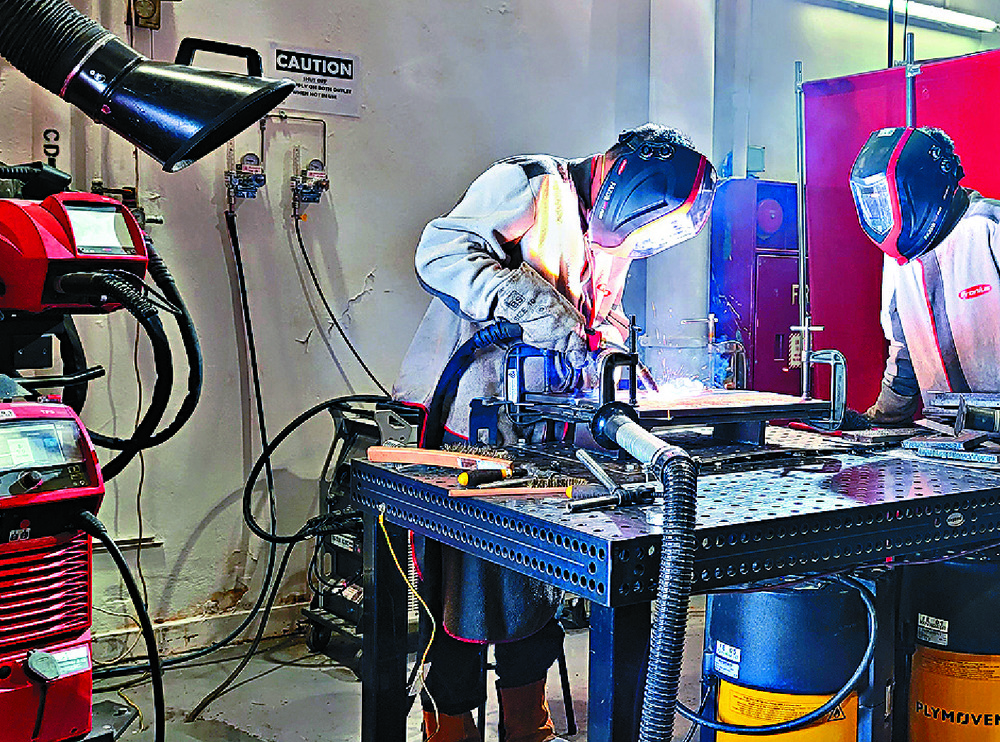
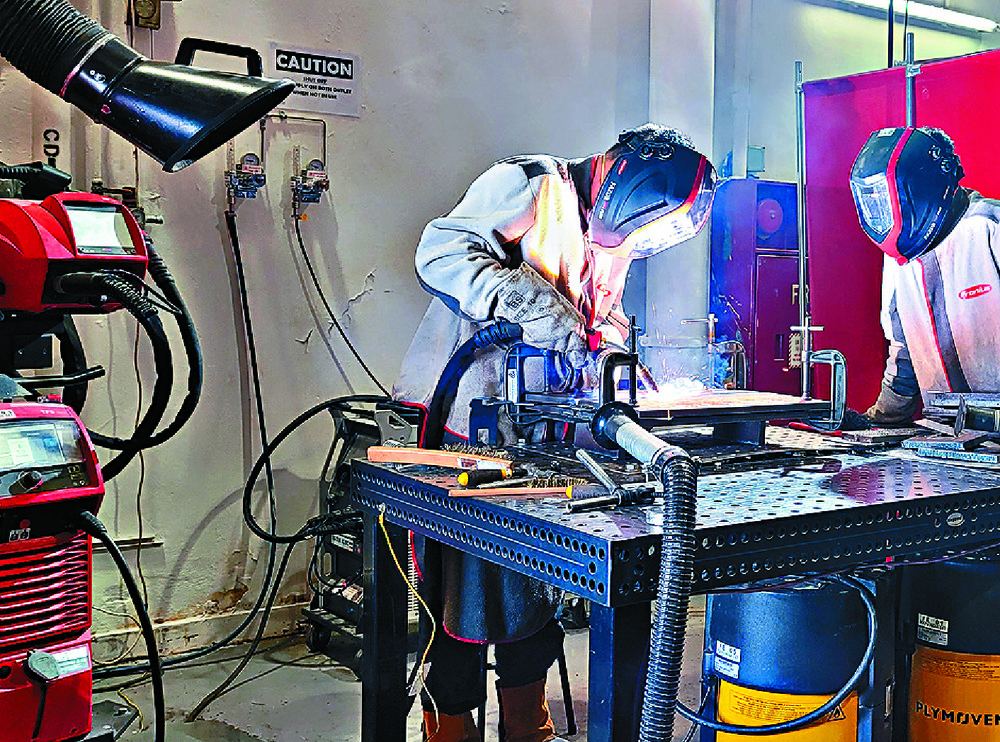
It uses robotic welding systems to ensure high quality while high frame rate infrared video cameras provide real-time measurements to keep the temperature range within design limits for optimal results.Should the welding process induce a heating/cooling cycle that exceeds these parameters, it could cause warping and grain growth that substantially reduces the strength of the steel.
Close supervision throughout construction and installation is required to ensure the structural integrity of the final product.Although the costs of high-strength steel, with its much more stringent manufacturing and fabrication processes, can be 1.5 to two times higher than conventional steel, the increased strength allows for a thinner and longer structure that uses less steel.
That, besides saving on transportation and construction costs, offers reduced carbon emissions and overall cost savings.A good example is the double arch steel bridge for the Cross Bay Link in Tseung Kwan O.
Formed from S690 steel, that section of the bridge was fabricated offsite.Following that success, a team from the Civil Engineering and Development Department, under director Michael Fong Hok-shing, promoted the further use of high-strength steel for faster construction times and competitive costs, especially for locations involving difficult conditions and a lot of existing structures.
In the Fanling Bypass project, apart from the rotated viaduct construction method I described previously, they used S960 steel to build footbridges.This allows long footbridge sections to be fabricated offsite.
One of these footbridges has been installed and residents will soon be able to use it to cross Ng Tung River underneath the highway.Such applications of S960 steel showcase China's advanced technology and ability to apply them to the world.
They also facilitate synergy from government collaborations with academic and industry sectors to drive innovation.This clearly shows the CEDD is working toward the "new quality productive forces" that President Xi Jinping says is needed to create an environment conducive to innovation and nourishing talent.
However, such applications of new technology must also be carried out with great caution as the thinner and lighter structures, if used without adequate stiffening, are subjected to excessive vibrations and might require more frequent maintenance.We are fortunate to have engineers continuously developing new materials and construction methods.
The pilot application of S960 steel to build footbridges facilitates the formulation of standards and design guidance for engineers to assess whether high-strength steel is suitable for their projects.Engineering designs for transport infrastructure are complex and cannot be simply replicated for all locations.
Safety, cost and time should always be the highest priorities.Veteran engineer Edmund Leung Kwong-ho casts an expert eye over
features of modern life