Use of the English language is on the wane, and this appears, as far as I know, to be the trend throughout former British colonies such as Hong Kong and India, which is a pity.
The language still thrives in Singapore, our major competitor, although this former colonial outpost and current Asian "tiger" has adopted Putonghua as its second language.
When I first arrived in Hong Kong in 1978, I tried to buy a cardigan at Chinese Arts and Crafts, but no one would serve me became I could not speak Chinese.
I have since picked up Cantonese, having spoken both English and Malay since my birth and upbringing in Malaysia, before moving on to Singapore, England and then Hong Kong.
Every time I watch television, most of the channels, like NHK, DW and France 24, RT (currently inaccessible due to Russian invasion of Ukraine) and WION, an Indian Channel available on YouTube, are all in English.
I also noticed when shopping at Mannings that the packaging for some products, including toothpaste, sport only Chinese descriptions.
This is a disturbing trend.
India, according to Pallavi Aiyar who writes for Asia Nikkei Review, states that only 0.02 percent of Indians speak English as their first language while 6.8 percent use it as their second language.
Hindi is spoken as the first language in India yet English is the language of its supreme court, business elites, the government and the national media.
However, this is could change under President Narendra Modi, a Hindu nationalist.
When I visited India, I was made aware of the lack of English spoken by the man in the street, so I didn't walk about and had to be driven about in a client-provided private car with a driver who could speak a little English but with an accent.
I guess after the handover Hong Kong is gradually using more Chinese and less and less English.
This is already happening in the courts, except for the high court.
So most of the English barristers will be phased out unless they practice in the high court.
Every time international leaders meet up, they are accompanied by an interpreter, even though I understand that Russian President Vladmir Putin is, for example, fluent in English.
Japan now has signs in English and Japanese, leading to a boom in tourism.
In fact all over the world English-speaking tour guides are indispensable.
I suggest English should be kept in use alongside Chinese here if Hong Kong is to continue to be an international city and a strong competitor to Singapore.
SAR Chief Executive Carrie Lam Cheng Yuet-ngor must be accorded the respect she is due in this regard.
She was at least prepared to hold her press conferences in both Chinese and English.
And, to her credit, she resisted a total lockdown for Hong Kong when the fifth wave hit the city with a vengeance.
That is, of course, in recognition of the fact that there was a lack of resources to deal with it, unlike Shanghai, which has now been placed under a total lockdown.
So I shall judge Lam's legacy by her recent efforts for our city, which will continue to come under pressure from "one country, two systems" and the meaning the next chief executive gives to it.
At the very least, I hope the recent past chief secretary for administration John Lee Ka-chiu, who I understand will be in line to succeed Lam, will not downgrade the use of the English language in our courts if we are to continue to attract judges of high caliber to sit on our court of final appeal.
Susan Liang is a lawyer who likes to speak her mind on issues that concern the man on the street
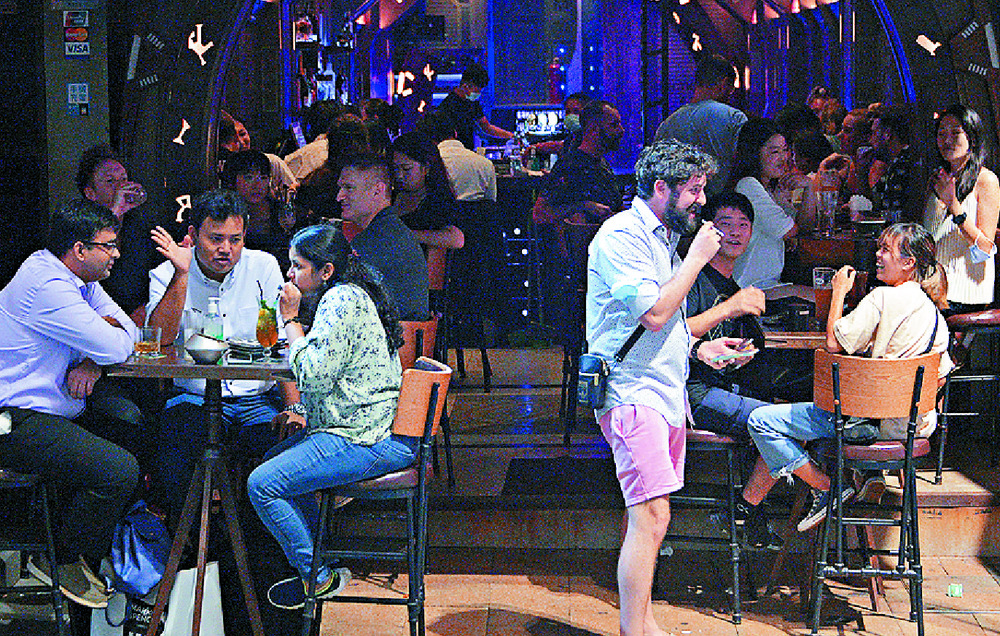
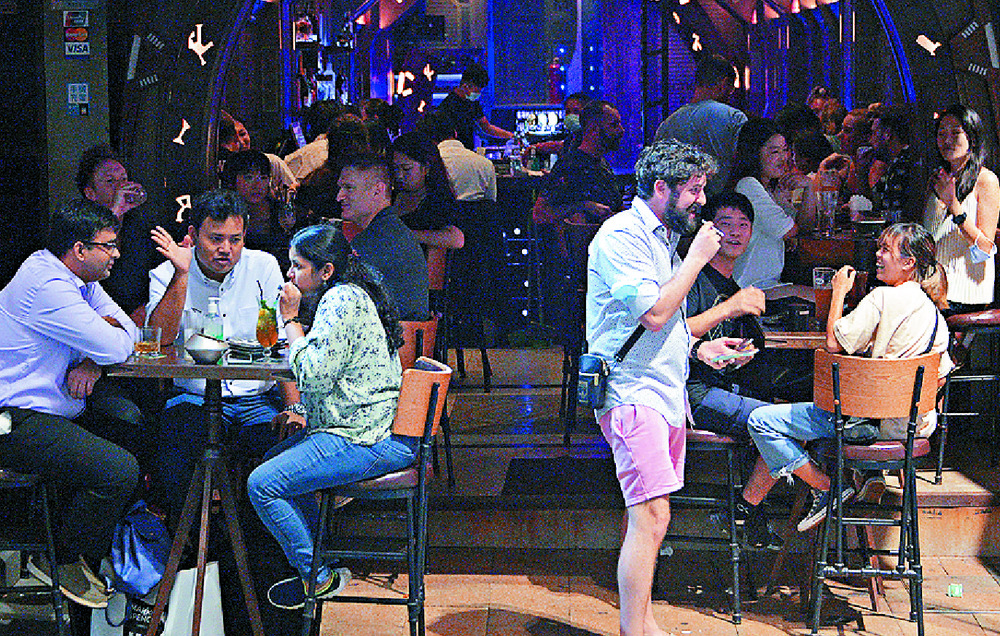
English is the lingua franca of the Lan Kwai Fong world.