Read More





Powering Hong Kong’s data-driven future | Nuts and Bolts | Edmund Leung
16-09-2026 00:05 HKT

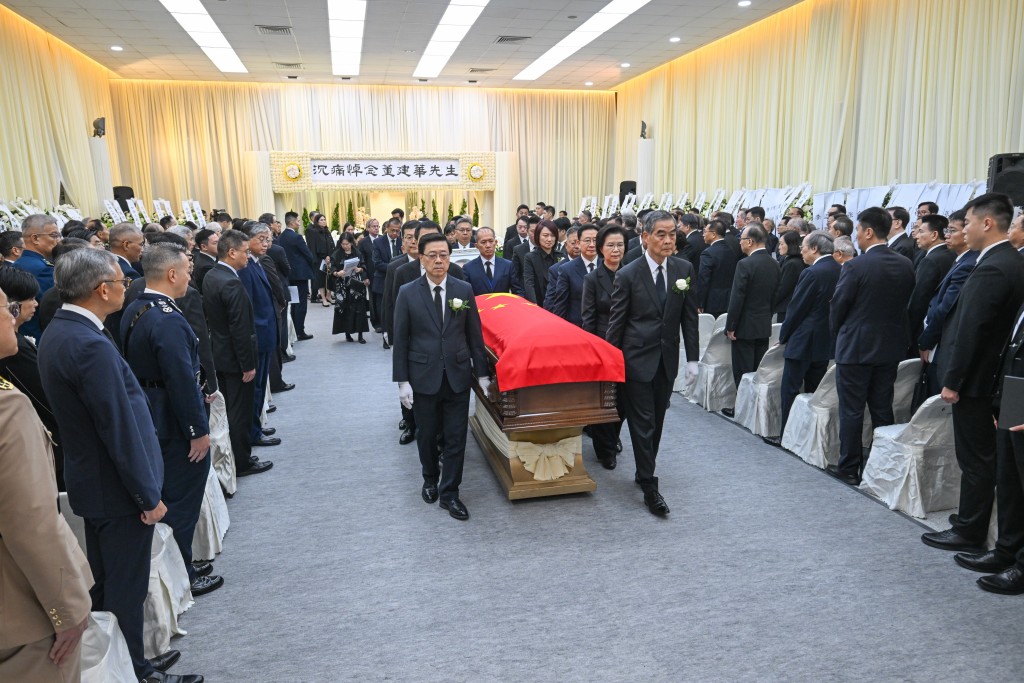
John Lee and CY Leung lead pallbearers for Tung Chee-hwa
20-09-2026 15:54 HKT



Language is a living, breathing entity, experiencing seasons of richness and poverty, expansion and retreat. Just as a civilization blossoms, its language soars, pollinating other tongues through contact and cultural exchange. When Arabs ruled a vast domain from the Arabian Gulf to Western Europe during the Middle Ages, their language became a luminous beacon. Cities like Baghdad, Damascus, Cairo, and Cordoba stood as global capitals of intellect, radiating brilliance in medicine, mathematics, astronomy, and philosophy.
Beyond the sciences, the enchanting melodies of Arabic poetry and music captivated European hearts. Chivalric ideals, romance, and the evocative imagery of courtly love deeply inspired Western traditions, with eighth-century Spanish poetry undeniably echoing the passionate styles of Arab verse.
This rich cultural embrace left an indelible mark on the world. Persian adopted nearly 60 percent of its vocabulary from Arabic, while Spanish absorbed over 3,000 words. Turkish and English, too, embraced this linguistic wealth.
In Spanish, many words bearing the "al" prefix, the Arabic definite article, reveal this heritage, such as almohada (from the Arabic al-mikhadda, pillow) and alcazar (from al-qasr, palace). French botanical and culinary terms flourished with Arabic roots, giving us aubergine (from al-badhinjan), jasmin (from yasmin), and sucre (from sukkar, sugar). Italian welcomed cassata (from qashda, cream), fattura (from fatura, invoice), and tariffa (from ta'rifa, tariff). Even English adopted everyday words like magazine (from makhzan), admiral (from amir al-bahr), cotton (from qutn), and mattress (from matrah).
Today, these borrowed words return to modern Arabic like migratory birds coming home. Having journeyed across oceans and centuries, they arrive with altered colors and transformed melodies, evoking a profound, poetic nostalgia for their original homeland.
Amjad Refai is the director of the Arabic Programme at the University of Hong Kong