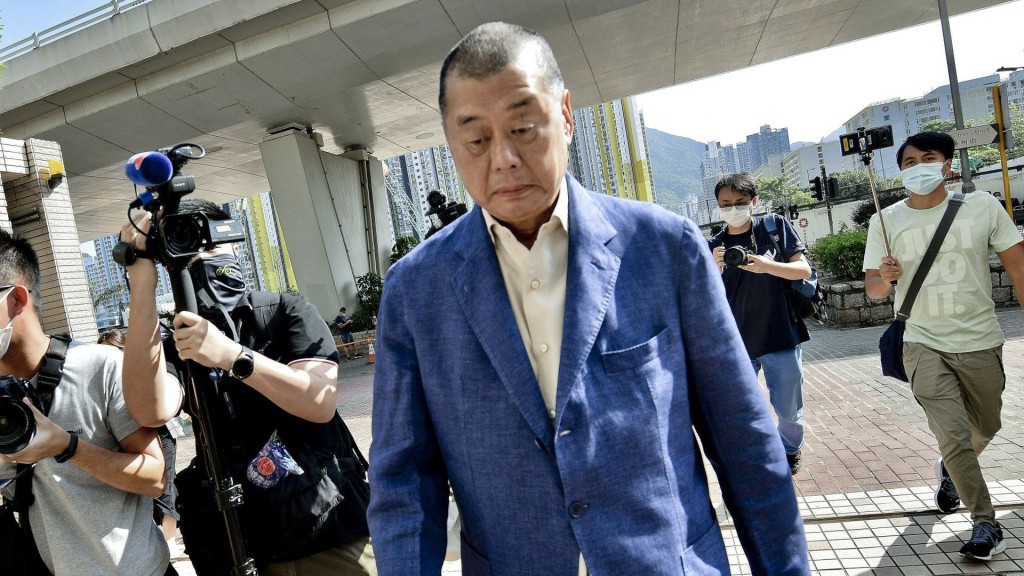
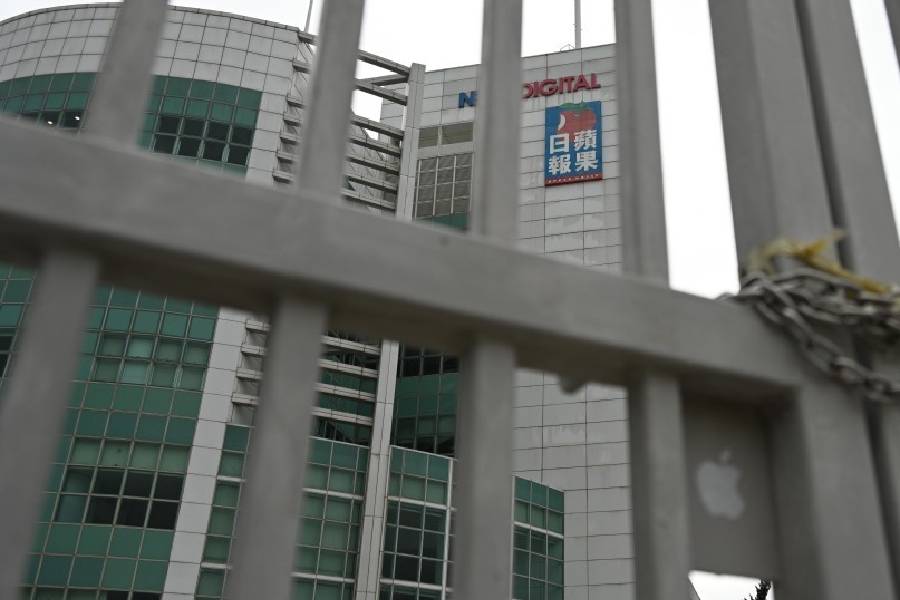
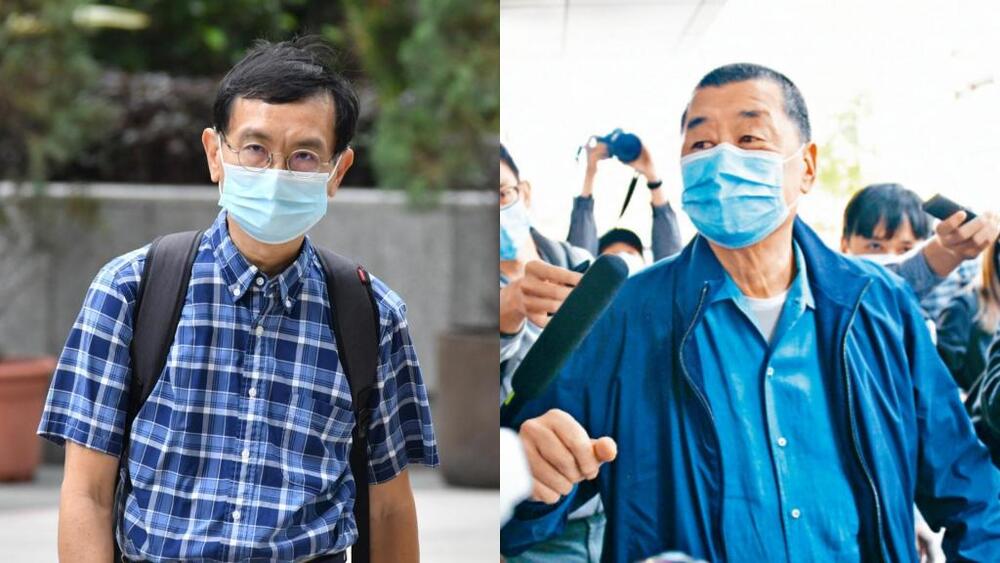
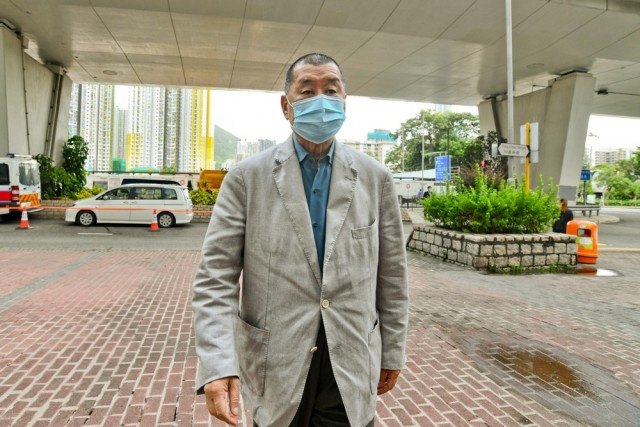
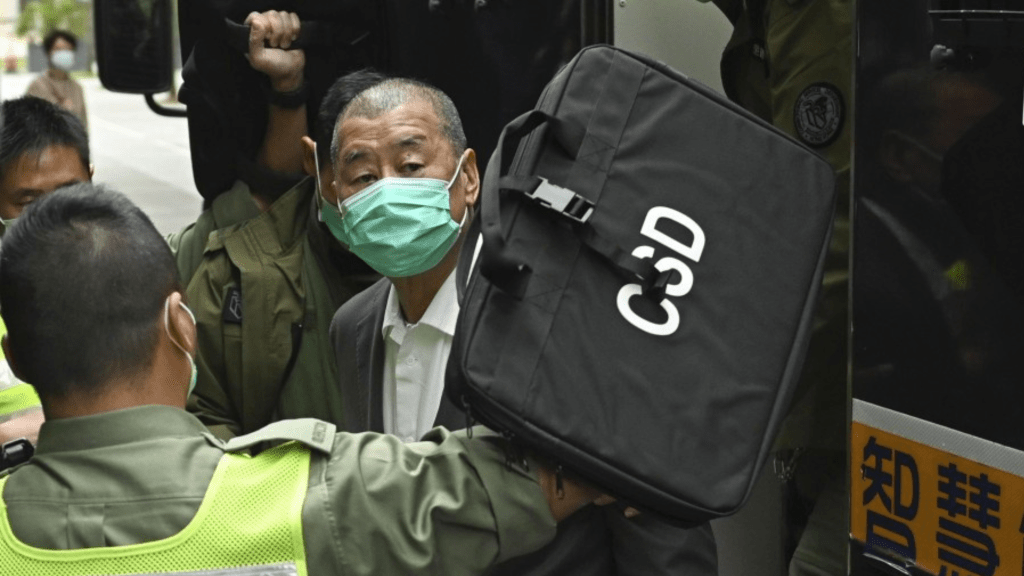
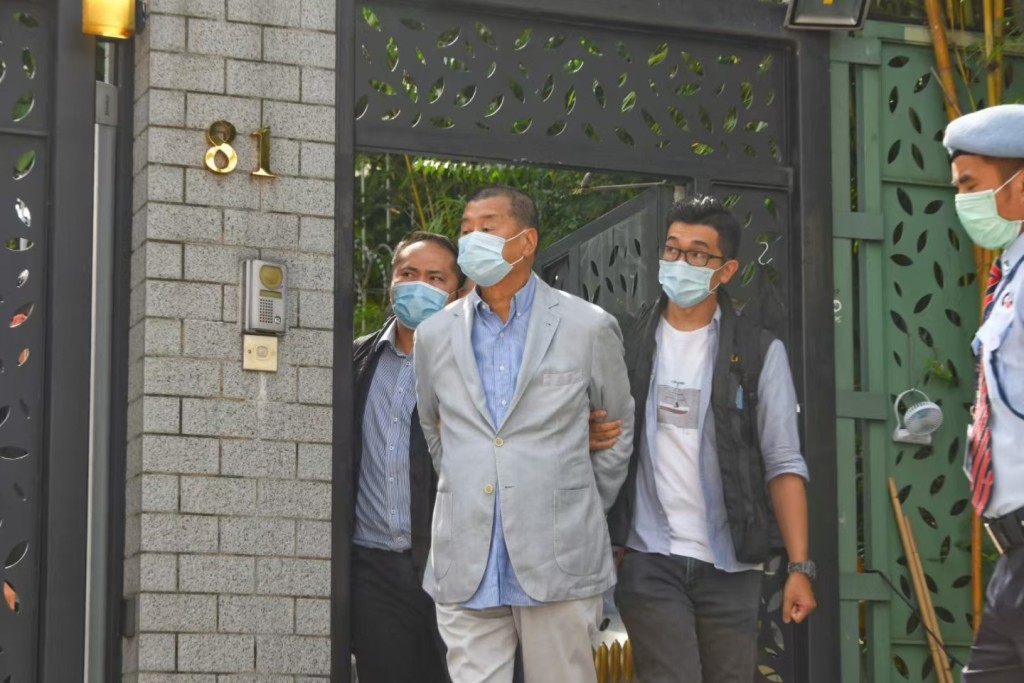
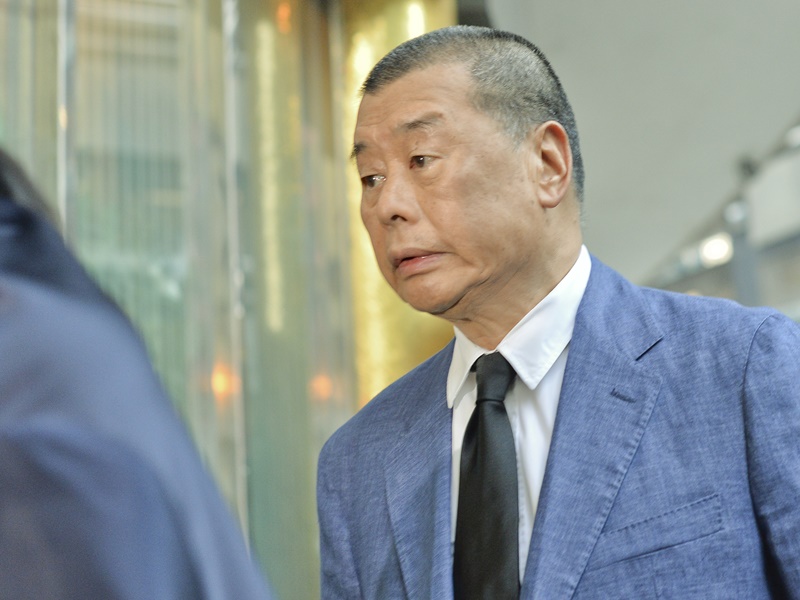
Jimmy Lai was earlier sentenced by a Hong Kong court to 20 years imprisonment on charges including conspiracy to collude with foreign forces and conspiracy to publish seditious materials. He subsequently decided not to pursue an appeal. While the legal process has effectively reached its conclusion, controversy surrounding the case has not subsided. With the U.S. President Donald Trump expected to visit China in the coming days, some American politicians, overseas Hong Kong groups and Western media outlets have once again renewed calls for Lai’s so-called “humanitarian release”.
However, when viewed through the lens of international legal practice, comparative approaches to national security cases and Hong Kong’s own legal framework, such demands appear to lack a solid legal or practical foundation.
Western precedents: rarely grant humanitarian release in national security cases
Much of the discourse surrounding Lai’s case tends to create the impression that advanced age or deteriorating health should automatically justify early release on humanitarian grounds. In reality, this assumption sits uneasily with actual Western legal practice.
In the United States, while a formal “compassionate release” mechanism exists under 18U.S.C. §3582(c)(1)(A), the threshold for approval is exceptionally high. Applicants must demonstrate “extraordinary and compelling reasons,” yet courts must also balance broader considerations including public safety, sentencing objectives—such as punishment, deterrence, and upholding the rule of law—and the gravity of the offense. In practice, defendants convicted in cases involving national security, terrorism, espionage or major politically motivated violence are rarely granted early release. Judicial discretion routinely weighs not only physical condition but also symbolic influence, organizational ties, and the potential for continued political mobilization, even by an elderly or infirm individual.
Britain adopts a similarly restrictive approach. Under the UK Ministry of Justice’s Early Release on Compassionate Grounds Policy Framework, prisoners are generally considered only in extreme circumstances—typically involving terminally ill prisoners with only months to live, where continued detention serves no meaningful penal purpose. Even then, authorities must still be satisfied that release poses no unacceptable risk to public safety.
Other Western jurisdictions, including Canada, Australia, and Germany, follow a comparable logic. Their systems are not built around the principle that old age or chronic illness alone warrants release. Rather, applicants typically must satisfy multiple cumulative conditions: a terminal or severely debilitating illness, medical needs unmanageable in custody, substantial completion of the sentence, and above all, minimal risk to society.
Indeed, where national security or foreign interference is involved, Western judicial systems often adopt standards far stricter than those for ordinary criminal offenses. The reason is straightforward:An individual’s symbolic significance or political capital does not dissipate merely because of advancing age or physical frailty.
From this perspective, calls for Hong Kong to adopt a more lenient approach than Western governments themselves employ would likely face accusations of double standards.
Jimmy Lai’s profile fails to meet conventional humanitarian thresholds
Even setting aside the national security dimension, Lai’s current circumstances would still struggle to qualify as a typical humanitarian release case under standards commonly applied in Western jurisdictions.
Age alone is seldom sufficient grounds for release; elderly inmates are commonplace in Western prison systems, which continue to hold many individuals older than Lai.
As for his health, publicly available information indicates that Lai suffers from conditions including diabetes, hypertension, retinal vein occlusion and certain chronic inflammatory ailments. These undoubtedly require ongoing medical attention, but they are not generally classified as terminal illnesses nor fall into the category of conditions that cannot be adequately treated within a prison medical system.
Hong Kong’s correctional system has long maintained established medical arrangements for inmates. Prisoners are entitled to healthcare broadly comparable to that available to the general public, and may be referred to public hospitals or specialist treatment where necessary.
Over recent months, Lai has repeatedly appeared in court and conducted lengthy self representation during proceedings. Media reports—both local and Western—have consistently described him as being in relatively good spirits, a portrayal that contrasts sharply with political narratives depicting him as near death.
Furthermore, Hong Kong’s legal framework differs fundamentally from “medical parole.” The city’s system is based primarily on treatment within custody rather than release for treatment outside prison. Supervised release schemes under the Prisoners (Release Under Supervision) Ordinance impose strict requirements regarding the proportion of sentence already served.
Creating special arrangements for Lai could therefore raise questions about consistency and equal treatment within Hong Kong’s legal system.
National security issues are not bargaining chips
Ultimately, however, the more decisive issue is not medical or procedural, but political.
The evolution of “one country, two systems” in recent years underscores that national security is a cornerstone of Hong Kong’s governance. From Beijing’s perspective, Lai’s case is not viewed simply as an ordinary criminal matter, but as one involving foreign interference, political mobilization and challenges to sovereignty and state security.
Indeed, the sustained high-profile involvement of Western politicians and overseas activists may itself reinforce Beijing’s assessment that external pressure remains an active component of the case’s political context. Under such circumstances, Chinese authorities are even less likely to make concessions that could be interpreted internationally as evidence that foreign pressure works.
This logic is not unique to China.
Whether in the United States, Britain, or elsewhere, governments rarely make substantive concessions in core national security cases under external political pressure. Different countries may define national security differently, and their political systems may vary widely, but the principle that national security constitutes a fundamental, non-negotiable interest is one shared by virtually all sovereign states.
In the context of Hong Kong and Beijing’s broader national security framework, the underlying logic of Lai’s case appears equally clear: national security is a matter of principle, not a bargaining chip for diplomatic negotiation.
Viewed through this perspective, ongoing calls for Jimmy Lai’s “humanitarian release” lack both legal and factual foundations. At most, they are likely to remain little more than political slogans, rather than evolving into any realistic possibility.
Liang Yaqi, a member of the Chinese Association of Hong Kong and Macau Studies