Read More
Nvidia announced a US$20 billion (HK$156 billion) deal with artificial intelligence startup Groq on December 24, the biggest transaction in Nvidia’s history.
ADVERTISEMENT
SCROLL TO CONTINUE WITH CONTENT
This is not the first time Nvidia has made a transformative deal.
Back in the 1990s, when Nvidia was still an infant company, chief executive Jensen Huang went “all-in” with the company’s limited resources on an expensive emulation machine, an advanced simulation tool that allowed engineers to test chip designs virtually before manufacturing. This proved to be an intelligent move that tremendously shortened development time from years to months, enabling breakthroughs like the 1997 RIVA 128 and 1999 GeForce series, establishing Nvidia as the leader in consumer graphics cards.
In 2020, Nvidia attempted a US$40 billion acquisition of Arm Holdings, aiming to combine Arm’s energy-efficient CPU architecture with Nvidia GPUs for a comprehensive AI ecosystem from edge devices to data centers. However, intense regulatory scrutiny from the US FTC, UK CMA, EU, and China forced Nvidia to abandon the deal in 2022.
Learning from this failure, Nvidia shifted to flexible structures and avoided full mergers. In December 2025, it struck this $20 billion deal with Groq. The deal is structured as an “asset purchase and licensing agreement” rather than a traditional acquisition to avoid antitrust scrutiny.
Groq’s Language Processing Units – or LPUs – use a software-defined, fully deterministic execution model with operations statically scheduled by a compiler, avoiding dynamic hardware scheduling and caches. Each LPU has roughly 230 MB of on-chip SRAM and delivers 80 TB per second of bandwidth, reducing data movement latency compared with GPUs that rely on external high-bandwidth memory. Large language models run on interconnected LPUs with weights partitioned across chips, enabling low-latency, batch-size-one inference with fast, consistent real-time performance, in scenarios where GPUs typically require high-volume batching for efficiency.
This de facto acquisition enables Nvidia to integrate Groq’s core technology into future architectures such as Rubin, sidestepping antitrust hurdles while boosting Nvidia’s position in the rapidly evolving AI market.
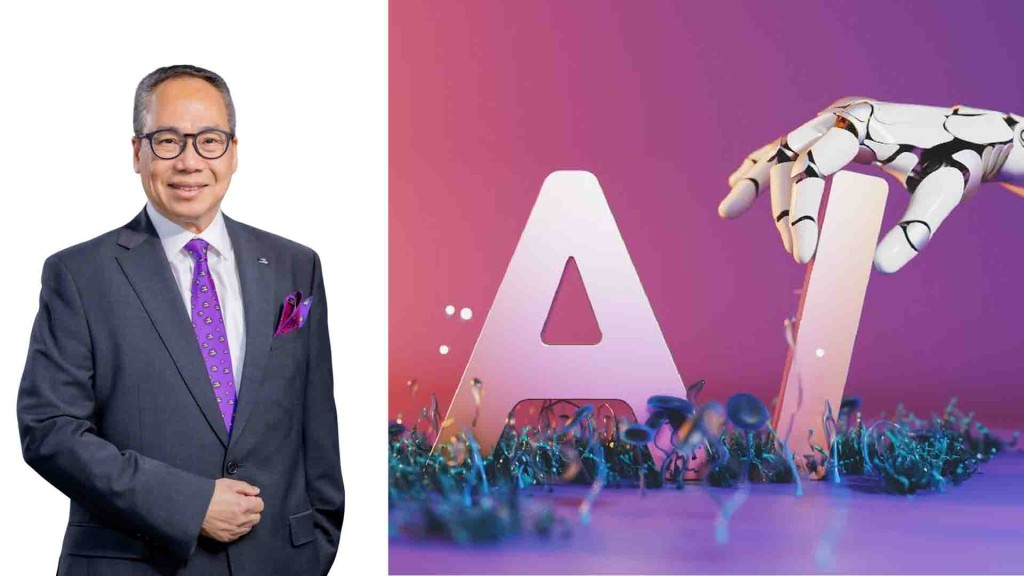
Allen Au is a tech startup founder, AI architect, and YouTuber