An ingenious device to allow traffic flow in rural road junctions is the highway roundabout we have inherited from Britain.
For light traffic, it allows continuous traffic through a junction without prolonged stops.
Traffic enters a large road circle, with everyone travelling in a clockwise direction, and leaves at the intended exit.
There are no electrical systems.
Furthermore, drivers who do not know a road can do a full circle to find the right exit, without affecting other cars by stopping to check the direction.
As traffic volume increases, a roundabout can be expanded to two to three lanes. This is when driving needs a lot more attention.
The highway code specifies that traffic should yield to the right, which is workable when all vehicles travel at the same speed and drivers are courteous and careful.
Originally, the system required that all traffic must follow the outer circle prior to leaving a roundabout, but this caused a slowing of the total flow.
A modification allows traffic in the inner circle to drive directly to the exit. This has led to some traffic from the inner lane exiting abruptly, causing conflict to other cars in the outer circle traveling on the roundabout to further exits.
We have seen accidents caused by such conflicts because in theory, drivers cutting across the outer circle to an exit expect vehicles in that circle to yield while those vehicles traveling on the outer circle feel they have the right to remain in the roundabout until they are ready to leave.
To remedy this, solid-line road markings in some sections separate the inner from the outer circle, reducing significantly the risk of conflict from those vehicles in the inner lane cutting across those in the outer for an abrupt exit.
But such arrangements somehow limit the volume of traffic that the roundabout can allow in busy periods.
However, good planning should ensure that when traffic volume increases, these intersections need to be replaced by traffic light junctions as roundabouts are not designed for use in heavy traffic.
Even for junctions with traffic lights, when traffic volume continues to increase, it would be time to construct flyovers along the directions of the heaviest traffic to allow a continuous flow without interruption.
In any event, when a district had developed with more commercial activities the land occupied by the roundabout, which is significantly larger than that required for rectangular grid traffic light intersection, can be released for other purposes, including sites for commercial and residential buildings.
This is especially important here when we are running very short of space.
Cities develop gradually, and traffic continues to build up to facilitate access to various locations from different directions.
Roundabouts become traffic light intersections, and then flyovers further allow larger traffic flow.
When that exceeds the road capacity mass transit railways will be the next step to divert flow from the road.
Traffic engineers must continuously watch the development of a city, especially busy road intersections, to ensure efficient traffic flow and not strangle it to the detriment of the movement of people attending to a wide range of activities.
Veteran engineer Edmund Leung Kwong-ho casts an expert eye over Hong Kong's iconic infrastructure
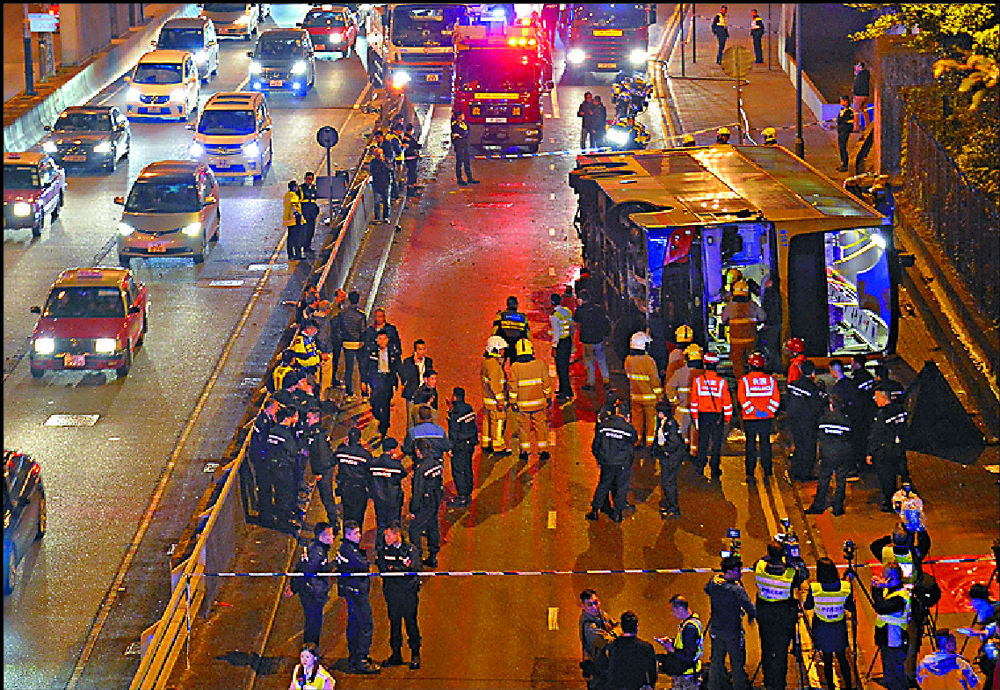
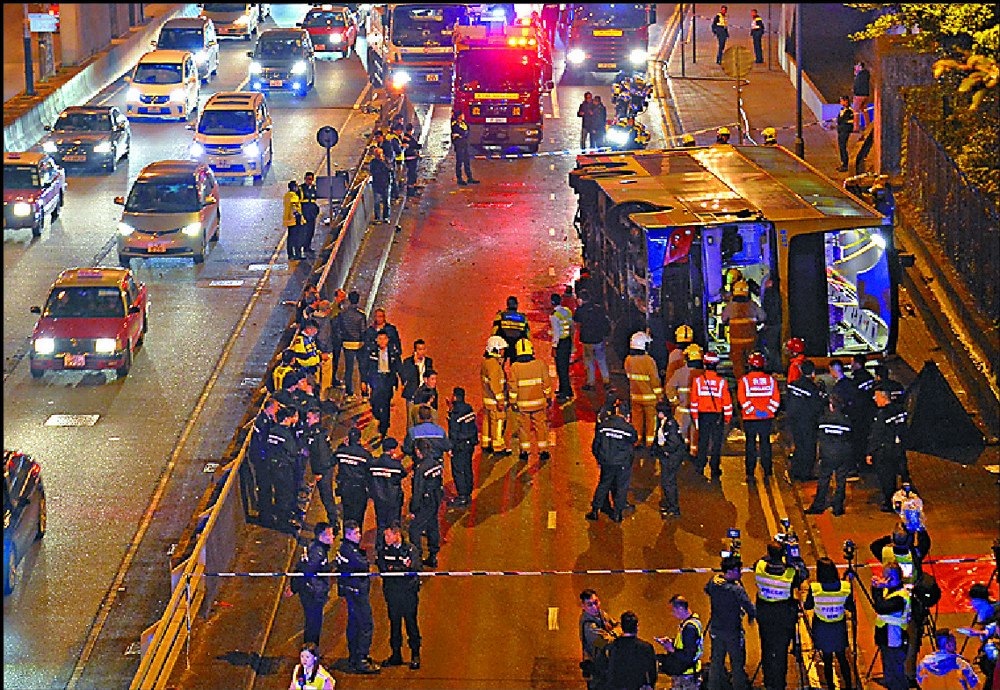
The Kwun Tong Road roundabout is a major congestion hot spot during peak hours while, inset, the Lei Yue Mun Road one was the scene of a major accident in 2017.