Read More
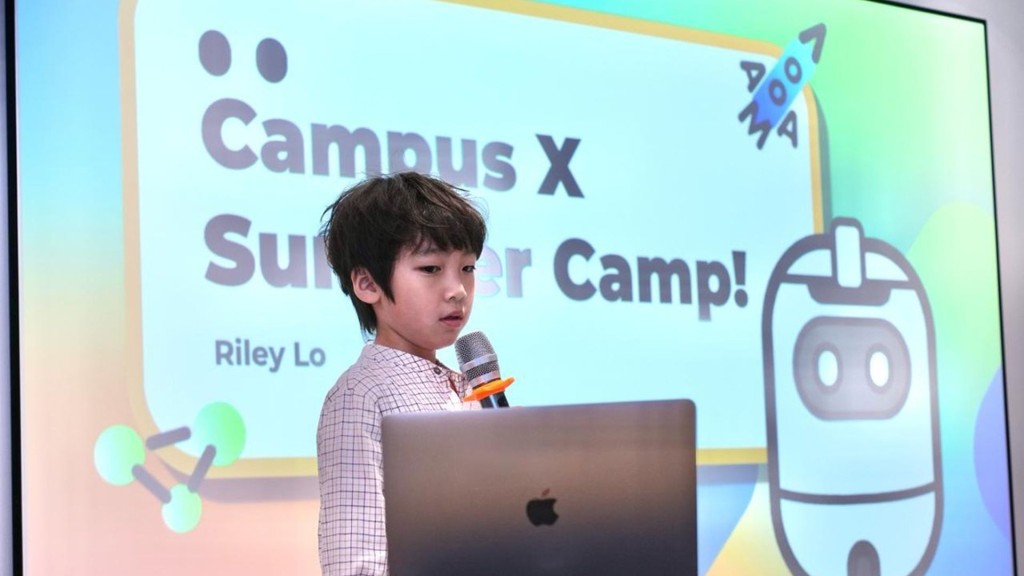
Earlier this year, I shared how a local robotics manufacturer transformed its facilities to promote hands-on STEM education among primary school students. That initiative has since evolved into an education organization called Campus X, a dedicated learning hub for young inventors – combining structured weekend lessons with weekday open-maker access for independent exploration.
ADVERTISEMENT
SCROLL TO CONTINUE WITH CONTENT
Campus X recently moved from its former factory premises in Tsuen Wan to a purpose-built education center in Wong Chuk Hang, right next to the MTR station. While it no longer bears the look of an industrial workshop, the new site is more than just a classroom area. It is now a hybrid of school and makerspace.
On weekends, Campus X runs structured robotics and innovation courses, teaching students to design, code, and build real-world solutions. On weekdays after school, the space opens up as a community for young makers, where students can freely use 3D printers, fabrication tools, and design benches under staff supervision to work on personal projects. It’s where ideas turn into tangible creations – and where children come not only to learn, but to invent. When parents ask their children what they learned in class, many would usually answer: “I don’t know.” It is not that they did not learn – but rather that much of today’s learning, especially in typical coding classes, feels detached from everyday life.
Many after-school programs focus on digital platforms such as Scratch or Roblox, which encourage creativity through game design but often lack a direct connection to real-world world innovation. This gap shows a disconnection by design.
The organization’s mission is to bridge this gap by linking engineering, design, and entrepreneurship, giving children the tools and confidence to apply what they learn to the world around them.
Students there go through the full creative journey – from identifying a problem, to designing and coding a solution, to fabricating and testing their prototype using a proven compact educational robot designed for hands-on learning.
Two student stories show how imagination and engineering come together inside this classroom-hybrid.
One of the youngest inventors, a five-year-old girl, was afraid of walking to the washroom alone at night. Instead of relying on her parents, she decided to build her own helper.
Using her mini robot, she 3D-printed a small torch mount and installed a light on top. Then, she programmed the robot’s path from her bed to the washroom and back. The magic touch: she coded the robot to activate with two claps. As she claps, the robot lights up, guiding her along the path, and gently bringing her back to bed.
Her invention turned a common childhood fear into a lesson in engineering, problem-solving and empowerment, proving that even the youngest minds can build solutions.
Another nine-year-old boy, learning about photosynthesis at school, noticed that his plant in the bedroom was not thriving. His room faced east, receiving sunlight for only three hours each morning. His mother’s room, facing west, gets the afternoon sun.
He wanted his plant to grow faster, so he designed a robot to help it do just that. Using 3D modelling software, he built a custom potholder for his mini robot, allowing it to carry the plant. He programmed it to move from his room in the morning to his mother’s room in the afternoon, giving the plant almost 10 hours of sunlight each day for more time for photosynthesis.
He proudly called it his “Sunlight Chauffeur” and presented it as an example of how technology can help nature thrive – blending a science lesson with creative engineering in person.
After completing their prototypes, students join a monthlong presentation boot camp, learning to tell their stories like real entrepreneurs. They practice pitching in a Silicon Valley-style format – clear, confident, and backed by evidence.
Select students are then invited to present their work to investors and Campus X industry partners. Those with outstanding ideas can receive seed funding to bring their projects into small-batch production. In time, Campus X envisions a student-to-student invention marketplace, where young creators can trade and collaborate on their products – learning not only engineering, but also the mindset of entrepreneurs.
The curriculum has already been adopted by Singapore International School (Hong Kong) and Malvern College, with more than 25 additional schools across Hong Kong joining soon.
Globally, the program is expanding into Singapore, the United Kingdom, and Australia, introducing its project-based learning philosophy and RICE mini kits to a new generation of young inventors.
Campus X is more than a place to learn – it is a movement of young creators who think critically, build boldly, and present confidently. By turning classrooms into makerspaces and ideas into inventions, it is helping children rediscover what true learning means: connecting curiosity with creation.
Veteran engineer Edmund Leung Kwong-ho casts an expert eye over features of modern life