There appears to be too many incidents during the last few months, both in the air transport sector and at sea, especially in northeast America.
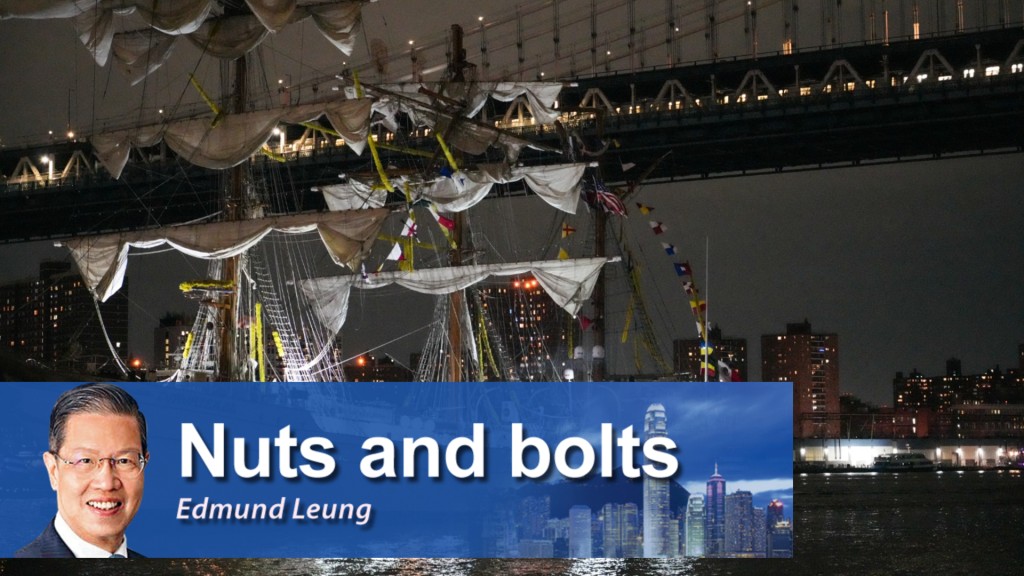
The Mexican naval training ship hitting the Brooklyn Bridge is another freak occurrence. It is almost a repeat of the Francis Scott Key Bridge incident in Baltimore last year. In both cases, it appeared that an oceangoing vessel lost control as it was leaving port and smashed into a nearby bridge.
There was no detectable damage to the bridge structure in Brooklyn nor the vehicles on it, and bridge traffic resumed after 20 minutes. So, in terms of scale, this incident had far less impact than the Baltimore event.
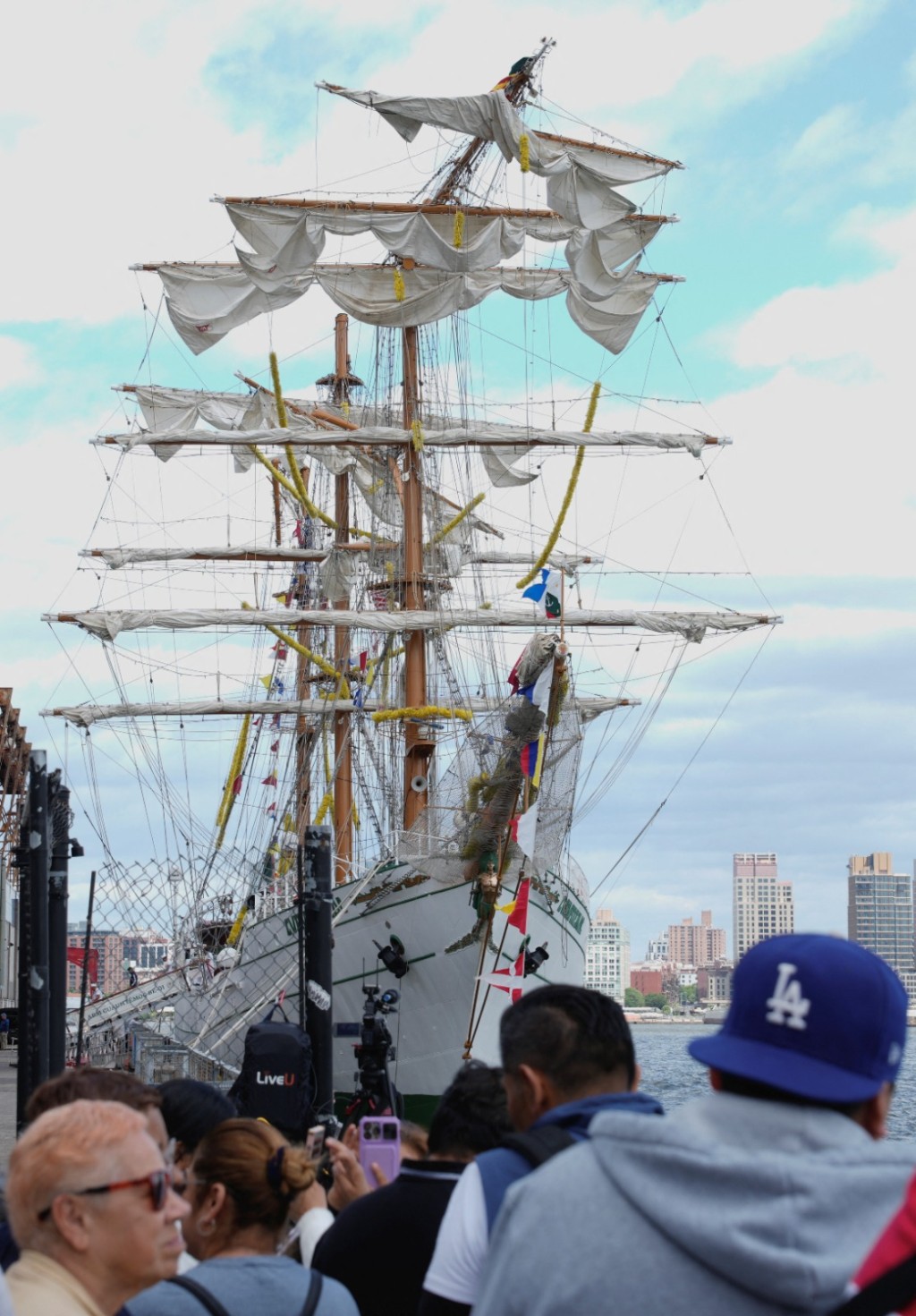
The Mexican training ship Cuauhtemoc, launched in 1982, is 90.5 meters long and 12m wide. It has three tall masts with up to five layers of sails. At the time of the incident, it was carrying a crew of over 200. It was leaving the South Street Seaport in Manhattan to sail to her next destination, Iceland.
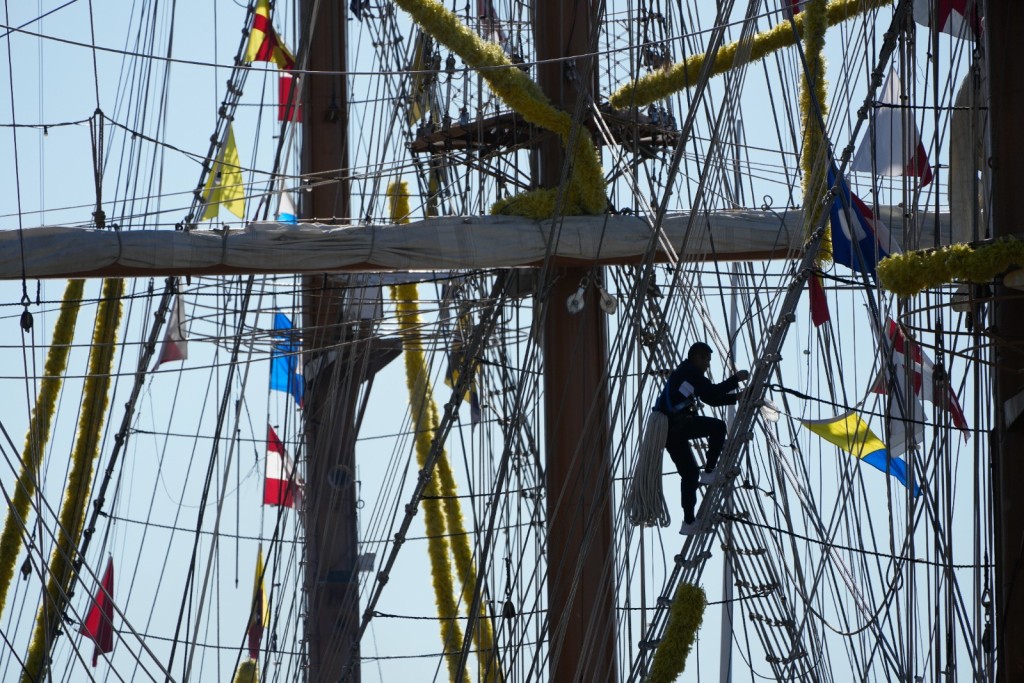
It is normal that when this type of vessel enters or leaves a port in a city, crew members stand on the yards – the beams where the sails are hung – “dressed” along with hundreds of bright lights dangling on the various parts of the masts, to wave farewell to onlookers on the quayside. For this ship, the front mast carries five yards, capable of carrying 12 crew members on the lowest yard and four on the top yard. Cadets climbed up the masts through the rope shrouds and, for safety reasons, were securely harnessed.
But what started as a spectacular beginning to a farewell cruise, ended in disaster. Numerous crew members were left hanging from their harnesses, resulting in some 20 being injured and two fatalities.
When the ship smashed into the Brooklyn Bridge, all top sections of the three tall masts were dislodged. It may be fortunate that the masts were made of steel as their lower sections stayed intact. If they had been wooden masts, as commonly used for sailing ships hundreds of years ago, they would have been tied to each other and the total masts array would have collapsed, probably causing more serious damage and many more casualties.
The official report, with data collected and analyzed by the National Transportation Safety Board, will take many months to complete. Meanwhile, some expert marine analysts have provided the following opinions, based on available videos and photographs.
The ship left the port at around 8pm, about midway between low and high tide. There was a light, steady wind and the current was flowing upstream. A pilot appeared to be on board as an “H” flag was flown. One powerful tugboat was on duty, purportedly to guide her at the initial part of her sea journey down the East River.
Pulled by the tugboat, she was moving astern away from the docking point, into the congested waterway. To make a sharp turn to point her downstream, away from the Brooklyn Bridge, was particularly challenging as the ship has a small rudder and a very large turning circle.
To assist the ship to make the turn, the tugboat, initially used to pull the ship out of the dock and upstream, let go its tethering rope and moved to the other side, apparently in an attempt to better control the turning ship.
It was at this point the ship was seen powering astern, as evidenced by the wake it was producing. It should have started motoring ahead, not astern.
Unfortunately, the ship was already only about two to three lengths from the Brooklyn Bridge, so the untethered tugboat was not able to halt her movement.
It appears the ship had gathered momentum under power from about two knots to about six knots. It smashed into the bridge and could only be brought under control for berthing some distance upstream. The ship was secured and the injured brought ashore.
What caused this sudden and unfortunate change in direction is unknown, but it could have been caused by either a mechanical or human error.
One expert suggested that the ship was equipped with a controllable pitch propeller, which allows the whole range of forward and reverse movement with the propeller turning in the same direction.
If this device were faulty at that time, this could explain why the ship, although being seen to move astern, did not cut power to prevent it continuing on its reverse path.
The reversed tide at that time, with the river current going upstream, could be another reason for the incident. Also, should there be another tugboat guiding the ship on the other side, the incident might have been avoided.
But whatever the findings, the captain of the naval ship would be held responsible as he was supposed to be carefully directing the vessel during that critically important maneuver to ensure safe and smooth operation of the ship.
Before the ship set sail, the captain should have ordered the engine to be tested, both for forward and reverse movement, to ensure reliable operation.
Ships or aircraft are designed and maintained for safe operation and should be under the full control of an experienced crew. When an incident occurs, there should follow a thorough inspection of the ship or aircraft and all operational procedures, to ensure that incidents like this one are minimized. Human lives are invaluable and must be protected at all times.
Veteran engineer Edmund Leung Kwong-ho casts an expert eye over features of modern life