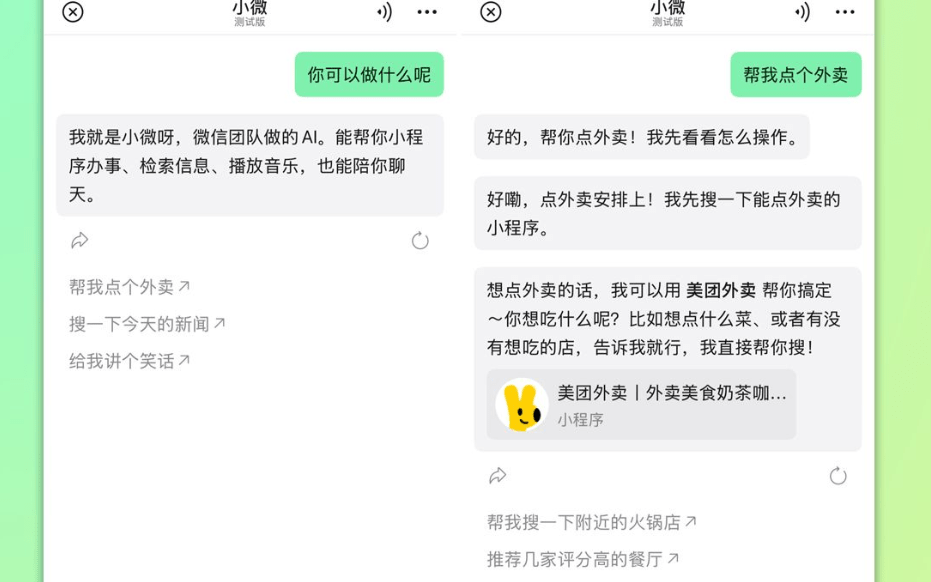
Goldman Sachs noted that the rise of "Xiaowei," an AI assistant within WeChat in China, brings three major risks to Tencent (0700), including resource duplication, cost burden from large-scale computational inference, and an unclear short-term monetization path.
The bank pointed out that the initial market reaction to the "Xiaowei" pilot test was relatively unenthusiastic, showing doubts about WeChat's choice to use its self-developed WeLM language model instead of its own hybrid model, raising concerns of resource duplication and reduced overall R&D efficiency.
Moreover, Goldman stressed that monetization through advertising around transaction scenarios still requires the WeChat AI agent to strengthen its penetration in local life services, which cannot be achieved overnight, warning against high expectations for “Xiaowei”’s short-term contribution to Tencent’s profits.
Additionally, Goldman estimated that, be "Xiaowei" fully launched, additional costs are equivalent to five to 17 percent of Tencent's projected adjusted operating profit for the fourth quarter of 2026, which may pressure WeChat's profit margin.