Artificial intelligence has moved beyond hype to become a fundamental business necessity, and the real competitive edge now lies in AI agents and AI workers – systems that can independently handle complex, end-to-end tasks, said Olivier Klein, chief technologist at Amazon Web Services.
Speaking at the Macquarie Asia Conference 2026 on Tuesday, Klein said many organizations are still operating with basic co-pilot-style AI tools, where humans direct every step. However, companies still relying solely on AI assistants risk falling behind as the technology matures into fully agentic workflows.
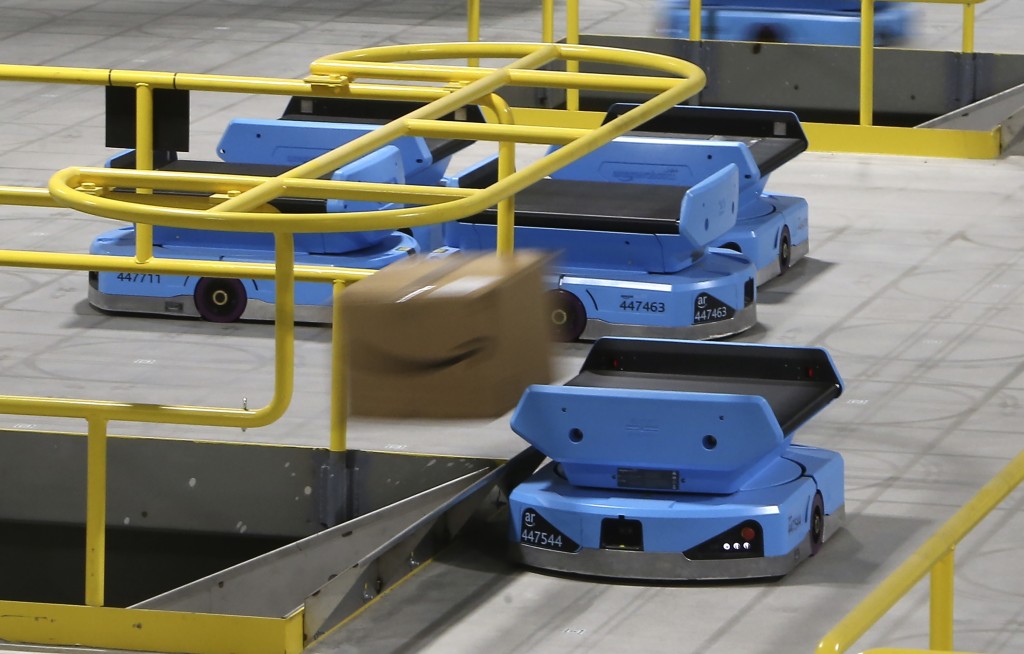
Inside the Amazon fulfillment center, a highly automated warehouse, Klein noted that AI-powered robotics and agents handle picking, stowing, and logistics, an example of moving from passive AI assistants to proactive AI workers that autonomously own and execute tasks.
He explained that through Model Context Protocol (MCP), a Bluetooth for AI, and related tools, AI can operate browsers, execute code, or interface directly with applications. This allows organizations to overlay intelligence onto virtually any existing system, whether through Application Programming Interface or user interfaces.
But as models grow larger and more power-hungry, concerns about sustainability and cost arise, where training a single popular large language model can consume as much electricity as streaming Netflix continuously for 15 years, Klein said.
To address this issue, Klein said Amazon has invested heavily in custom chips that are approximately 60 percent more energy-efficient than comparable Intel chips, lowering customer costs and reducing carbon emissions. Its graviton processors for general workloads and trainium chips for AI training and inference deliver substantial gains.
Klein highlighted that Amazon adds more of its own chips to its data centers every day than the combined shipments of major competitors.
"If we were to spin up the chip business alone, it would be a US$20 billion (HK$156 billion) business by now, just in the chips," he said.
He noted that scaling AI requires massive investment in energy, data centers, and compute. While acknowledging the financial hurdle, he said Amazon is addressing this through renewable energy projects, efficiency optimizations, and long-term planning, including potential small nuclear reactors.
Klein emphasized that governance and security cannot be compromised. AWS's Amazon Bedrock allows customers to select from various foundation models, such as Anthropic, OpenAI, Google, and Meta, without lock-in, while keeping operations protected within the AWS environment with robust controls.
Amazon combines AI with advanced simulation, including Nvidia's Omniverse, to train robots safely and efficiently, he added, from specialized fulfillment robots to selective use of humanoid robots, citing that AI is transforming physical workflows.