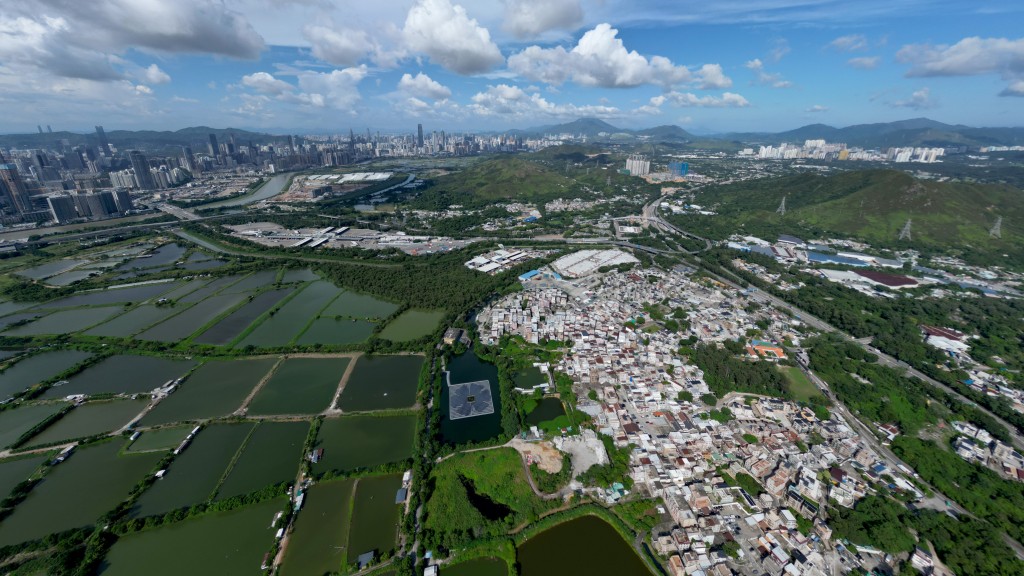
The government may establish a HK$200 million urban-rural integration fund in the Northern Metropolis in the upcoming Budget to encourage residents and community organizations to apply for grants aimed at promoting rural tourism, according to sources.
The fund will operate on a pilot scheme basis, allowing applicants to develop tourism projects such as local delicacies, cycling tours, traditions like dragon and lion dances as well as home-stay lodgings.
It is expected that more than 200 villages will benefit from the fund, and the fund will be reviewed for effectiveness after more than three years of operations.
Mui Tsz Lam Village in Sha Tau Kok, which has been deserted for years, is an example of rural revitalization. Tsang Yuk-on, village chief and vice-chairman of Sha Tau Kok District Rural Committee, noted that the village’s revitalization — including the construction of a Hakka lodging experience centre for campers — was previously supported by universities, non-profit organizations and commercial entities.
Tsang believed that additional government funding would better utilize existing revitalized facilities. He cited his century-old house, which was restored by the Chinese University’s School of Architecture but lacks operational experience. The new fund, he suggested, could help attract organizations to run it as a youth hostel.
He also stressed that the key to promoting tourism in Sha Tau Kok is the opening of the Frontier Closed Area and the removal of relevant permits to increase visitor flow.
He urged the government to speed up the reconstruction of Lai Chi Wo pier and subsidize ferry services between Sha Tau Kok and Lai Chi Wo, allowing visitors to enjoy the local night scenery.
Li Yiu-ban, a member of Heung Yee Kuk Executive Committee, pointed out that while the eastern New Territories, including Sha Tau Kok has great potential, remote villages lack basic infrastructure to support tourism development.
He said many villages in the area have no road access and are uninhabited. Residents must walk for hours to buy daily necessities, and construction materials cannot be transported to the villages — a situation he described as unbearable in modern society.
He emphasized that without building roads to enable villagers to return and revive these communities, no other tourism or development efforts will be effective.
For villages with better infrastructure, Li noted that highly developed areas are less appealing to visitors and often occupied by long-term tenants. Residents would not evict them to operate guesthouses, he said, adding that the focus should instead be on developing remote villages.