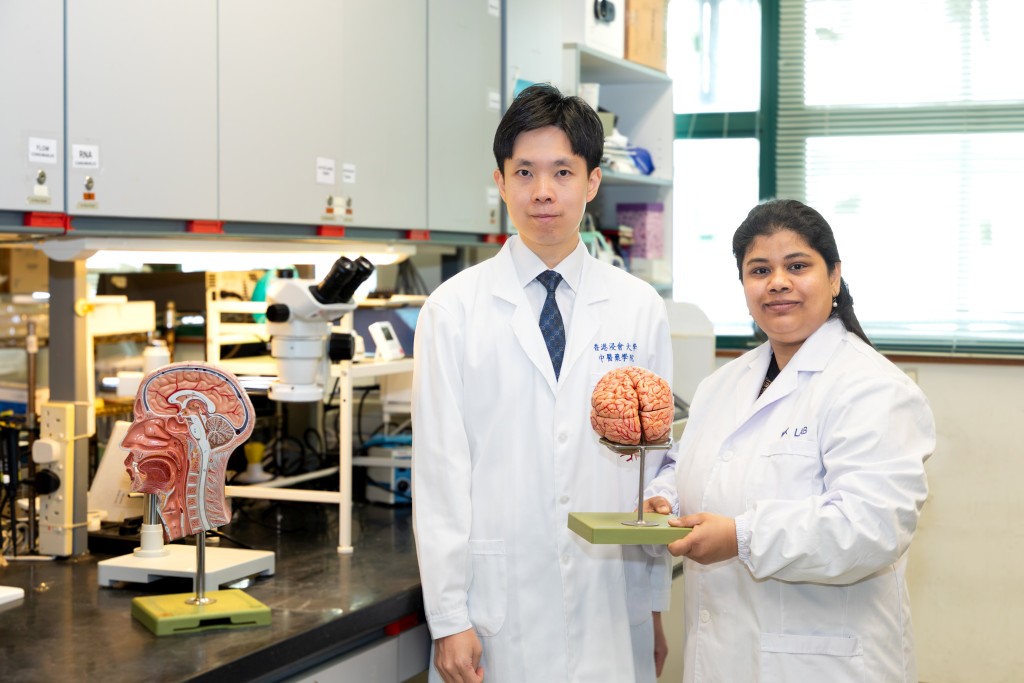
A research team from Hong Kong Baptist University has identified a brain enzyme that could become a new therapeutic target for treating cognitive decline linked to ageing and obesity, after experiments showed that inhibiting the enzyme restored memory and reversed cognitive deficits in mice.
Previous studies have linked ageing and obesity to increased neuroinflammation, which can impair the hippocampus — the brain’s memory center — leading to memory loss and cognitive decline. However, attempts to improve cognition by targeting neuroinflammation alone have had limited success, as it is only one of several contributing factors.
Led by Xavier Wong Hoi-leong, a professor in the Research Division of the School of Chinese Medicine at HKBU, the team found that neuroinflammation increases the activity of an enzyme known as membrane type 1 matrix metalloproteinase, or MT1-MMP, in the hippocampus in both mice and humans.
The researchers discovered that activating MT1-MMP in the hippocampus alone was sufficient to trigger memory and cognitive decline in mice, even without changes in neuroinflammation levels.
In a series of experiments, the team genetically blocked MT1-MMP or reduced its levels in mouse models, then evaluated the animals’ learning and memory using multiple behavioral tests.
Aged mice with lower levels of MT1-MMP performed as well as young mice, the study found. Treating aged mice with a chemical inhibitor targeting MT1-MMP also improved learning and memory, with no detectable toxicity.
Similar results were observed in obese mice. Inhibiting MT1-MMP led to improvements in both learning and memory, suggesting the enzyme could be a viable therapeutic target for cognitive decline associated with both ageing and obesity.
The researchers also identified the mechanism behind MT1-MMP’s effects on brain function. They found that the enzyme breaks down a hippocampal receptor known as GPR158. Damage to this receptor prevents osteocalcin — a protein essential for maintaining memory and cognitive function — from working effectively, resulting in impaired learning and memory.
Wong said the findings demonstrate for the first time that cognitive impairment in ageing and obesity is driven by a mechanism centered on MT1-MMP.
“Our collective research findings position MT1-MMP as a promising therapeutic target for a range of age-related diseases, including neurodegeneration, obesity, diabetes, and atherosclerosis,” he said.
The HKBU team is now working to advance MT1-MMP inhibitors toward clinical development, which could lead to new treatment options for patients experiencing cognitive decline related to ageing, obesity, or associated conditions.