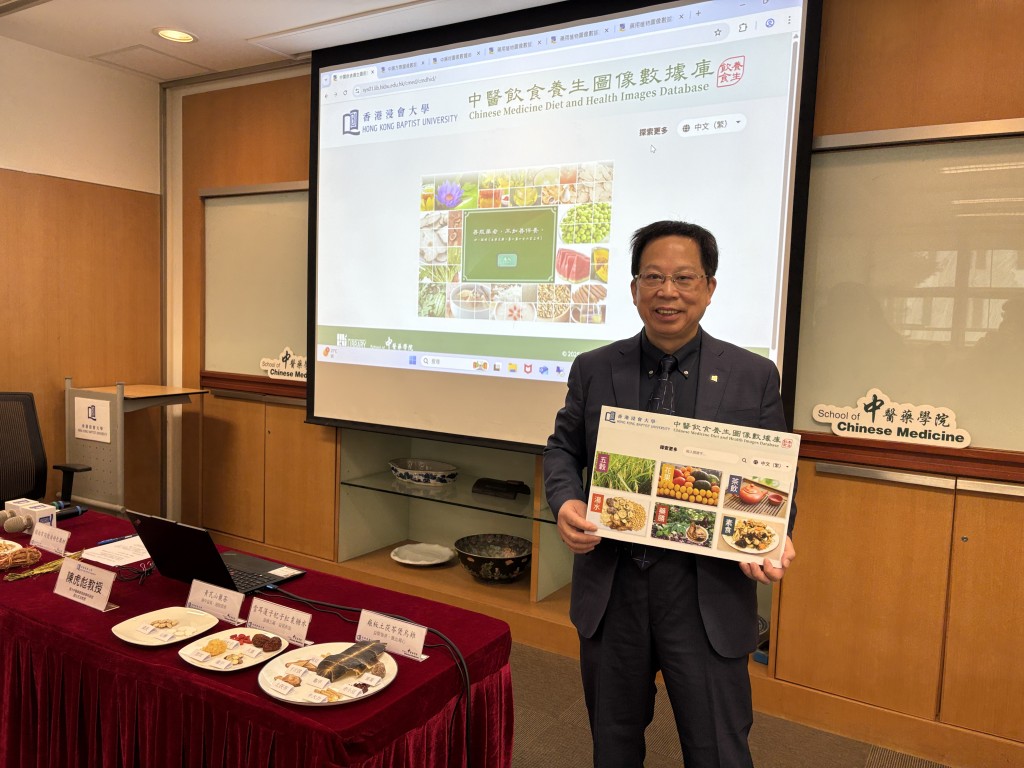
Looking to boost everyday health through food? Hong Kong Baptist University (HKBU) has launched a free online Chinese Medicine Diet and Health Images Database, offering the public an easy-to-use guide to wellness recipes grounded in traditional Chinese medicine (TCM) principles.
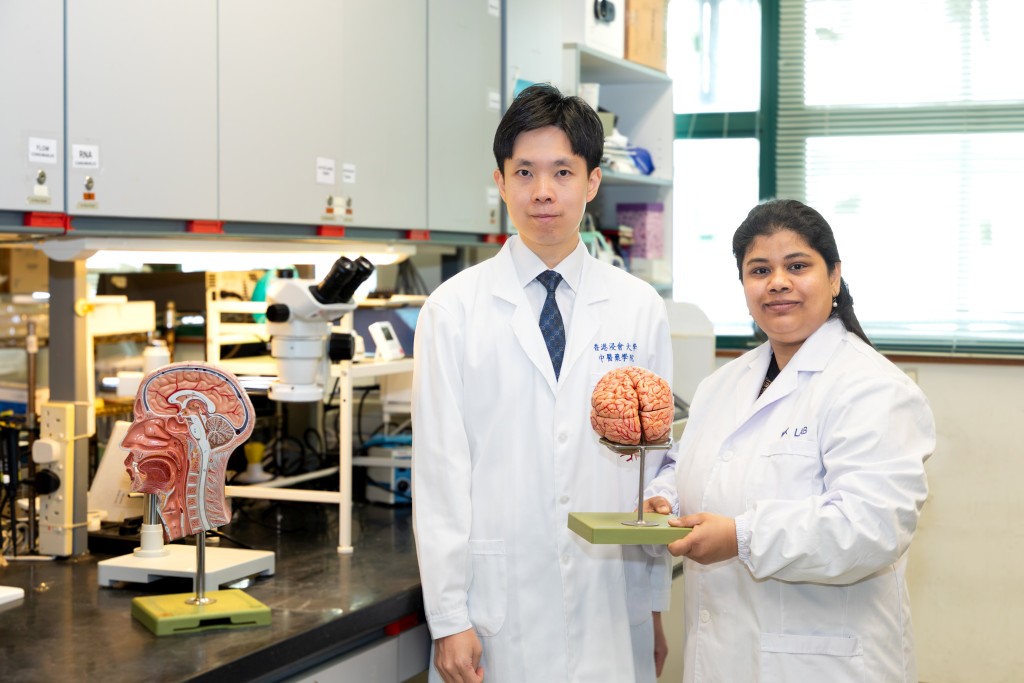
The database, developed by a research team led by Professor Chen Hubiao from HKBU’s School of Chinese Medicine, features 124 carefully curated recipes designed to support daily health through diet.
Rooted in the TCM philosophy of “preventive treatment,” the platform promotes the idea of using food as medicine to maintain balance and prevent illness.
Tailored to the climate and dietary habits of southern China, the collection reflects local wellness traditions such as herbal teas and slow-cooked soups, which are commonly used to counteract humidity and internal heat.
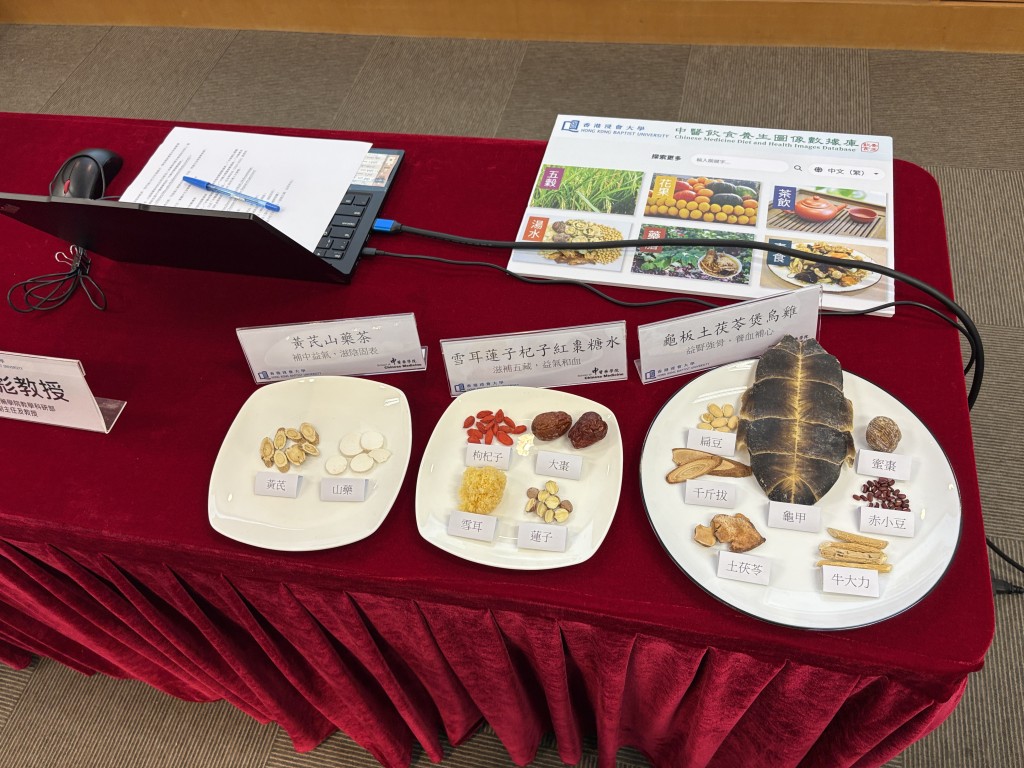
Ingredients of health meals
Open to the public at no cost, the database organizes recipes into six categories, including food crops, flowers and fruits, tea and drinks, health-preserving soups, medicinal foods, and vegetarian dishes.
Users can search by ingredients, health benefits, or cooking methods, making it suitable for both beginners and those already familiar with TCM-inspired diets.
The platform is available in English, Traditional Chinese, and Simplified Chinese, and is linked to HKBU’s existing Chinese medicine databases, allowing users worldwide to explore traditional wellness knowledge and use the materials for learning and teaching.
The university’s Chinese medicine databases have attracted significant global interest. Over the past two years, five HKBU databases — including the Medicinal Plant Images Database and the Chinese Medicinal Formula Images Database — recorded more than 36 million views from users in over 200 countries.
Supported by the university, the research team spent three years studying food-herb compatibility based on TCM theory, independently preparing and filming each recipe to ensure accuracy, safety, and clarity for public use.
Looking ahead, the team plans to expand the collection to 200 recipes, further promoting accessible, culturally rooted wellness practices for everyday life.