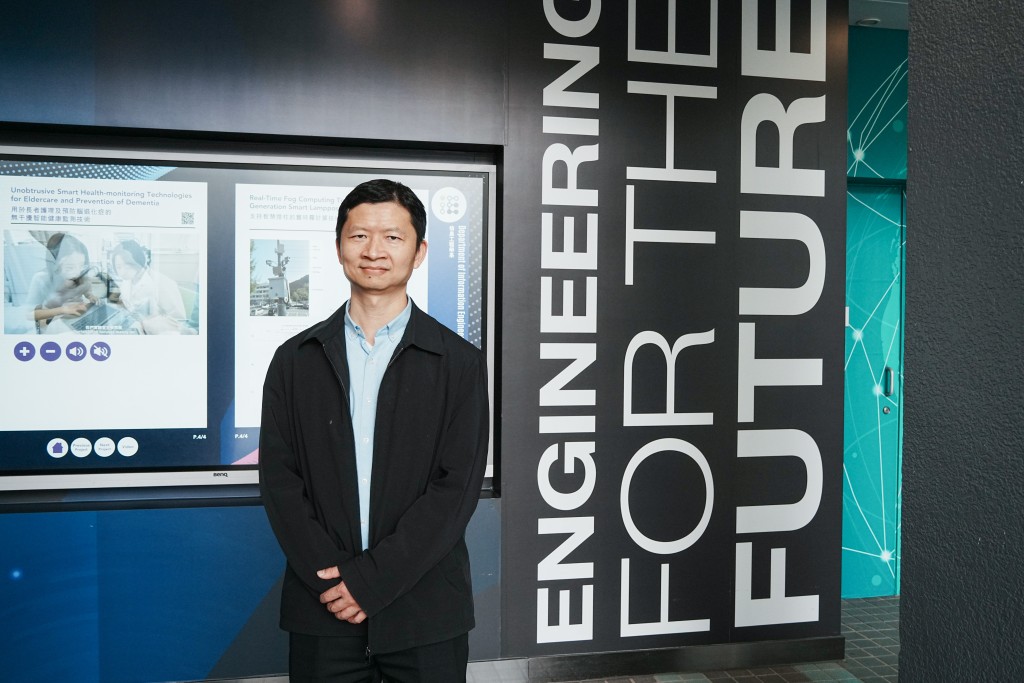
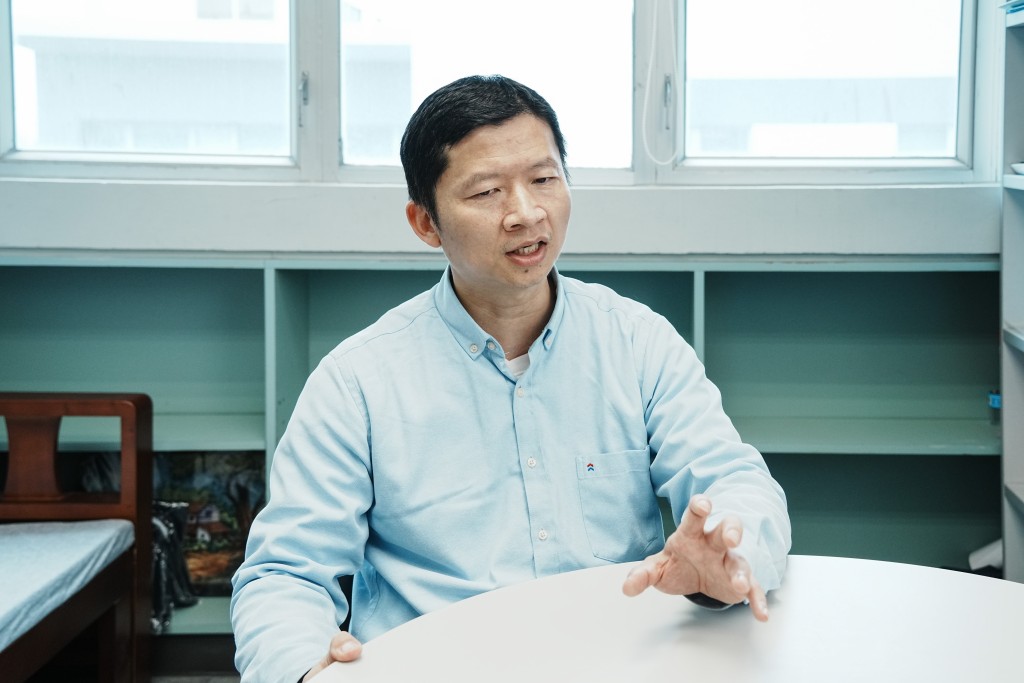
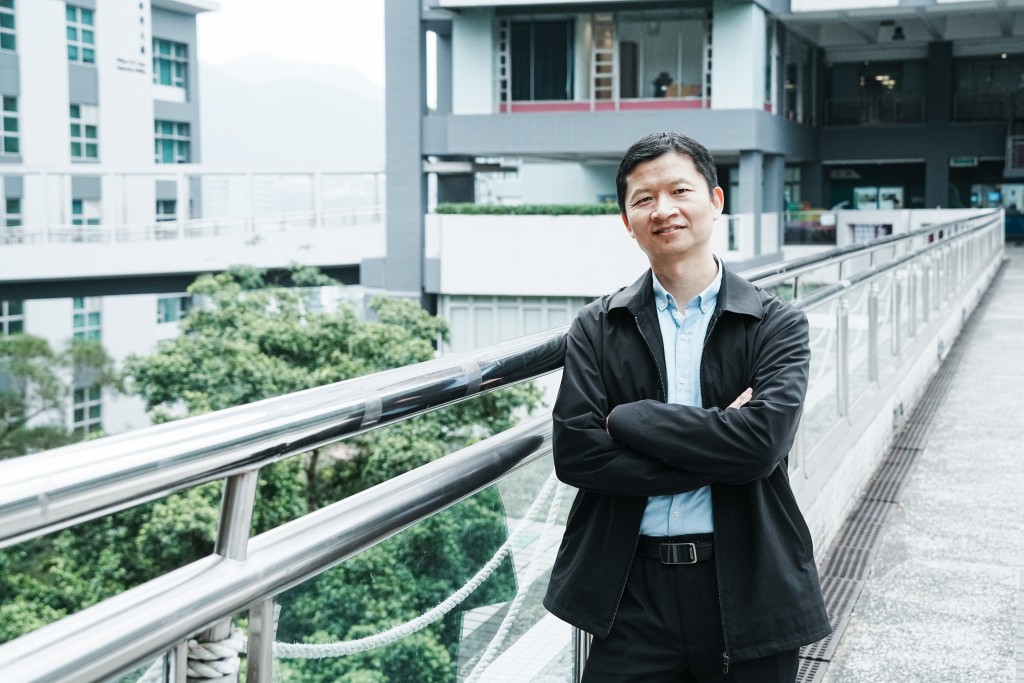
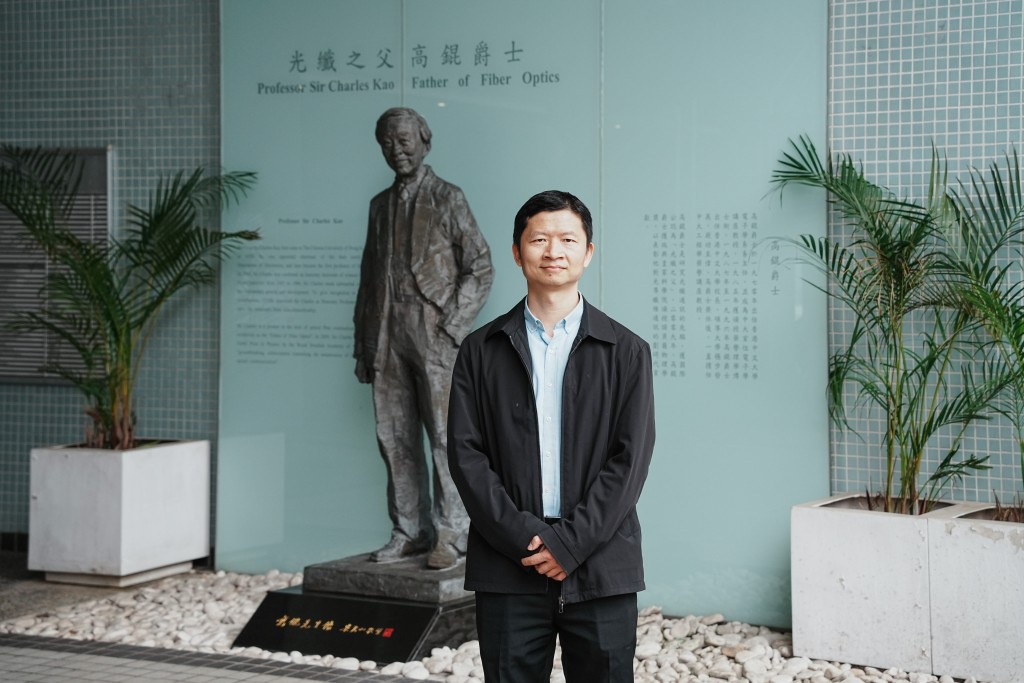
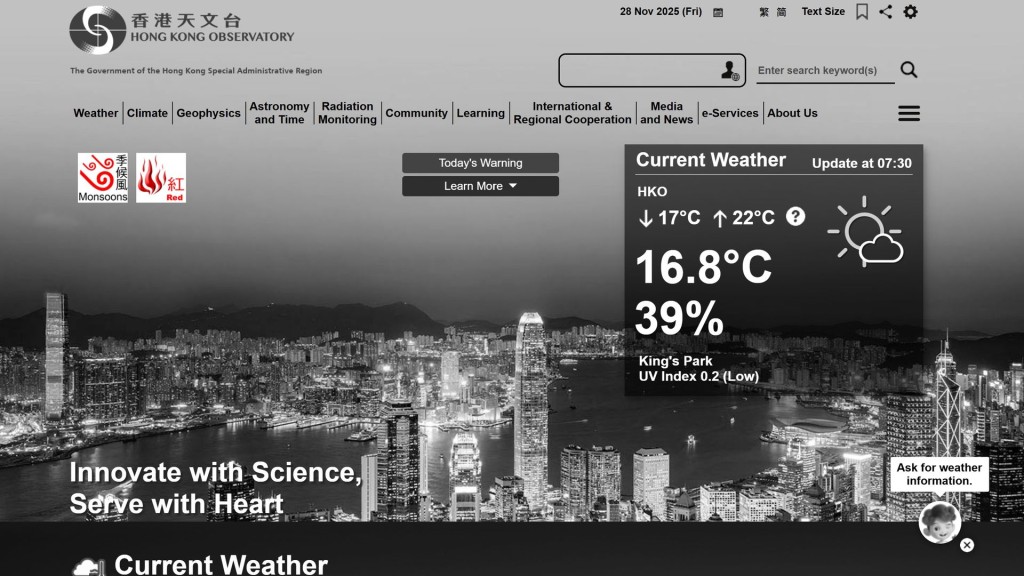
FengWu, an artificial intelligence (AI) weather forecasting system adopted by the Hong Kong Observatory, has now improved its effective forecasting period to 11.25 days, making it the world’s first medium-range weather forecasting model to exceed 10 days, according to Ouyang Wanli, Professor of Information Engineering from the Faculty of Engineering of the Chinese University of Hong Kong.
ADVERTISEMENT
SCROLL TO CONTINUE WITH CONTENT
The system, developed collaboratively by the Chinese University of Hong Kong, the Shanghai Artificial Intelligence Laboratory and other institutions, was launched in its first version in early 2023 following research conducted in 2022.
Citing the scientific journal “Science”, Ouyang noted that for the past 50 years, the best global weather forecasts relied on physical equation solutions, with the European Centre for Medium-Range Weather Forecasts achieving an effective forecast period of only 8.5 days in 2022.
He said the improvements in FengWu have successfully surpassed traditional methods.
“Under the traditional physics‑based approach, forecast lead time improved by just one day every decade. With AI, we now achieve a one‑day improvement in just six months — boosting the growth rate to 20 times faster. This is the rapid advancement AI brings to weather forecasting,” he said.
+1
As for the technical principles behind FengWu, Ouyang explained that it uses datasets provided by the European Centre for Medium-Range Weather Forecasts and has received positive feedback after evaluation by the centre.
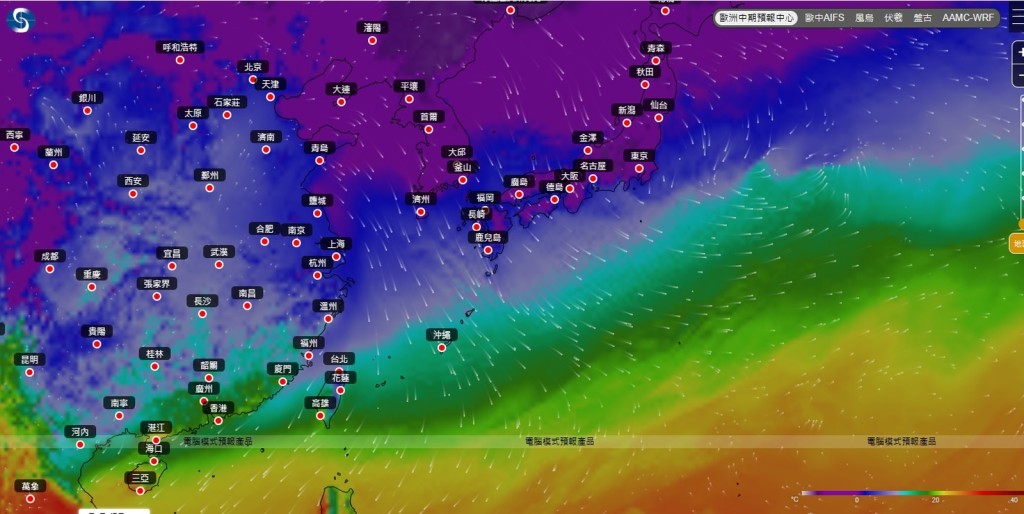
As an end‑to‑end AI system, FengWu currently offers a forecast resolution of 0.09 degrees latitude and longitude. It collects meteorological data, including wind direction, wind speed, humidity, and temperature, then uses the AI model to predict grid‑by‑grid weather conditions for the next hour.
While traditional weather forecasting required tens of thousands of CPU nodes, the AI system now only needs one Graphics Processing Unit card installed in a computer to carry out forecasting tasks.
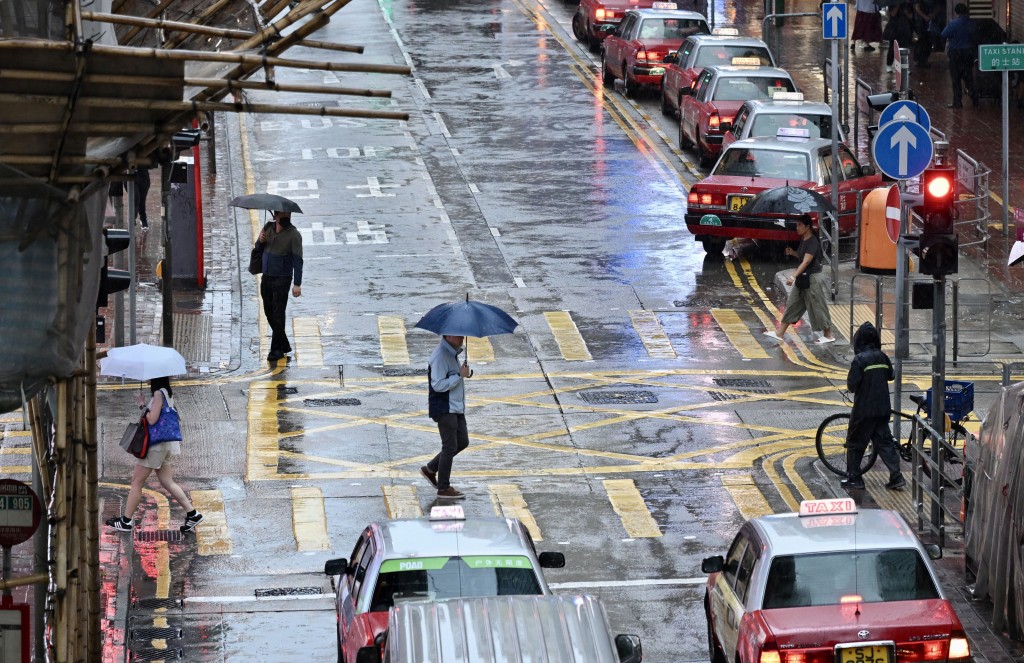
Ouyang revealed that the China Meteorological Administration and the Shanghai Meteorological Bureau have integrated the FengWu model into daily systems used by meteorologists. The Observatory also introduced the system last year, mainly for typhoon forecasting.
However, he admitted that AI weather forecasting cannot guarantee 100 percent accuracy and still has considerable room for improvement. He also revealed that the MTR Corporation has provided funding to combine FengWu’s weather predictions with passenger flow forecasting for better train service planning.
In addition, FengWu has been successfully extended to green energy applications, supporting precise planning for wind and solar power generation. Ouyang said the system has collaborated with a major energy group in China, applying it in more than 400 wind and solar power stations in Inner Mongolia, saving approximately 40 million yuan each year.
The research team will continue to refine FengWu, collaborate with experts across various fields, and actively promote the system to the international market.