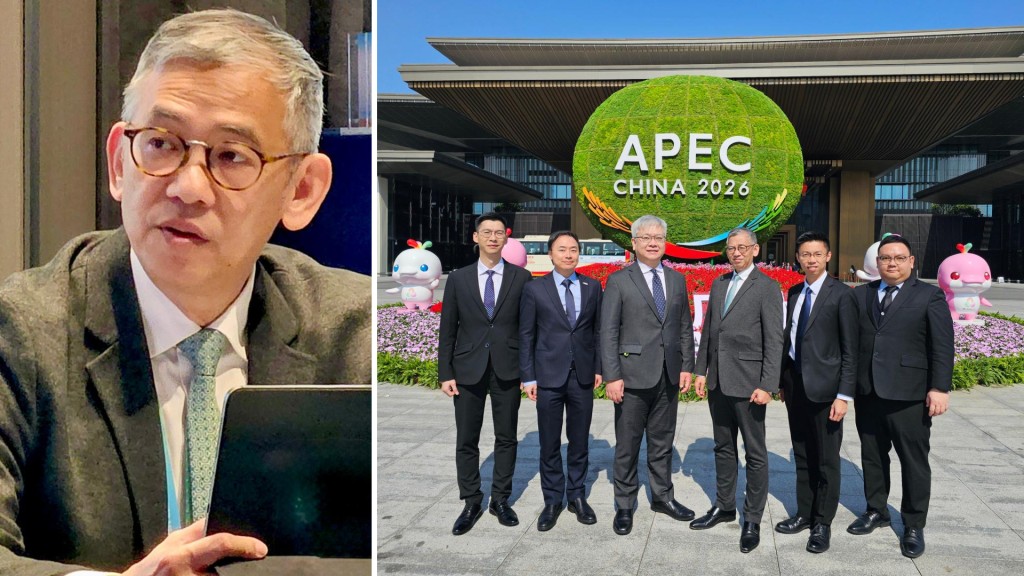
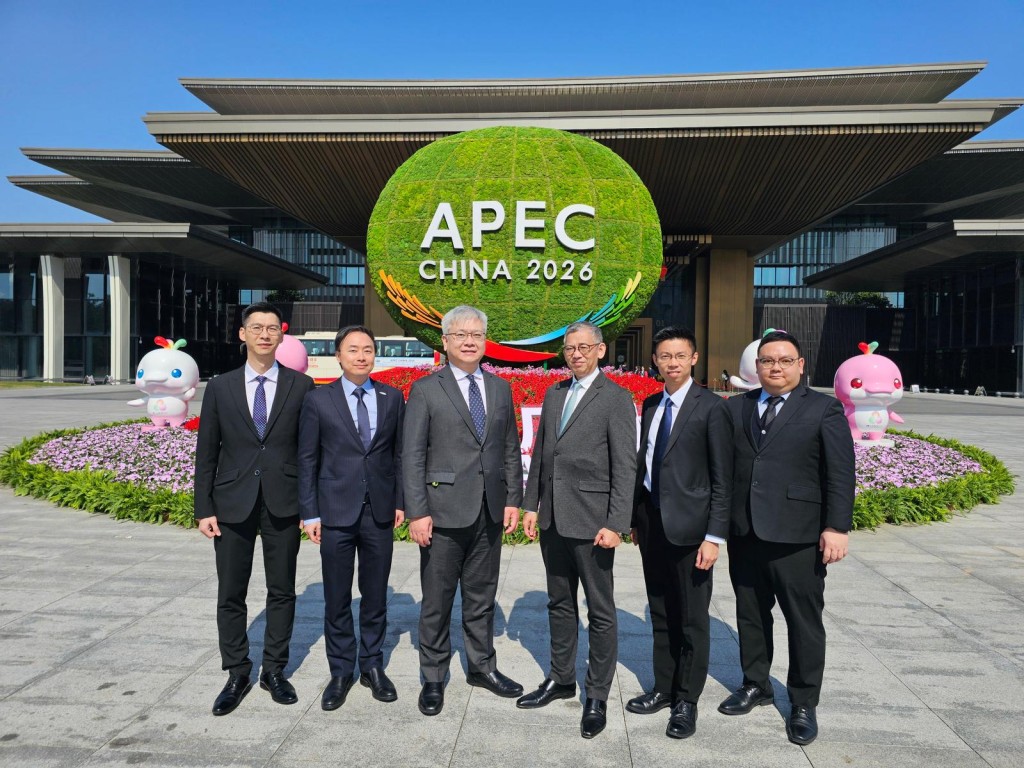
A delegation of the Independent Commission Against Corruption has attended Asia-Pacific Economic Cooperation anti-corruption meetings in Guangzhou to reinforce international cooperation in the fight against graft.
The ICAC said it will focus on the three priorities outlined by APEC – openness, innovation, and cooperation – to support the country’s vision of “Building an Asia-Pacific Community to Prosper Together.”
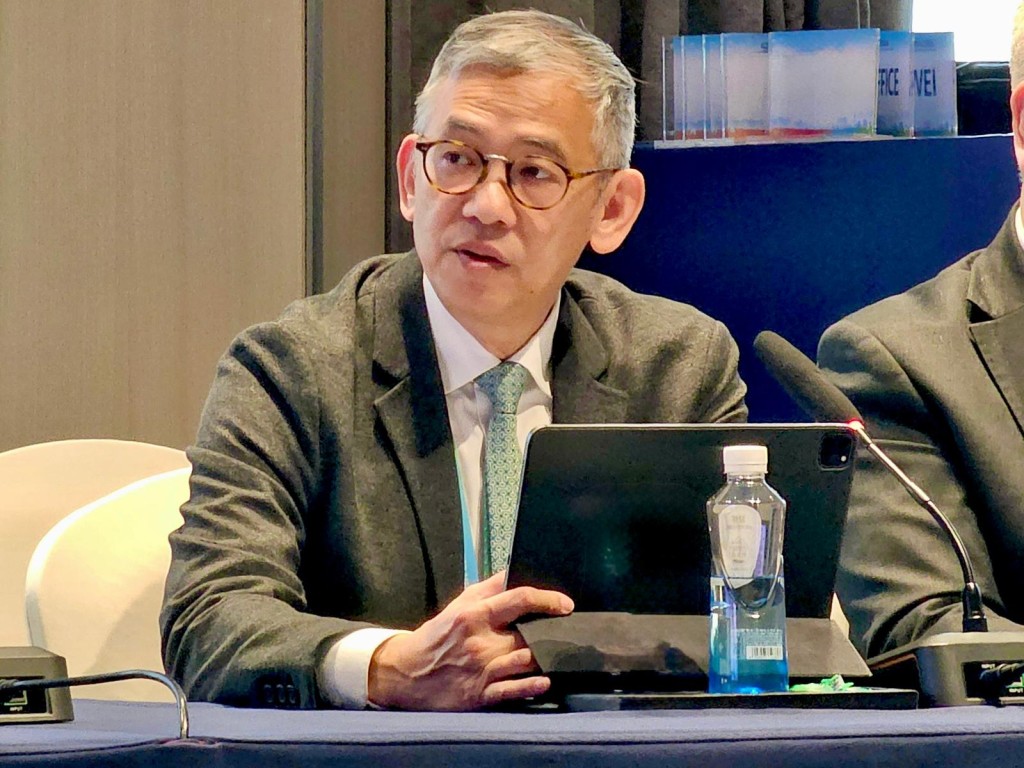
ICAC Commissioner Woo Ying-ming, who led the delegation, said yesterday that China, as host of APEC 2026, will organize a series of high-level conferences, showcasing its influential role in the Asia-Pacific region.
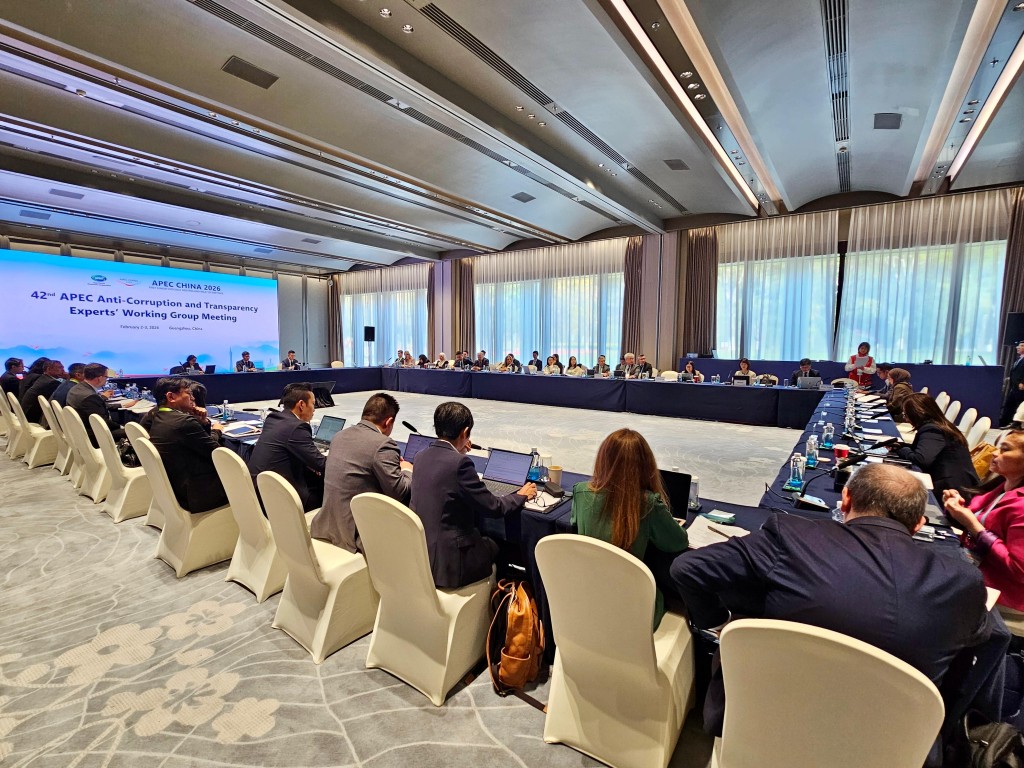
The current meetings, the first APEC anti-corruption thematic event during the APEC “China Year,” have drawn representatives from nearly all member economies.
Woo notes that the Commission will implement the Beijing Declaration on Fighting Corruption objectives to build a clean and fair society.
Woo also exchanged insights on new anti-corruption work with law enforcement agencies from various APEC member economies, exploring future cooperation in areas such as training support to jointly enhance their capabilities.
Woo said that since the adoption of the Beijing Declaration on Fighting Corruption in 2014, the ICAC has been effectively implementing its objectives.
By partnering strategically with the United Nations Office on Drugs and Crime, the ICAC has co-organized initiatives such as the “Coding4Integrity” hackathon, professional development programs, and the joint compilation of a guide on corruption risk management in prison systems.
The ICAC has also entered into a number of memoranda of understanding with counterpart agencies in different jurisdictions to strengthen anti-corruption cooperation.
“The ICAC will continue to deepen regional anti-corruption ties and capitalize on the unique advantages of the ‘One Country, Two Systems’ principle to implement the objectives of the declaration, building a clean and fair society,” Woo said.
The ICAC added that experience gained from the conference will help enhance Hong Kong’s local anti-corruption work and integrity promotion.
ICAC must integrate high tech to battle corruption
The ICAC sent several senior investigators to attend the conference, including specialists in fugitive recovery and asset recovery.
They shared new technological approaches for corruption prevention and investigation, such as using big data to analyze criminal methods and patterns.
Officers also exchanged views on applying artificial intelligence to track financial flows and combat corruption offenses involving cryptocurrency.
Woo described today’s anti-corruption work as “often a battle between anti-corruption elites and high-tech criminals.”
To counter constantly evolving criminal methods, the ICAC must integrate cutting-edge technology and continue learning new techniques, he said.
He stressed that one of the most effective ways to learn is through “face-to-face” exchanges with law enforcement officers from different countries at international conferences.
Such exchanges allow officers to obtain first-hand information on emerging criminal methods and jointly discuss response strategies, thereby enhancing global anti-corruption governance capabilities, he added.
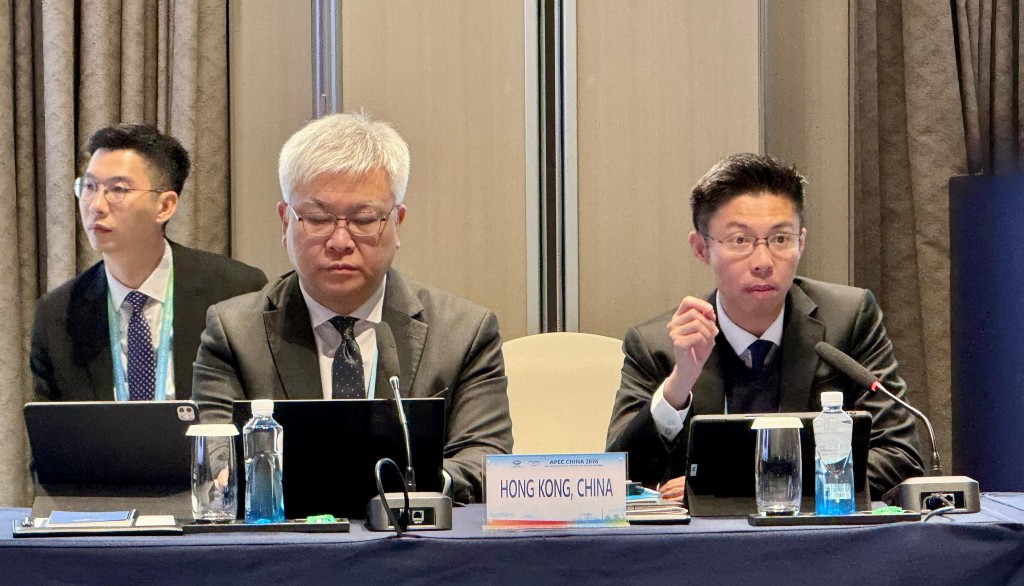
Woo was accompanied by the Director of Investigation (Private Sector) of the Operations Department Bryan Chong Ka-lok and other ICAC officers at the meetings.
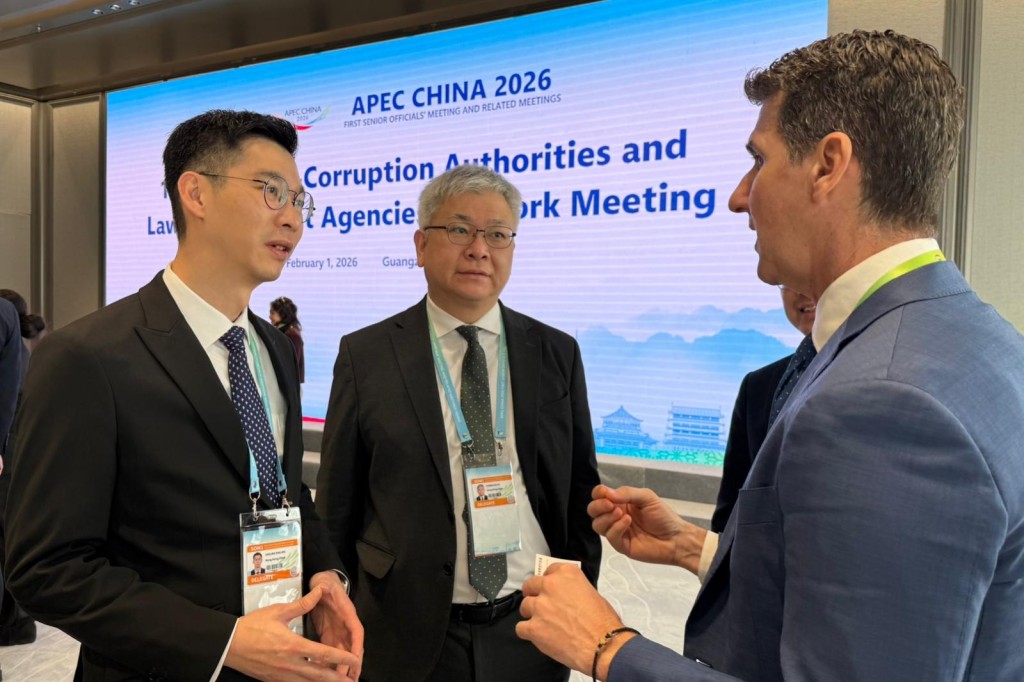
Bryan Chong Ka-lok and ICAC representative (centre and left) share experience with participants.
The first APEC anti-corruption thematic event has drawn representatives from nearly all member economies.