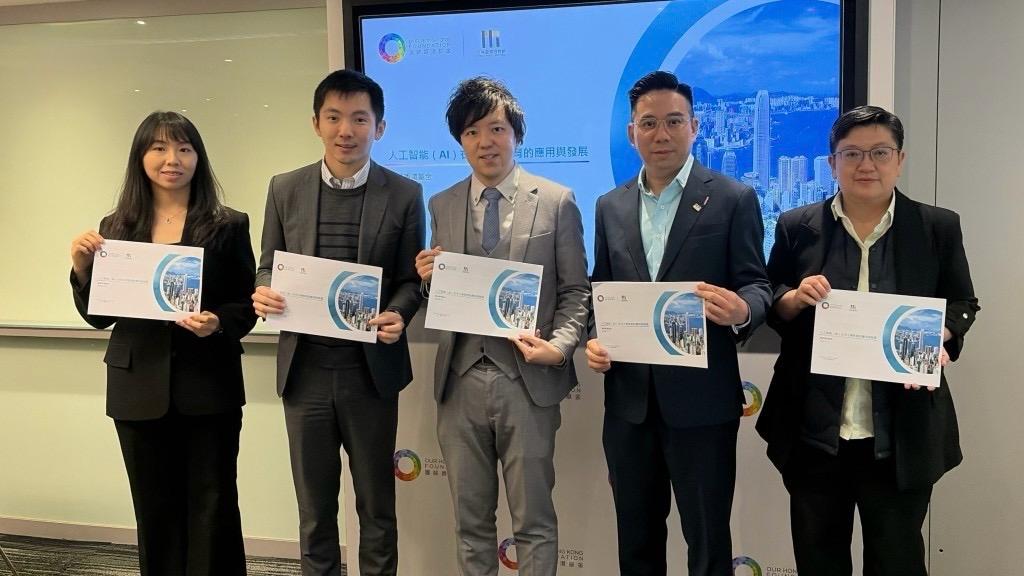
Teachers in Hong Kong are struggling to keep pace with their students when it comes to AI proficiency, according to a new survey by Our Hong Kong Foundation.
The survey of 1,200 primary and secondary school principals, teachers, and students, conducted through questionnaires and interviews from July to December last year, found that educators rated their AI proficiency at just 5 out of 10, while students assessed themselves at 6.5.
It also found that over 91 percent of teachers used AI tools, with 57 percent of them utilizing AI as teaching support and 26 percent for administrative tasks.
More than 95 percent of students used AI, with 35 percent for searching information and 29 percent for completing homework and projects.
Despite the widespread use of AI in education, the survey revealed that teachers are generally concerned about students’ overreliance on AI.
Specifically, 71 percent worry it will undermine students’ problem-solving skills, and 63 percent fear it will impact students’ critical thinking.
Additionally, nearly 23 percent of students said they would find it difficult to finish homework without AI assistance.
Researcher Kynita Wong highlighted growing student dependence on AI, which risks undermining independent learning.
She cited overseas studies showing excessive use can cause cognitive regression and “cognitive debt”—where quick answers replace deep understanding, potentially reducing long-term learning efficiency.
Deputy research director Victor Kwok Hoi-kit noted many teachers now avoid home-written assignments due to fears students will secretly generate flawless AI work, missing the thinking process.
He argued that banning AI is impractical; instead, teachers should guide proper use to maintain learning objectives and improve efficiency.
Kwok welcomed the Education Bureau’s upcoming AI framework and suggested it specify how teachers can integrate AI in lessons, as well as when and how students may use it.
Meanwhile, the foundation pointed out that the current AI literacy program in Hong Kong only covers junior secondary levels.
While the Enriched Module on Coding Education for Upper Primary Level teaches algorithmic thinking, its focus on programming is not directly related to AI.
It recommends introducing AI education from lower primary, with stage-appropriate frameworks to build literacy, ethical awareness, critical thinking, problem-solving, and creativity.
The group also warned that schools independently adopting AI tools lead to duplicated purchases and wasted resources, while fragmented student data across platforms raises security concerns.
It proposed building a citywide AI learning resource platform on Hong Kong Education City (EdCity), developed with input from principals and teachers, to streamline resource use and enhance teaching strategies.