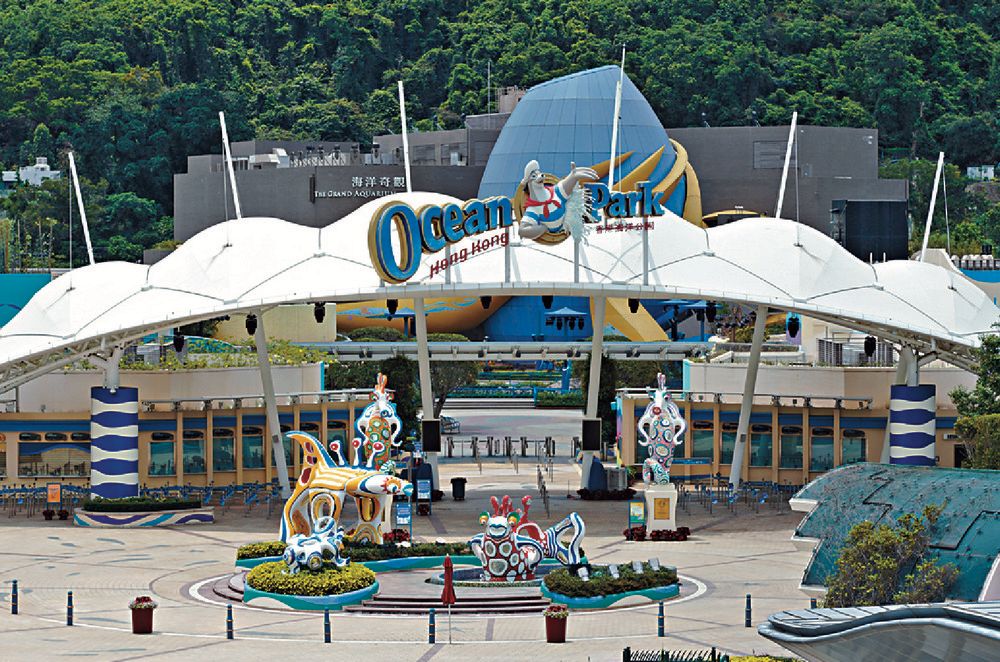
Ocean Park reported a year-on-year increase of over 20 percent in overseas visitors from December to February, with visitors from the United Kingdom, the United States, and Australia increasing by nearly 60 percent combined, while mainland Chinese visitors grew by around 15 percent.
Regarding local visitors, the park stated that although the Lunar New Year holiday saw a significant decrease, visitor numbers rebounded noticeably this month. Since March, local visitor numbers have already surpassed those of the same period last year.
Furthermore, the park is committed to promoting cross-border education and study tours within the Greater Bay Area. The number of student visitors in study tour groups in the first three months of this year increased by about 10 percent. The students primarily come from Guangdong, including Shenzhen and Shantou, with some also from cities like Shanghai.
Ocean Park also stated that since introducing artificial intelligence (AI) technology early last year, it has achieved a series of breakthroughs in animal conservation and research.
Through a machine learning system that can accurately identify individual differences and track complex behavioral patterns, the park conducts 24/7 monitoring of the giant pandas An An and Ke Ke, as well as the Sichuan golden monkey family.
Ocean Park stated that the three-level analysis developed by its team has shown outstanding performance. The basic level achieves 95 percent accuracy in individual identification, whereas the core level uses a temporal neural network to annotate social behaviors such as grooming, and the decisive layer achieves an even higher accuracy of 87 percent in predicting breeding cycles.
Ocean Park will open its real animal dataset to schools in Hong Kong to support students in designing AI research projects. The developed pre-trained models will contribute to STEM education, covering 10 percent of research teams in Shenzhen, Shanghai, and other areas.