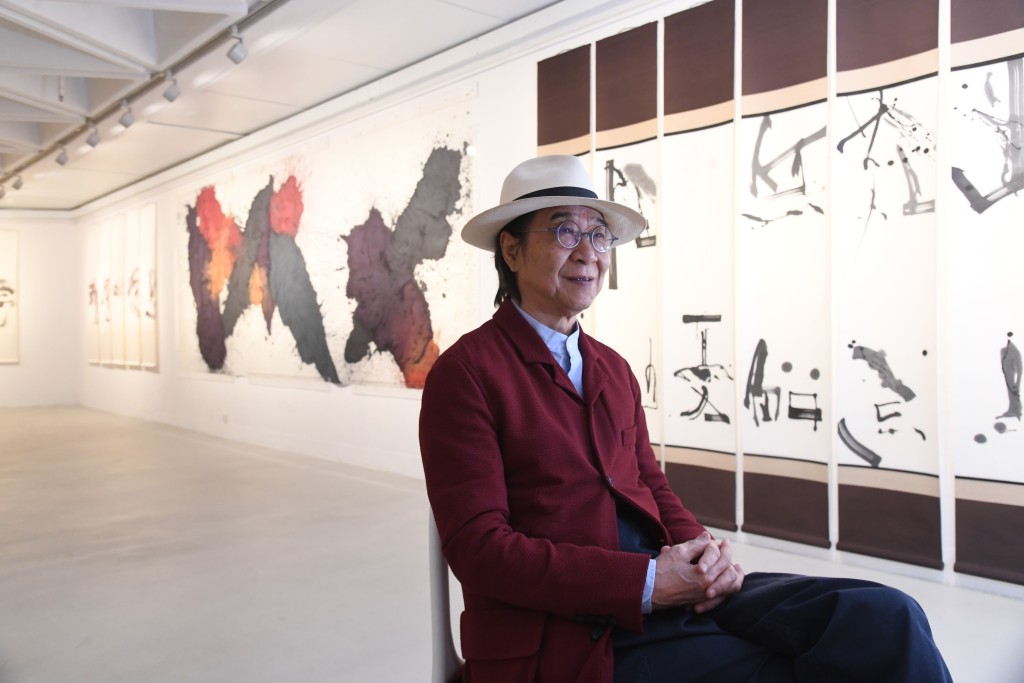
Transforming the essence of Chinese philosophy into tangible art through the nature-inspired medium of ice, Hong Kong interdisciplinary artist David Chan Tsze-wei has explored the interplay between life and nature as he believes “a good artist is a philosopher, which is different from an artisan.”
His captivating work weaves together diverse experiences in television, film and calligraphy, inviting the viewers to reflect on the beauty of existence in his solo exhibition “Do You Know – David Chan – Do You Know” at Hong Kong Arts Centre’s Pao Galleries, featuring a collection of works highlighting his 50 years of artistic evolution.
“Do not force answers; let everything follow its destined path,” Chan shares, a philosophy that resonates deeply in ice painting, a self-created method rooted in nature and spontaneity that reminds us how art can flourish wherever inspiration leads.
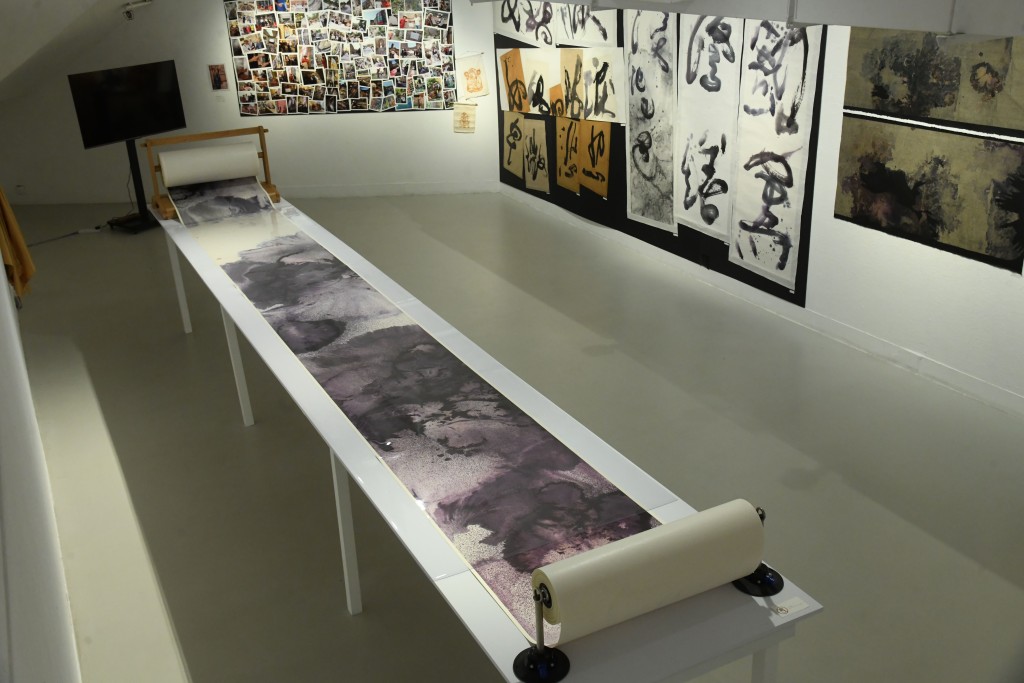
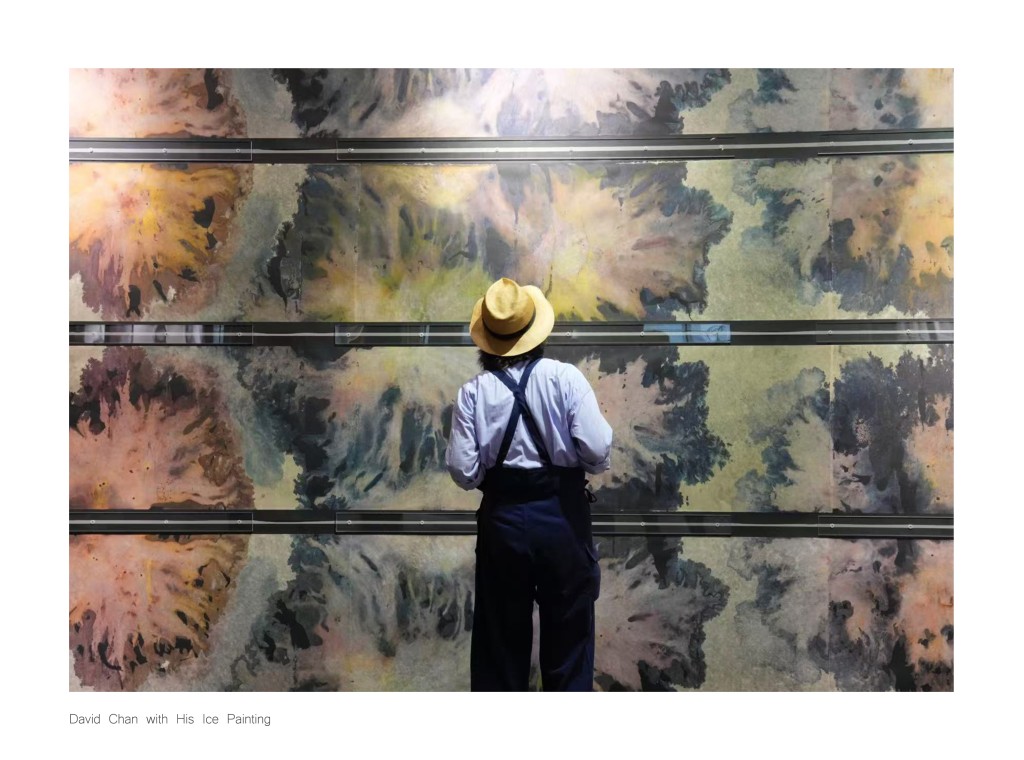
Among these, “The Tears of Nv Wa” – the mother goddess of Chinese mythology – stands out as a monumental masterpiece.
Chan has crafted “The Tears of Nv Wa,” for five years.
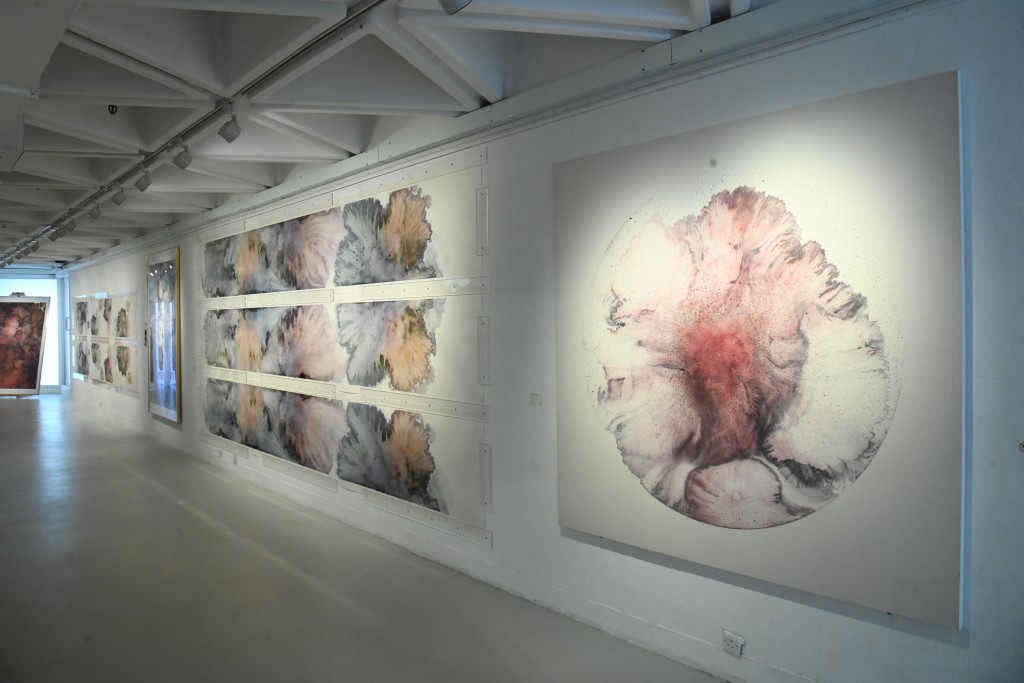
Completed in five years, the breathtaking work stretches over 100 meters, featuring abstract patterns formed by dripping of melted ice in various color tones according to Chan’s mood and hope. Kintsugi, a Japanese traditional repair method that paints the seams with powdered gold, is also applied to show wabi-sabi – the aesthetics of transience and imperfection.
Abstract art exists in contrast to the principle of “form follows function” by American architect Louis Sullivan, which Chan adhered to when he started his career as art director for television and film.
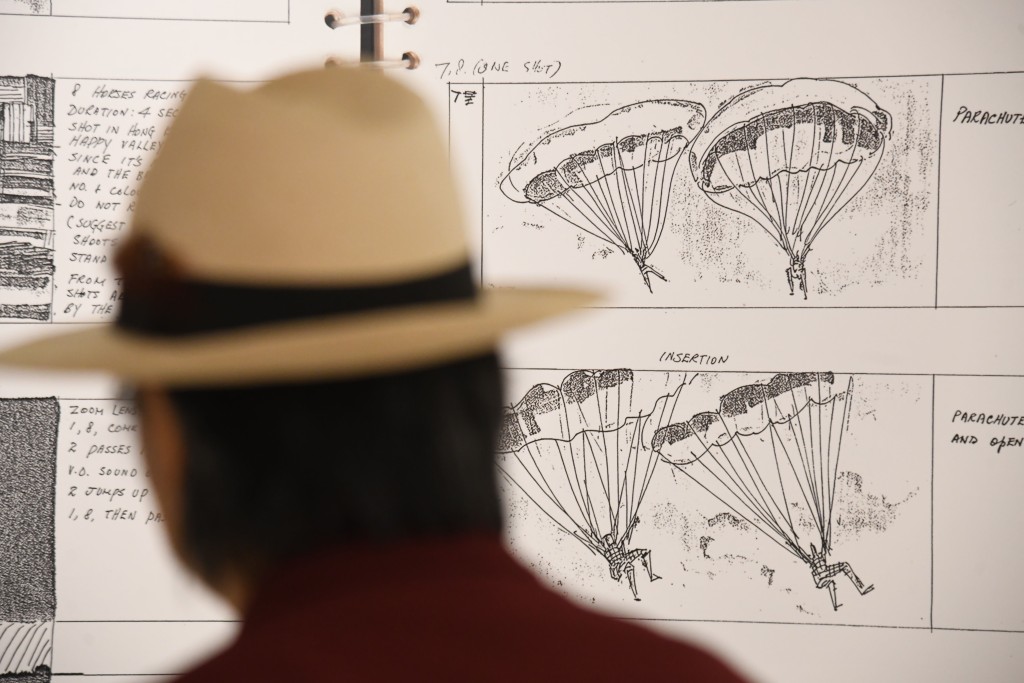
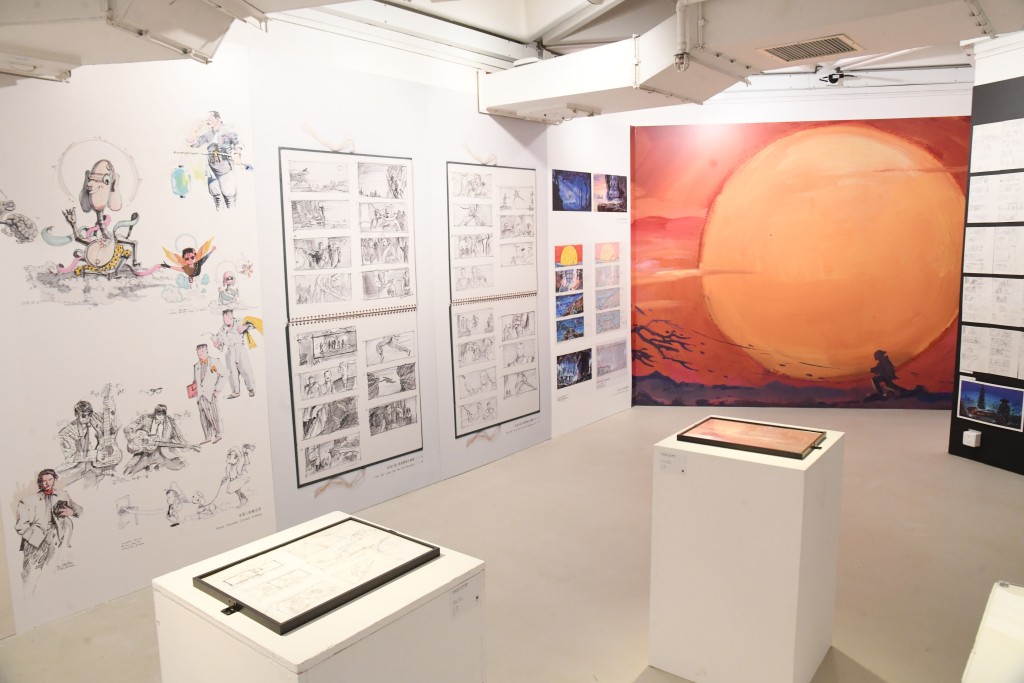
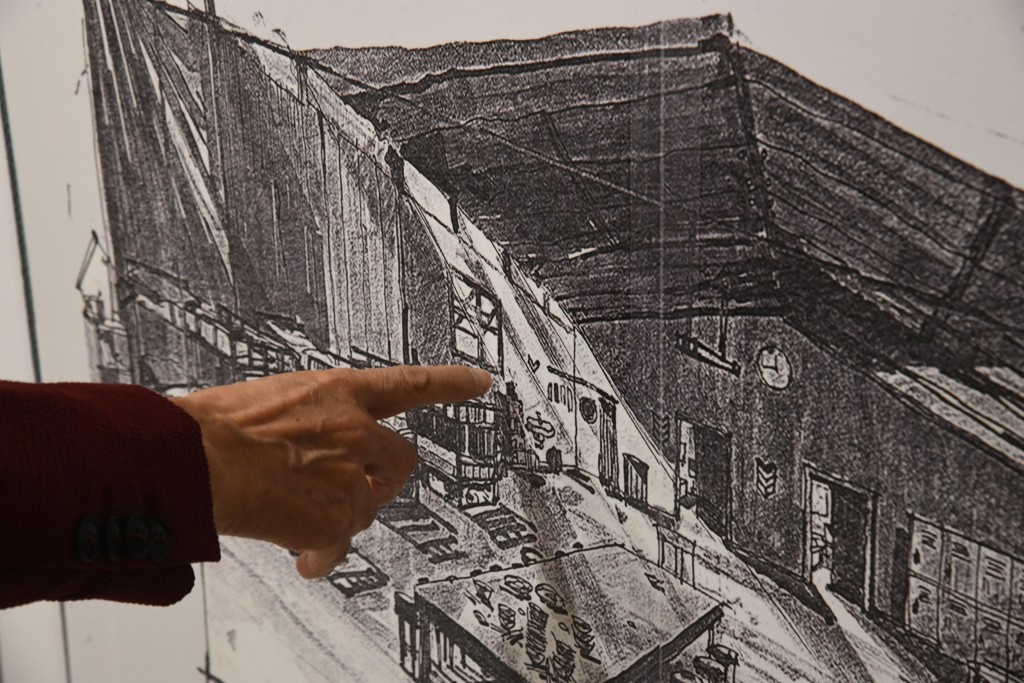
As an art director, Chan transformed written scripts into vivid storyboards, resulting in collaborations with his mentor, comedy legend Michael Hui Koon-man. Chan vividly recalled how he created the parachute scene in the Shatin horse racing course for the 1979 film “Security Unlimited.”
The parachute scene in the Shatin horse racing course for the 1979 film 'Security Unlimited.'
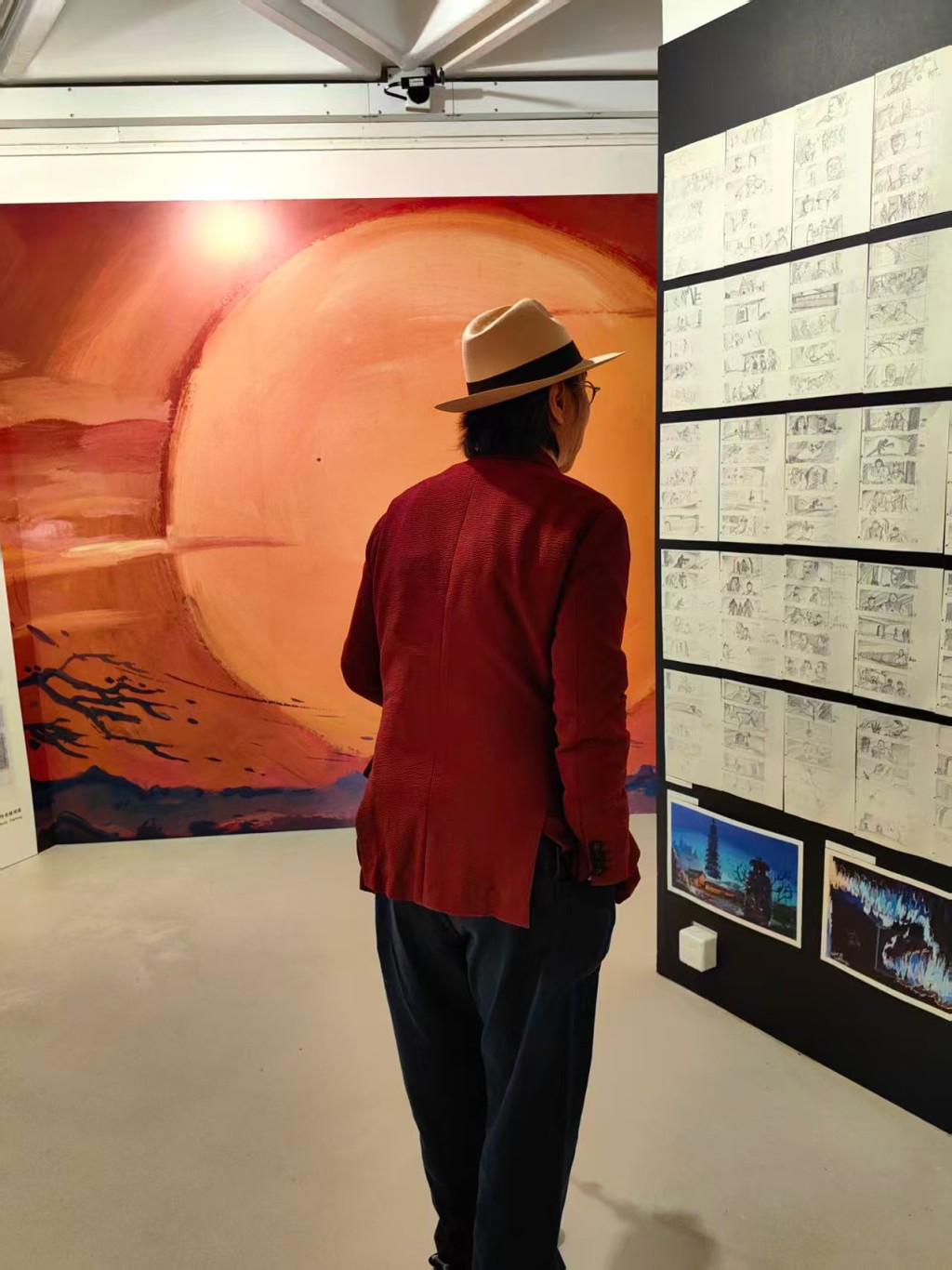
The exhibition features Chan's movie storyboards.
The set design of Michael Hui Koon-man's film 'Security Unlimited' (1979)
Chan became an art director in the 1970s.
His experience in the TV and film industry shaped his worldview, making him contemplate the impermanence of life through the lens of friends who have passed away.
“I watched as they aged and passed away, and it fills me with deep emotion,” he said, his eyes glistening with tears remembering Paul Chung Bo-law, Leslie Cheung Kwok-wing, Anita Mui Yim-fong, and Danny Chan Pak-keung – beloved artists younger than him.
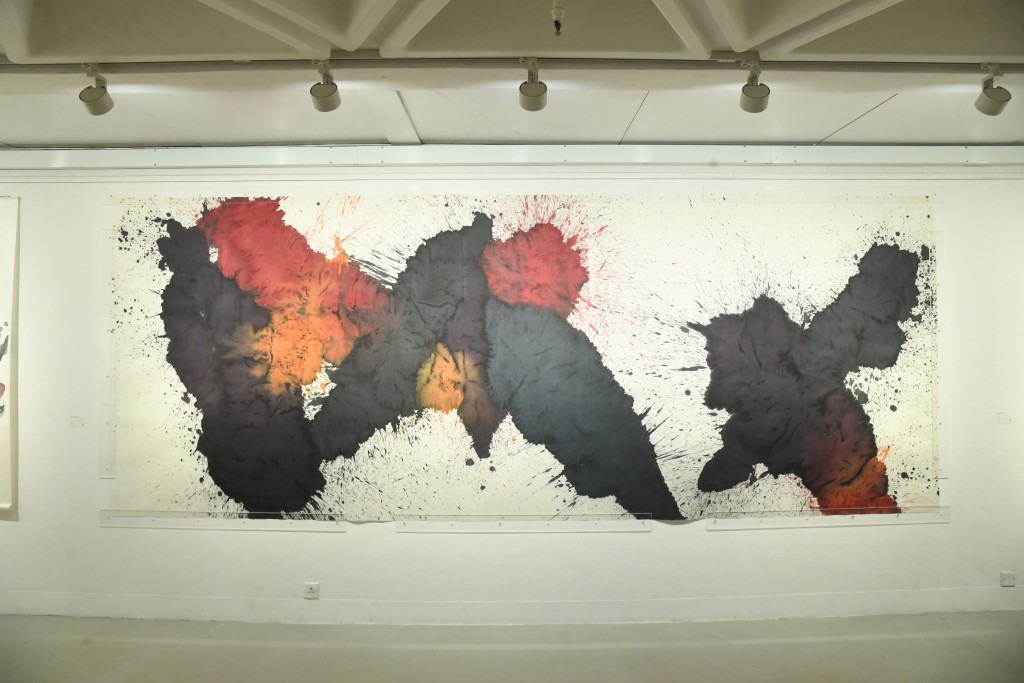
Chan’s stylistic inspirations stem from the “New Ink Movement” led by his teacher, Lui Shou-kwan, who inspired him to explore a new approach to calligraphy.
Reflections on the I-Ching, a Chinese philosophical taxonomy of the universe, also guide his life's ideology.
The teachings illuminate how to confront the ebb and flow of life and nature, suggesting a harmonious coexistence with the environment.
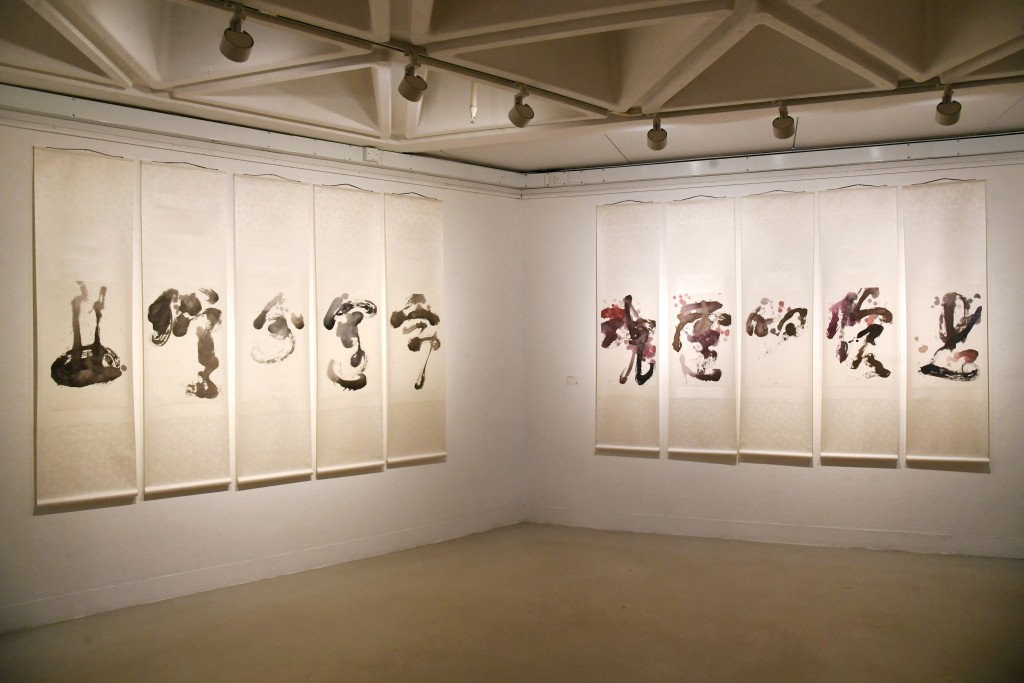
His “Sad and Miserable Soul” (2016) draws inspiration from Beethoven’s Symphony No 9, which evokes the musician’s deep emotions and the struggle for hope in the face of despair.
Chan reflected on the symphony’s rich complexity and how it resonated with his own artistic journey.
In 2017, Chan launched his Love and Peace calligraphy tour, creating a bridge of understanding and compassion in a world filled with chaos and uncertainty.
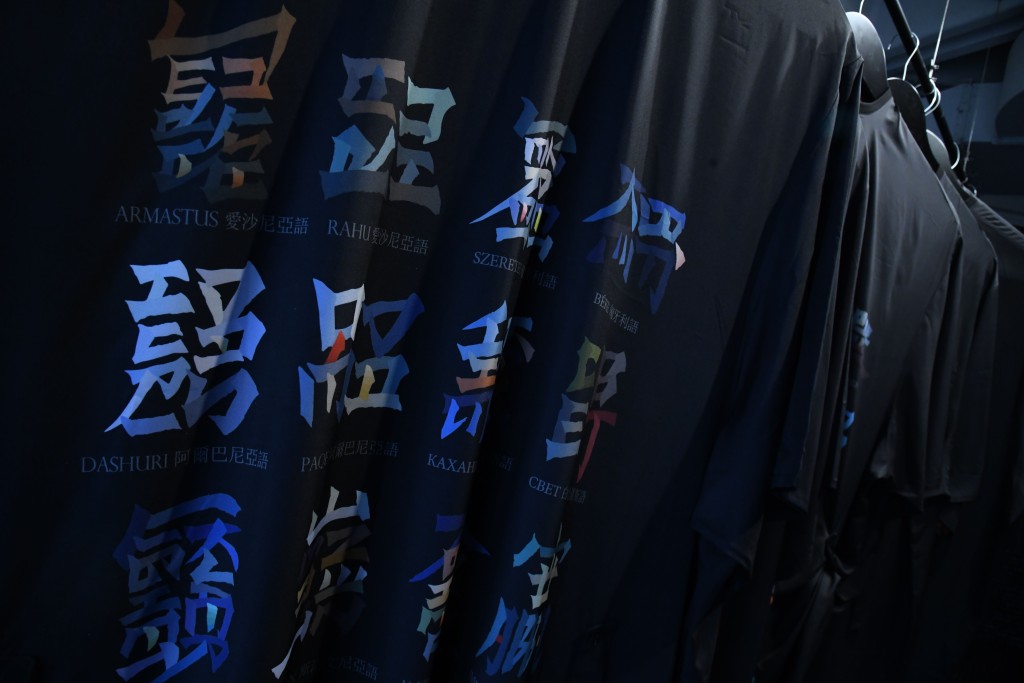
In 160 languages – including English, Russian, Hebrew, and Arabic – he depicted the word “Love” and“Peace”in the style of Chinese calligraphy, manifesting humanity's interconnectedness and the myriad ways we express affection.
“Sad and Miserable Soul” (2016) (right) is among David Chan’s iconic calligraphies.
Chan uses 160 languages to depict “Love” and “Peace”in Chinese calligraphy style.
Love in Chinese and PAIX (peace) in French (2018)
Chan's ice paintings
“Words of most languages are composed of alphabets written horizontally, whereas Chinese characters are in pictogram forms, which encourages deeper thought,” he said.
During the Covid-19 lockdown, Chan felt trapped, being unable to embark on his calligraphy tour. But he found inspiration in the natural process of ice melting and reforming, recalling the beautiful scenes from Alaska’s glaciers.
Letting nature take over 70 percent of the process while keeping 30 percent in his control, he mixes and freezes colors into blocks, hanging them like ice pops.
As they melt, the colors drip and blend on the canvas, forming unexpected patterns that echo nature's beauty.
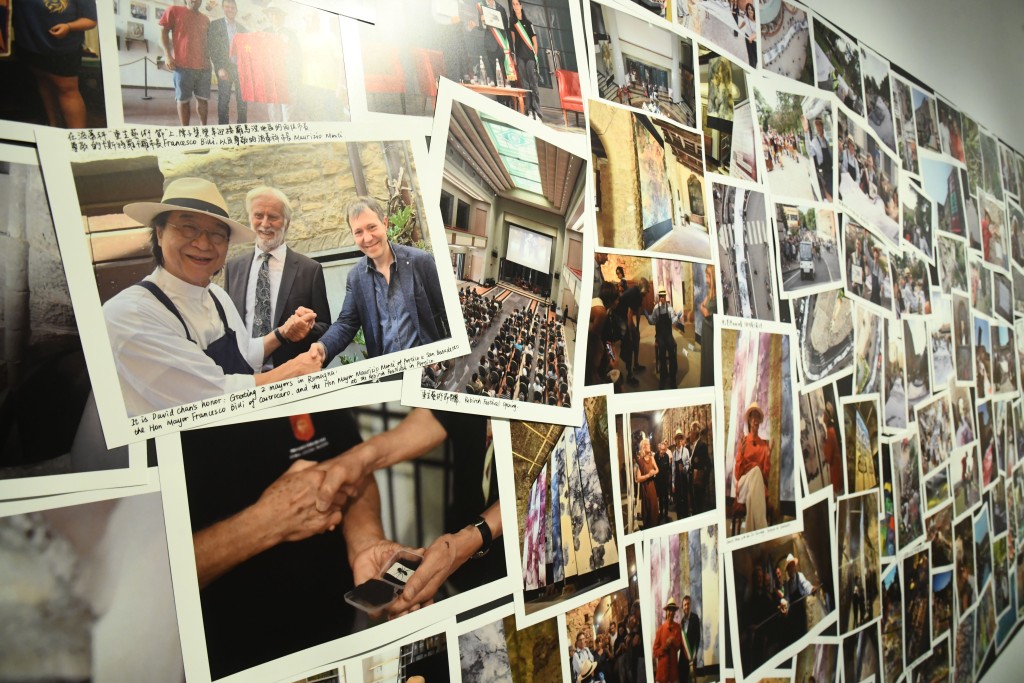
Chan’s unique technique gained recognition in Romagna, Italy, where he held an exhibition and conducted workshops as part of the“Rebirth Festival”honoring Chan that were widely welcomed by local residents.
Chan’s works were widely recognized in Italy.
His approach was also embraced by Italian artist Andrea Bandini, who created a stunning banner displayed at Fortezza di Castrocaro in October.
“I used to do calligraphy, requiring strong control,” Chan said. “Now, with ice painting, it’s the opposite. When faced with nature and reality, how much can we truly control? The answer is: very little.”
winona.cheung@singtaonewscorp.com