A newly surfaced air traffic control recording has revealed that the Turkish-operated Emirates cargo plane, which crashed into the sea at Hong Kong International Airport on Monday, made no distress call before the accident and stopped responding entirely after impact.
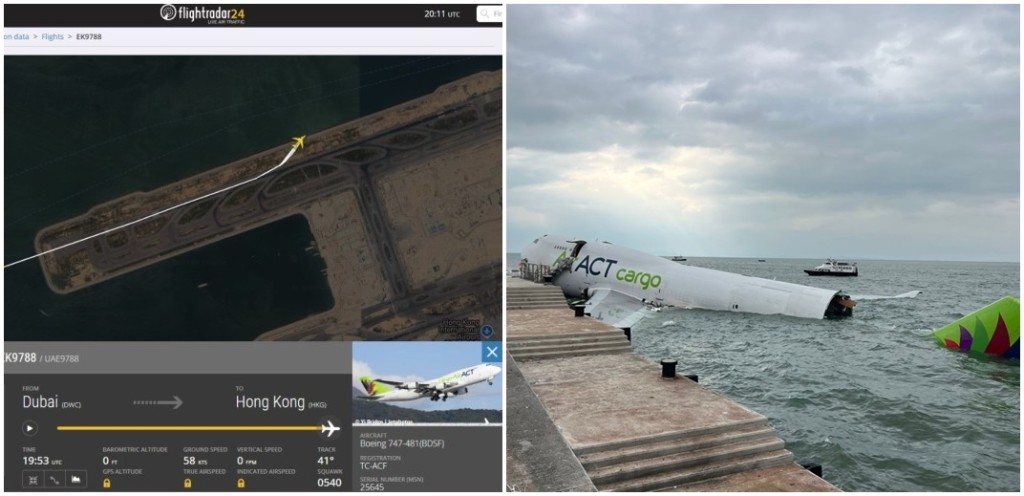
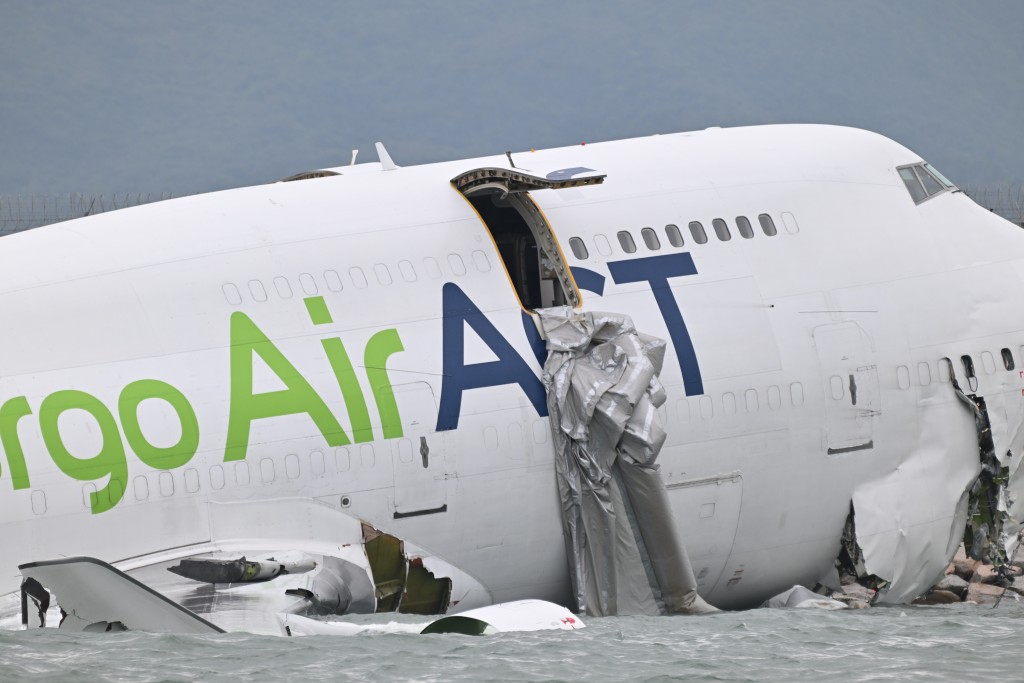
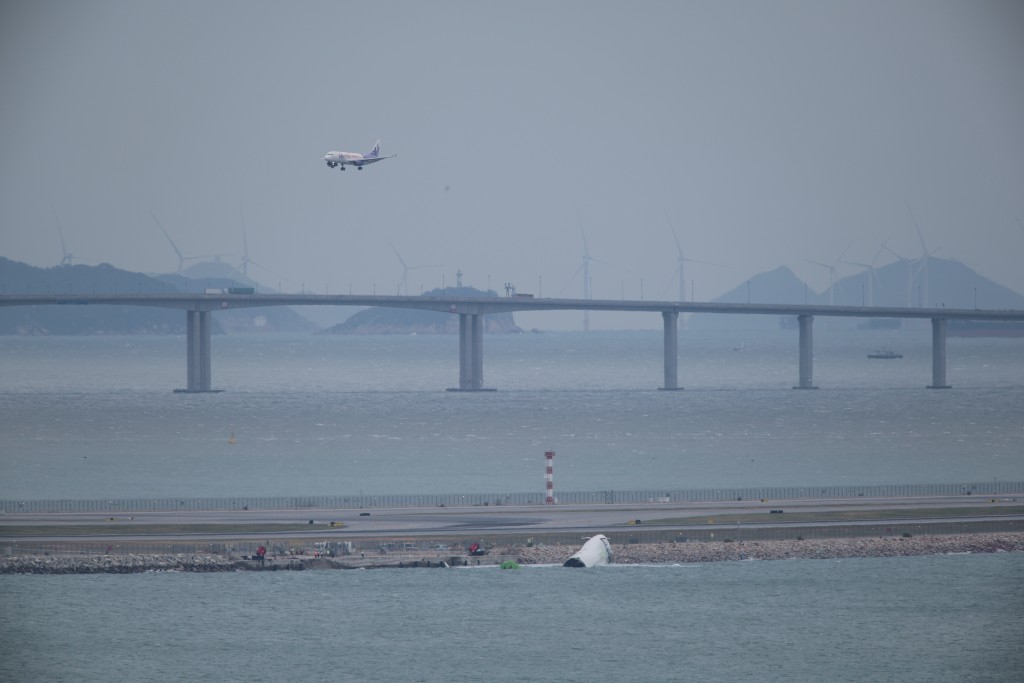
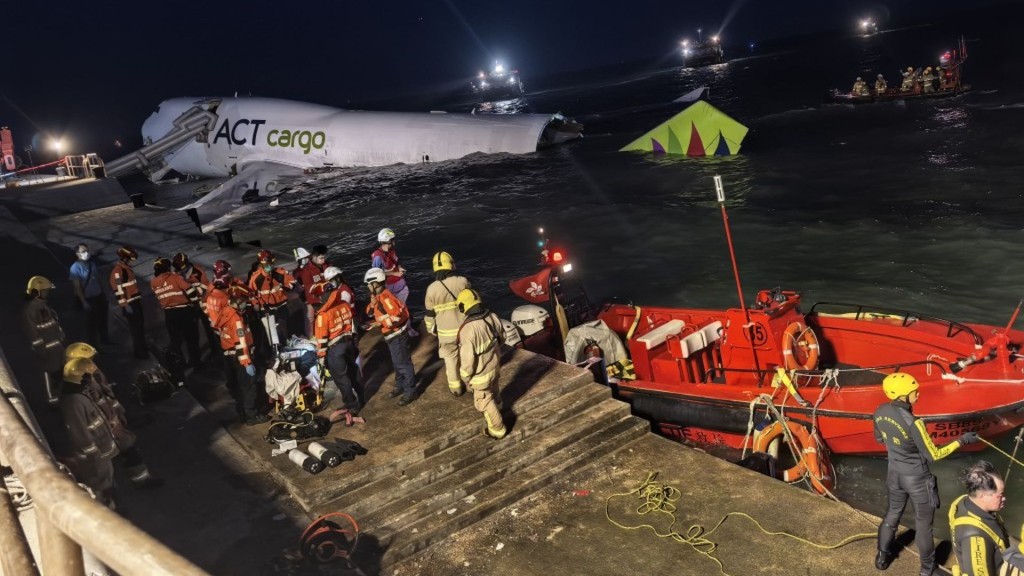
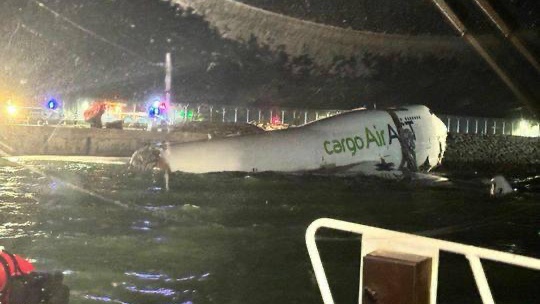
The Boeing 747-400 freighter, flight number UAE9788/EK9788, was arriving from Dubai when it landed on the airport’s north runway (07L) shortly before 4am and suddenly veered left off the runway, breaking through a perimeter fence and striking a patrol vehicle.
The patrol car, carrying two Airport Authority security staff, was thrown into the sea along with the plane. Both staff members were killed.
According to the circulating radio transcript, the aircraft’s pilots maintained normal communication with the control tower before landing, confirming instructions to approach runway 07L via the waypoint “LIMES.”
The pilot reported descending to 11,000 feet and was told to maintain speed while turning left toward the final approach path. No emergency signal or request for assistance was made.
After the plane touched down, communication ceased. The tower attempted to contact the crew after the incident but received no response.
The recording also captures the control tower’s swift response as the crash unfolded. Moments after the aircraft veered off the runway, air traffic controllers urgently instructed nearby planes to hold in the designated airspace and delay landing.
A Cathay Pacific flight from Toronto (CX829) was told to circle at 13,000 feet after the controller announced, “We just had an accident at runway 07L and no landing is accepted at the moment. How long can you hold?” The controller later added, “I think we won’t be open for up to 20 minutes at this moment. Affirm, holding undetermined.”
Several incoming flights, including Cathay Pacific flight CX883 from Los Angeles, Scoot flight TR960 from Singapore, and Hong Kong Express flight UO623 from Tokyo, were forced to hold before being redirected to the south runway (07R).
Wesley Yung-wing-lok, Chief Air Traffic Control Officer (Technical and Development), said yesterday that five arriving and one departing flights were delayed by between five and fifteen minutes as a result.
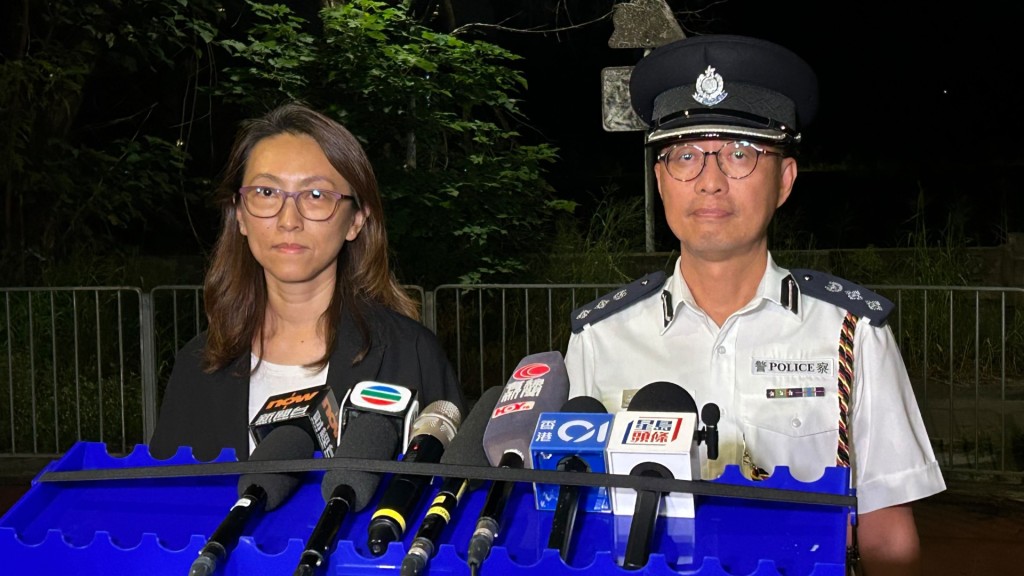
Airport Authority executive director of airport operations Steven Yiu Siu-chung confirmed at a press briefing today that both weather and runway conditions were suitable for landing.
He said the pilot received correct clearance to land and did not report any mechanical issues or request assistance.
“After the accident occurred, the control tower made repeated contact attempts with the cockpit, but there was no response,” Yiu said.
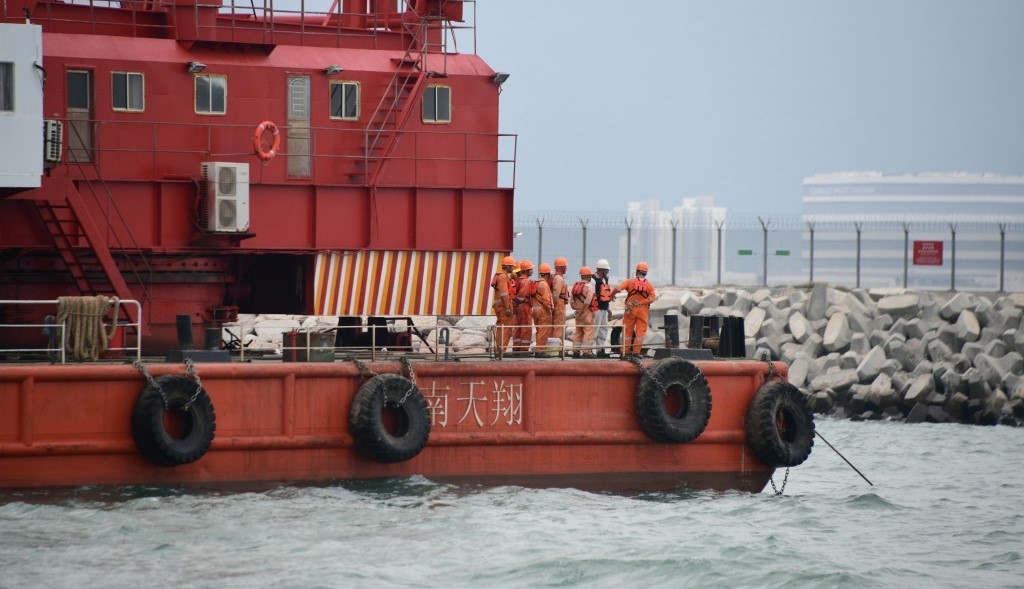
He added that repair work on the north runway was completed by 7am this morning and that the runway is expected to reopen at noon, though only as a backup due to recovery work near the wreckage. The aircraft’s black box has been located in the tail section but has yet to be retrieved.
The ill-fated freighter was operated by Turkey’s Air ACT Airlines under a wet lease agreement with Emirates. Registered as TC-ACF, the 32-year-old Boeing 747-481 (BDSF) was not carrying cargo at the time.
Onboard were four Turkish crew members — the captain, first officer, loadmaster, and maintenance engineer — all of whom survived and are receiving medical attention.
In a statement, Emirates confirmed the incident and extended condolences to the families of the two Airport Authority employees who died.
“Emirates confirms that EK9788, which sustained damage on landing in Hong Kong on 20 October 2025, was a cargo aircraft wet leased from and operated by ACT Airlines,” the airline said.
“All four crew members onboard have been confirmed safe and are receiving medical attention. Emirates extends our condolences to the families and colleagues of the two airport employees who lost their lives on the ground.”
The airline added that both Emirates and ACT Airlines are cooperating fully with investigators.