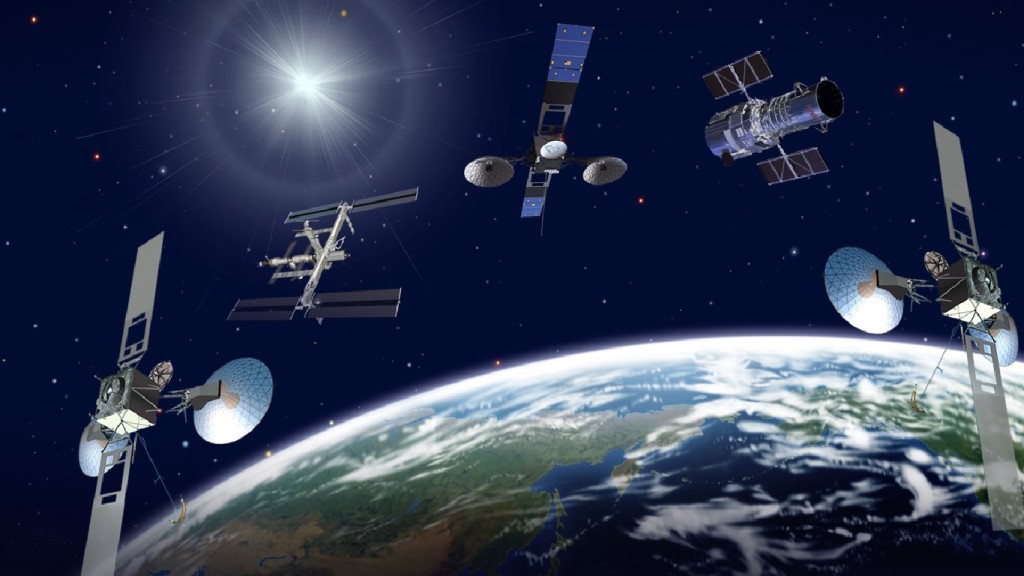
Hong Kong's Education Bureau has unveiled a revised science curriculum framework for junior secondary school students, introducing a new "Earth and Space" module that highlights China's advancements in space technology while incorporating artificial intelligence tools for interactive learning.
The updated curriculum will expose students to fundamental concepts about Earth's structure, natural resources, and space exploration, with particular emphasis on China's achievements like the Tiangong space station and manned spaceflight programs.
Students will also learn about contributions from local and national aerospace scientists in lunar sampling and deep space exploration research.
Ho Tik-shun chairman of the Science Education Committee under the Curriculum Development Council, explained that the revisions aim to cultivate patriotic values through scientific education.
He said the framework is not about teaching complex astrophysics to teenagers, but about developing basic scientific and mathematical skills through data analysis and observation, potentially inspiring future career paths in STEM fields.
The curriculum also integrates national security education elements covering data security and aviation safety, with schools encouraged to organize aerospace innovation competitions, he said.
Principal Henry Ng Wa-piu of Newman Catholic College welcomed the changes, noting students should appreciate China's recent breakthroughs in satellite technology and lunar exploration.
The revised framework also promotes digital education tools, suggesting teachers employ generative AI, personalized learning platforms, and analytics software to design interactive materials, track student progress, and identify learning difficulties.
The bureau cited AI's potential to recommend tailored learning resources and assessment methods.
However, Ng cautioned about AI's limitations.
"Teachers must educate students on information literacy since AI-generated content isn't always accurate. Used properly, it can help decipher complex scientific literature." Ng added.