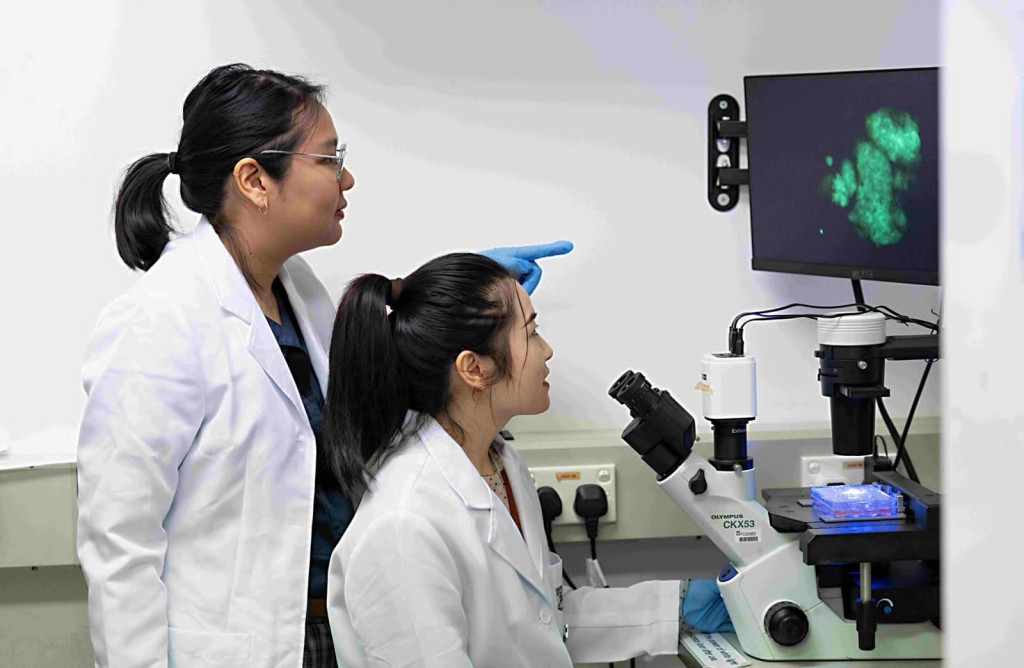
Researchers at the University of Hong Kong revived 700-million-year-old genes to generate pluripotent stem cells capable of developing into any cell type in mammals, potentially leading to new protein designs for innovative therapies.
Working with Queen Mary University of London and the Max Planck Institute for Terrestrial Microbiology, the HKUMed team used stem cell regulators SOX and POU factors — which were previously thought to exist only in animals — to recreate genes from tiny water-dwelling unicellular organisms called choanoflagellates.
They also used a “molecular time-travel machine” to reconstruct a key protein’s ancient version, called “Ur-SOX,” according to the university’s medical school.
With experimental tests, researchers found that these proteins worked similarly to those found in multicellular animals like mice, which can convert regular cells into pluripotent stem cells.
The research team stated that the discovery of these ancient SOX proteins allows scientists to find safer and more efficient ways to transform and refine cells, enabling better disease modeling, creating stem cells and guiding them into mature cells for accurate illness study and drug testing.
“‘Ur-SOX’ was a preadaptation — a ready-to-use molecular tool. This research shows how molecular tools from unicellular protists, including the reconstructed ancestral ‘Ur-SOX’ proteins, can reprogram mouse cells into pluripotent stem cells,” Ralf Jauch, associate professor in the School of Biomedical Sciences at HKUMed explained.
“This challenges the long-held belief that animal genes are unique and highlights nature’s enduring ability to inspire innovation,” he said.
(Cheng Wong)