Agencies
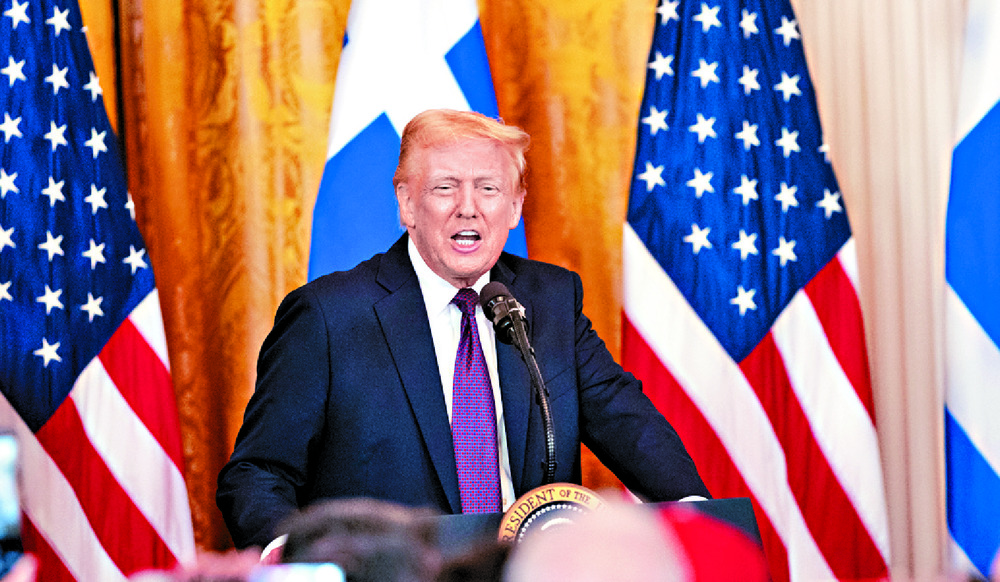
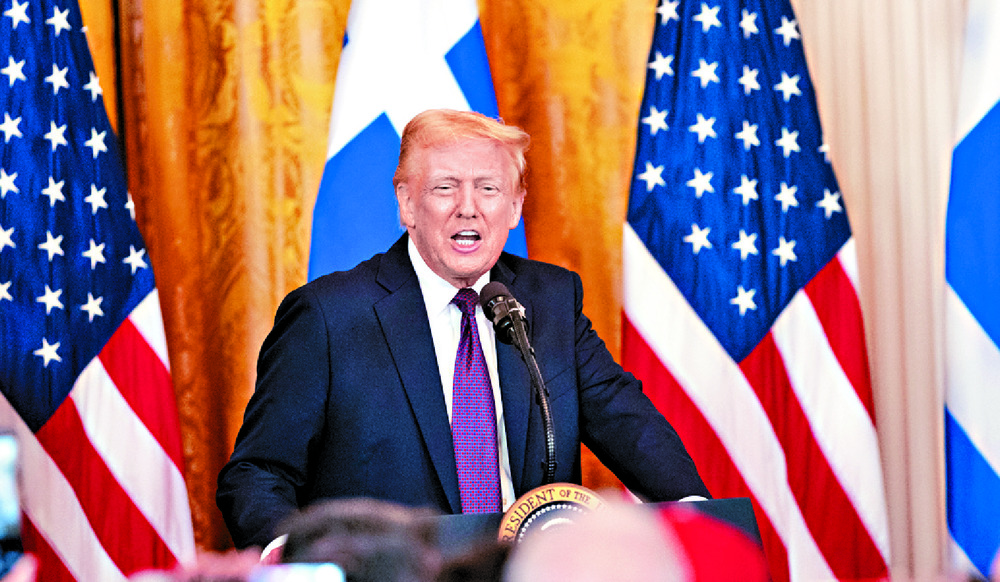
US President Donald Trump said automobile tariffs are coming soon even as he indicated that not all of his threatened levies would be imposed on April 2 and some countries may get breaks.
At the same time, Trump opened another front in a global trade war by slapping 25 percent secondary tariffs on any country that buys oil or gas from Venezuela, a directive that sent oil prices climbing.
Trump said not all the new tariffs would be announced on April 2, and that he may give "a lot of countries" breaks on tariffs, but provided no details.
Trump said the United States would impose tariffs on autos, pharmaceuticals and aluminum in "the very near future," arguing that America would need all those products in the event of wars or other problems.
The auto tariffs would come in the next few days, Trump said later in the day, adding that tariffs on lumber and semiconductor chips would follow "down the road."
Trump said the April 2 tariffs will mark a "Liberation Day" for the US economy.
They are aimed at shrinking a US$1.2 trillion (HK$ 9.36 trillion) global goods trade deficit by raising US levies to levels charged by other countries and counteracting their non-tariff trade barriers.
Meanwhile, trade of Venezuelan oil to top buyer China stalled yesterday as Trump's order caught traders and refiners in China by surprise.
They said they were waiting to see how the order would be implemented and whether Beijing will direct them to stop buying, although several industry insiders said they expect flows ultimately would continue, noting the frequent shifts in Trump's tariff threats.
China is Venezuela's largest oil buyer, directly and indirectly taking in 503,000 barrels per day of Venezuelan crude and fuel, or 55 percent of its exports, that is mostly rebranded as Malaysian after transshipment.
The Chinese foreign ministry said the country firmly opposes the move by the United States to penalize countries that buy oil and gas from Venezuela with tariffs on trade with the US.
Separately, Trump's plans to revitalize US shipbuilding are facing pushback from businesses, with retailers warning that added fees targeting Chinese-built vessels could bring higher costs and supply chain problems.
"Imports and exports would decline as a result of the higher costs of the fees, and/or the mandate to use more expensive US-built, US-operated ships," said a joint letter by two US retail associations to US Trade Representative Jamieson Greer.
While the shipbuilding sector "might see small gains over time," costs to other sectors and the broader economy would be greater, argued the National Retail Federation and Retail Industry Leaders Association.
Donald Trump says the auto tariffs will be rolled out in a few days. XINHUA