Read More







Restaurants, hotpots, coffee shops and the like have been wooing consumers with dishes and drinks priced under 10 yuan (HK$10.9), with a new breed of entrepreneurs riding what's come to be known as the 9.9-yuan wave.
Over the past two years, retailers and online marketplaces have slashed prices on everything from electric cars and electronics to coffee, clothes and cosmetics under a trend that's come to be known as "involution" in the mainland.
TROUBLE BREWING
In the food sector, coffee upstart Cotti Coffee, founded by two former Luckin Coffee executives, was one of the first to enter the battleground in February last year by offering lattes for as low 9.9 yuan, triggering a price war with Luckin, the largest coffee chain in the mainland.Others soon followed suit, with Beijing restaurant chain Nanchengxiang dishing out large breakfast buffets of rice porridge, soup and milk for just 3 yuan.
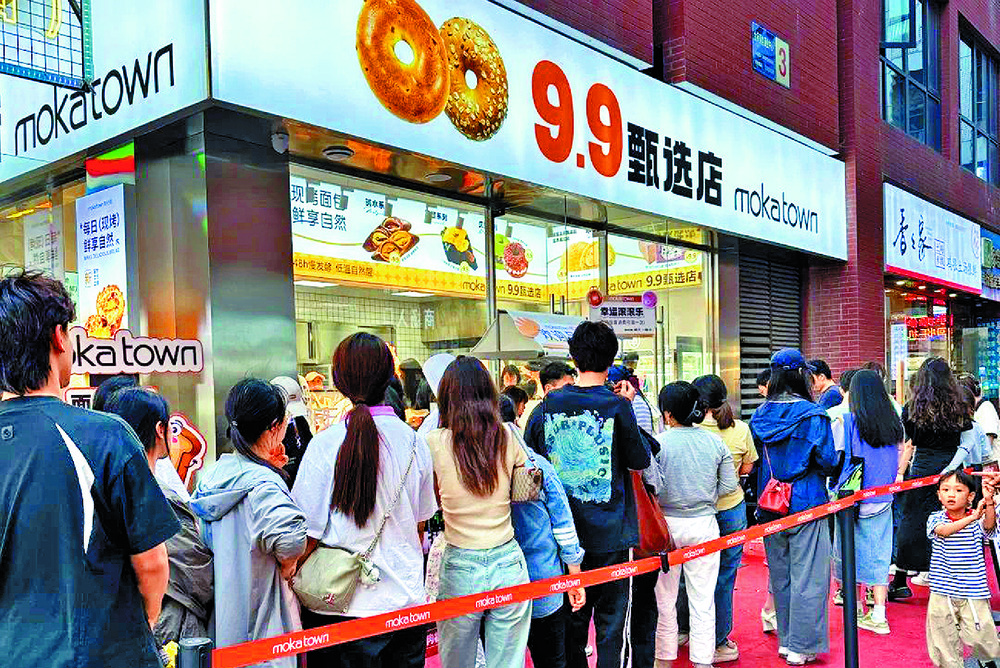
The 9.9-yuan wave has now swept across the mainland with bargains galore on milk tea, burgers, hotpot buffets and even China's most famous liquor.In May, bakery chain Mokatown unveiled a "9.9 yuan" store in Hangzhou offering pastries, bagels and croissants for that price, and over the summer Zhejiang chain Hefu Noodles slashed prices by as much as 32 percent, while Country Style Cooking said it would reduce prices back to 2008 levels.
Big guns Burger King, KFC and McDonald's have also entered the fray with 9.9 yuan and 10 yuan promotions on their meals.Bubble tea giant Sichuan Baicha Baidao (2555) is now selling three cups of tea for 26.9 yuan on food delivery platform Meituan (3690), which works out to 8.9 yuan a cup. Two years ago, this would have cost around 15 yuan.
The Cha Panda operator's interim profit has plunged 60 percent this year while its shares are 52 percent down since its trading debut earlier this year.The fiercely competitive tea market has also hit Nayuki (2150), whose customers spend above 30 yuan on average.
The milk tea chain shuttered 89 stores in the third quarter, while its shares are down nearly 54 percent this year.PROLIFERATION OF STARTUPS
Meanwhile, more entrepreneurs have been entering the fray with the number of new catering firms surging by 24 percent to more than four million in 2023.Many of them - workers who had lost their jobs and unemployed graduates - chose to open coffee, tea or ready-meals stores which don't cost much to launch and have low overheads.
Backed by government initiatives in the wake of the Covid pandemic, 347 startups won funds worth 40 billion yuan, compared to the 30 billion yuan raised in 2019 before the pandemic, according to catering industry website canyin88.com.The intense competition has left many restaurants with fewer diners while many startups have fallen by the wayside.
While the first six months of the year saw 1.35 million new catering firms registered, 1.06 million were canceled or revoked, according to corporate information platform Tianyancha.A report from Zhaimen further shows that more than 40 percent of hotpot, milk tea, Sichuan cuisine and fast-food restaurants which opened in 2023 have since closed.
BUSINESS CHALLENGESDespite the number of closures, low prices continue to plague the industry.
Profits for Beijing's caterers slumped by 89 percent in the first six months of 2024 from a year ago and profit margins also declined, data from the Beijing Statistics Bureau shows.And in Shanghai, accommodation and catering enterprises recorded losses of 770 million yuan over the same period.
Several high-end restaurants have also closed their doors this year.Notable closures in Beijing this year include acclaimed Nordic dining destination Refer, the Michelin-starred Italian restaurant Opera Bombana and Tiago.
Also, famed Taiwanese xiao long bao chain Din Tai Fung will close 32 stores in the mainland by the end of this month.Hotpot and seafood chain Jiumaojiu (9922), which saw average customer spend drop to a seven-year low of 69 yuan in the first six months of the year and its adjusted net profit plunge nearly 68 percent to 77.1 million yuan, is to close loss-making outlets and adopt more cautious approach to expansion amid the downturn.
FORMULA FOR SUCCESSSome low-cost operators, however, are thriving amid the vicious competition.
Japanese chain Saizeriya, which offers cheap Italian food, saw its net profit rise by 58 percent to a 14-year high of 8.1 billion yen (HK$413 million) for the year ended August 31, thanks to booming business in the mainland.Seventy percent of its dishes cost less than 20 yuan with soup being served for 9 yuan, tuna salad for 12 yuan and a six-inch chicken bacon pizza for 16 yuan.
To keep costs down, Saizeriya precooks its dishes at a central kitchen and distributes them to its restaurants where they are simply reheated and served.Supermarkets, too, are waging a price war.
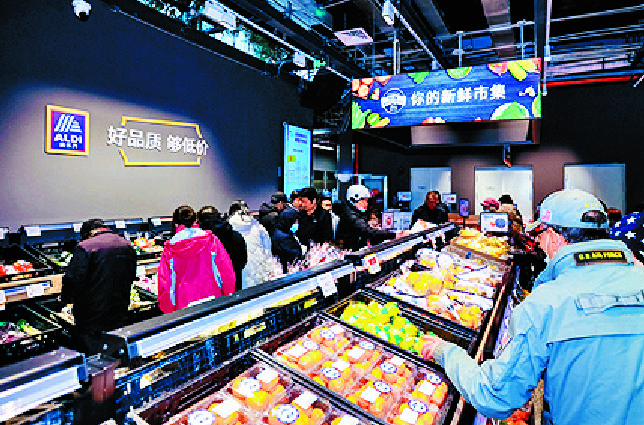
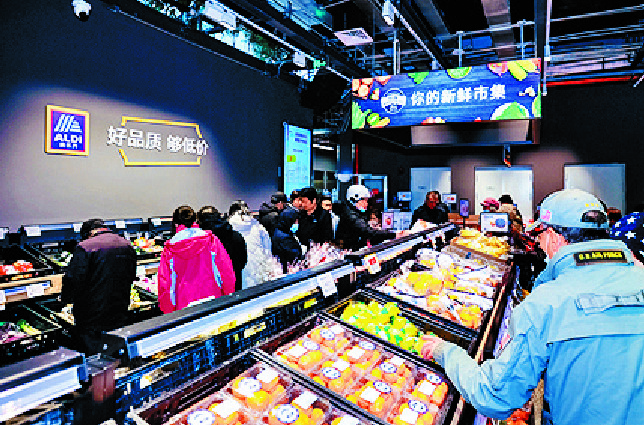
German supermarket chain Aldi recently slashed prices of around 300 items in Shanghai with more than a quarter of them - including bottles of baijiu - priced at 9.9 yuan.Ninety percent of its products and goods bear Aldi's own labels, which make more money for the discount chain than branded ones.
Also, Aldi's labor overheads are around 4 percent of total costs compared to 10 to 16 percent for traditional supermarkets, according to a report by China Merchants Securities.POSITIVES AND NEGATIVES
There's been some positive news from this month's Golden Week, with average daily dine-in consumption rising 33 percent in the first five days of the holiday over the same time last year, according to Meituan.And the recent stock market surge on the back of Beijing's stimulus has boosted valuations of some players.
Hotpot brand Haidilao (6862) has risen more than 20 percent over the past two months and is nearly 11 percent higher this year at HK$15.5, Jiumaojiu is more than 33 percent higher at HK$3.42 from two months ago, though down nearly 40 percent this year, and Yum China (9987), the operator of KFC and Pizza Hut in the mainland, is up by 28 percent in 60 days and more than 4 percent for the year, at HK$342.6.Still, thrifty consumers and weak spending keep adding to overall deflationary pressures, as falling prices lead to lower spending, lower growth and higher unemployment.
Consumer inflation unexpectedly eased last month, growing by 0.4 percent from a 0.6 percent rise in August, while producer price deflation deepened, with the producer price index falling at the fastest pace in six months, down 2.8 percent year-on-year in September, versus a 1.8 percent decline the previous month and below an expected 2.5 percent decline.In the third quarter, the economy also grew at the slowest pace - 4.6 percent - since early 2023. It is likely to expand 4.8 percent this year, undershooting its target, and growth could cool further to 4.5 percent next year, a Reuters poll shows.
Over the last few weeks, Beijing has rolled out stimulus worth several trillions of yuan for banks, the stock and property markets, and rare cash handouts for the poor to boost spending.But the bruising 9.9 yuan war is unlikely to ease anytime soon and investors should keep a close watch on how the industry is faring, when betting on food and beverage stocks.
Francis Kwok Sze-chi, vice chairman of the Hong Kong Institute of Financial Analysts and Professional Commentators, says the low-price strategy adopted by firms such as Sichuan Baicha Baidao and Yum China is pressuring their cash flows.While their shares have risen in the past month, Kwok says the increase is in large part thanks to improved market sentiment and not their business performance.
The two stocks are not good options for now, unless China's consumer market revives, he says.But he admits that retailers are being left with "no other choice but to cut prices" in the face of a tepid consumer market that's being dragged down by cost-conscious diners.