Read More


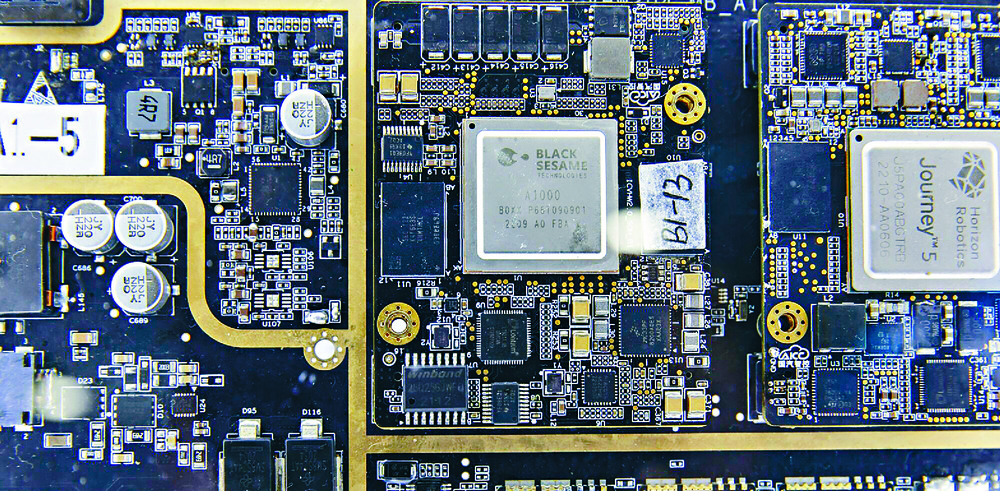
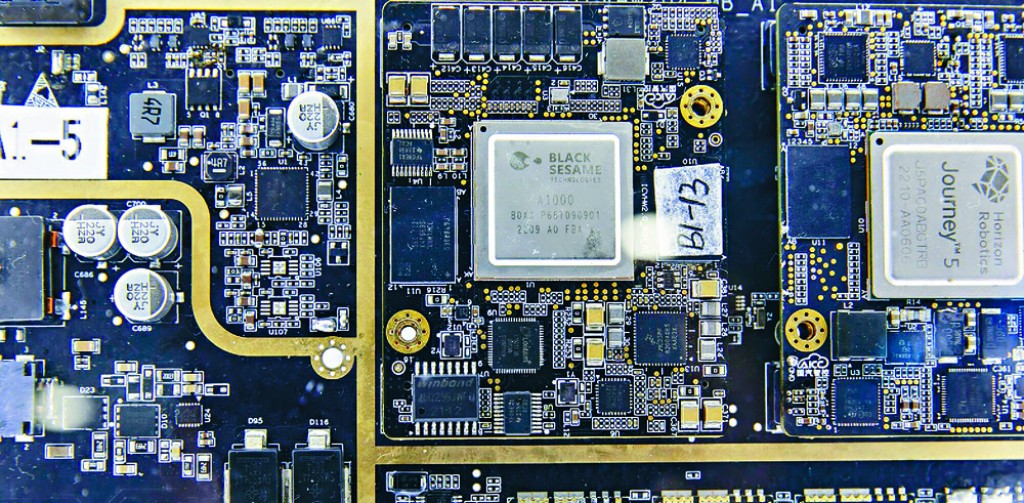
Black Sesame International, a Chinese developer of artificial intelligence chips and systems for cars, is seeking an initial public offering in Hong Kong, aiming to become the first company to list under new eased rules which lower the revenue threshold for specialist technology firms.
The challenger to Nvidia in autonomous driving is looking at raising US$200 million (HK$1.56 billion), and aims to oust the foreign giant in this segment of the domestic market by 2025.
Established in 2016, Black Sesame offers two series of high-computing chips powering autonomous driving - Huashan and Wudang - as well as the software for the chips.
The Huashan series includes three 16-nanometer chips - A1000, A1000L and A1000 Pro - with mass production of the former two launched last year.
The three are developed for Level 3 driving or lower, the highest tier of autonomous driving requiring a driver. L4 and L5 are autonomous, which means little or no human intervention and the startup is developing the A2000 to target L3 and above.
The C1200 under the Wudang series launched in April is a more advanced 7-nm chip that aims to make a breakthrough by combining the control of driving and cockpit on one single chip.
This product is also regarded as a challenge to Nvidia's 5-nm Thor which was released last year and is the most advanced version for autonomous driving developed by the US giant.
Black Sesame delivered 25,000 Huashan chips last year, and has built a partnership with 10 car manufacturers, including Geely Automobile (0175), Dongfeng Motor and the state-owned FAW Group.
The chipmaker estimates sales will exceed 100,000 units this year, a three-fold jump yearly.
Black Sesame has raised about US$700 million since its inception including more than US$500 million in two round last year, valuing it at nearly US$2 billion.
Xiaomi (1810) is among its leading investors as well as Tencent (0700).
With two products going into production last year, Black Sesame saw its revenue soar 173 percent yearly to 165.4 million yuan (HK$176.9 million), by providing autonomous chips and solutions to 89 customers in China and overseas.
However, chipmaking burns cash, with Black Sesame's net loss widening to 2.75 billion yuan last year, a 262 percent surge from 2020. Even after excluding the fair value change of financial instruments, the adjusted net loss has risen over the past three years to 700 million yuan last year.
The failure in profitability results from the huge spending in research and development, which Black Sesame spent 1.6 billion yuan in the past three years, 5.78 times the total revenue over the same period.
Black Sesame also warns that its net loss will jump "significantly" this year and the earnings will remain negative in the short term, citing the continuous investment in R&D.
Meanwhile, Black Sesame is reliant on its largest client, which accounted for over 40 percent of the startup's annual revenue for the past three years, and is suspected to be FAW, as the partnership was launched in 2019.
But the start-up believes it won't incur significant losses due to the solid partnership and the good reputation of this client.
Autonomous driving at L2 and L3 is expected to record a penetration rate of 50 percent in China by 2025 and 70 percent by 2030, which means the country might be the largest market for autonomous driving chips.
Black Sesame is the third biggest supplier in China's autonomous driving chips market with a 5.2 percent share, while Nvidia at the top spot dominates the market with a share of 81.6 percent.
Apart from the US giant, Black Sesame also needs to compete with domestic chipmakers, including startups such as Horizon Robotics and Semi Drive, and giants like Huawei. Even EV makers themselves, such as Nio (9866) and Geely, are developing their chips.
Black Sesame once predicted that there would be Chinese companies to break the domination of foreign giants and become the major suppliers of domestic carmakers in 2025, when Nvidia's advanced product Thor starts mass production as planned.
China International Capital Corporation (3908) and Huatai International are the joint sponsors of the IPO.