Read More






ImmD crackdown targets moonlighting domestic helpers arresting 17
19-05-2026 17:52 HKT

One dead, four injured in Jordan flat fire, 200 residents evacuated
22-05-2026 00:48 HKT
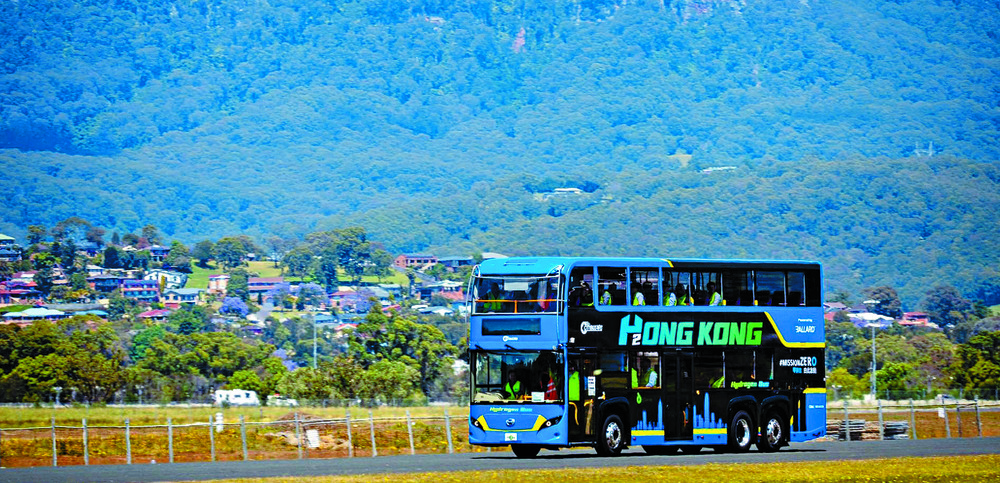
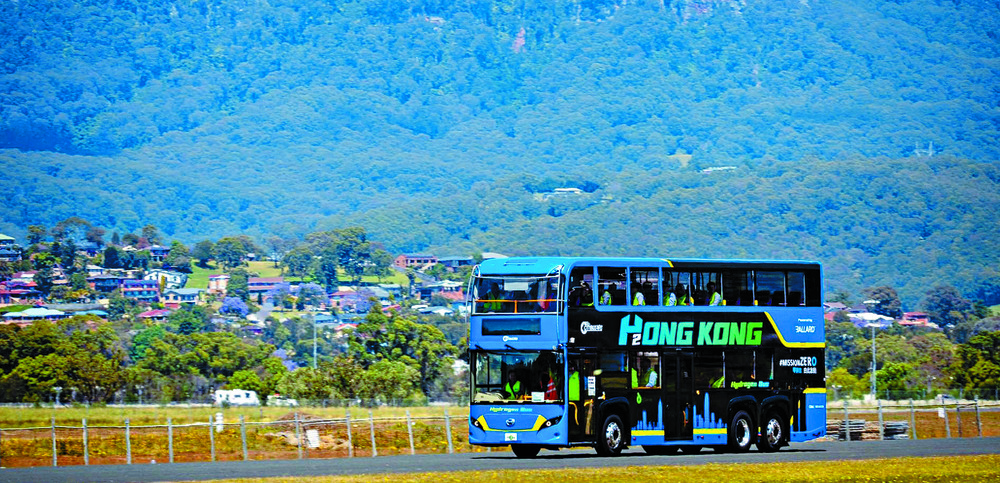
In a few weeks from now, Hong Kong's first-ever hydrogen bus in distinctive black and blue livery will hit the road, heralding the city's first steps to tap into the fuel of the future.
Emblazoned with the words "H2ongKong" and "#MissionZero," the trailblazing Citybus double-decker will no doubt turn heads as it goes about its test runs with barely a sound and only water vapor from its exhaust, cheering green activists and investors alike.
Hydrogen is being hailed as a future major source of energy for transport and heavy industry, and with nations locked in a race to become hydrogen superpowers, there are growing opportunities to invest in players across the hydrogen value chain.
The Hong Kong and China Gas Company (0003) - known as Towngas - is now able to extract hydrogen from its gas network and supply users such as Citybus through its underground pipelines.
CIMC Enric (3899), meanwhile, is building the city's first two hydrogen fuel stations in Kowloon and Hong Kong Island for the bus giant, with Citybus shareholders Templewater and Hans Energy (0554) throwing their weight behind the project, which could see no fewer than five such buses with a range of 400 kilometers launched over the next 12 months.
Also joining the hydrogen initiative are rail giant MTRC (0066), which will trial passenger-less hydrogen trains in Tuen Mun in the second half of 2024, Sinopec (HK), which aims to build a hydrogen fuel station in Yuen Long next year, and Linde HKO, which hopes to power the trains with hydrogen tube trailers.
While hydrogen is the most abundant element in the universe, it is expensive to make, not easy to store and transport, and highly flammable. Importantly, it has to be made using emissions-free renewable energy -- in a process called electrolysis that splits water into hydrogen and oxygen -- to justify its moniker as a clean, future fuel.
BloombergNEF says 500 million tonnes of emissions-free or green hydrogen a year will be needed to reach the 2050 goal, five times more than what is currently produced. But there's the rub: currently, hydrogen is made mostly though fossil fuels which generate carbon dioxide, a greenhouse gas.
There's also the danger of a glut in China, with overcapacity in electrolyser production and local governments racing ahead of their targets for green hydrogen, the cleanest of all, according to a new report from Citi Global Perspectives & Solutions.
While hydrogen stocks have had mixed fortunes this year, their future will be linked to how these challenges are overcome.
Color of choice
Color-coded nicknames describe the various ways in which hydrogen is made.
Green hydrogen is made through electrolysis with renewable energy like wind, water or solar power and is the most expensive.
Blue hydrogen is made mostly with natural gas and heated water but in a process that captures and stores carbon dioxide emissions.
Gray hydrogen uses the same process but does not capture CO2 emissions. And brown hydrogen is made with coal in a process that's not only water intensive but also generates more methane and CO2.
Though blue hydrogen has its critics, it has up to 90 and 70 percent less CO2 emissions than gray and brown hydrogen respectively.
China at the forefront
China is the world's biggest hydrogen producer and consumer, manufacturing 33 million tonnes in 2021. However, less than 0.1 percent of this is green hydrogen, according to the World Economic Forum, with most of it coming from huge fossil-fuel projects in Shangdong, Ningxia and Xinjiang.
China wants non-fossil fuels to fill a quarter of its energy needs by 2030 as part of its 2060 carbon neutral goal, and is pushing for more blue hydrogen from projects in Inner Mongolia and Shanxi which use carbon capture utilization and storage technology or CCUS.
China aims to have 20 CCUS projects by 2035, but Shenzhen-based hydrogen and fuel-cell expert Hack Heyward fears high costs could hinder the push toward to blue and green hydrogen.
Blue hydrogen costs between US$1.5 and US$2.5 (HK$11.7 and HK$19.5) per kilogram while green hydrogen can cost between US$3.5 to US$7.5, according to the International Energy Agency, while PRC Carbon Resources says blue hydrogen costs 130 percent more than brown.
But even with carbon-capture costs, Heyward points out that blue hydrogen is still cheaper than green hydrogen.
Still, China aims to produce 100,000 to 200,000 tonnes of green hydrogen a year and 50,000 hydrogen-fueled vehicles by 2025.
In June, China Petroleum and Chemical Corporation (0386) started producing green hydrogen at a US$414 million plant in western Xinjiang, as part of its energy transition. The oil giant known as Sinopec is also China's biggest producer of hydrogen, and the plant in Kuqa can produce 20,000 tonnes of hydrogen a year, using solar power to electrolyze water.
Barely a month later, Sinopec launched production at the world's largest green hydrogen project in Inner Mongolia. Costing US$830 million, it will produce 30,000 tonnes of green hydrogen and 240,000 tonnes of green oxygen yearly.
The state-backed China Hydrogen Alliance, meanwhile, forecasts green hydrogen costs will only be on par with blue hydrogen by 2030 as technology improves and demand rises, and expects green hydrogen could account for half of China's hydrogen production by 2040.
Storage and supply challenges
Besides costs, storage, transport and safety can challenge hydrogen's wider use. Hydrogen takes up more space than traditional fuels and must be stored in high-pressure tanks, while great care needs to taken during its transportation as it is highly flammable.
Also, it is yet to score well in efficiency: the round-trip efficiency of hydrogen -- measured by calculating the energy lost by converting power to hydrogen and back again to power -- is between 18-46 percent.
Putra Adhiguna, a lead researcher at the Institute for Energy Economics and Financial Analysis, believes suppliers are likely to repurpose existing infrastructure for piping hydrogen to households, which could be in full or as a partial blend with gas to encourage greater use and lower costs, although there could be safety challenges, and it may not be cost-effective.
There are also smaller hydrogen-related stocks for investors to look at such as gas storage and transportation equipment firm Beijing Jingcheng Machinery Electric (0187), coke producer China Risun (1907), which was the largest hydrogen supplier in the Beijing-Tianjin-Hebei region in 2022, Dongyue Group (0189), which has a subsidiary making fuel-cell membranes, and fuel-cell manufacturer SinoHytec (2402). Many of them rallied last month after China issued new guidelines for hydrogen production, storage, transport and usage by 2025.
Global thrust
The Citi GPS report says global investment on the transition to clean energy hit US$1.1 trillion in 2022, led by China's US$546 billion followed by the European Union with US$180 billion and the US with US$141 billion. However, it expects the gap between China and the rest of the world to close, as nations in The Organisation for Economic Co-operation and Development boost spending in the second half of this year. Along with the EU quadrupling its 2030 target for renewable hydrogen and the US dishing out generous green hydrogen subsidies, the report sees Australia, Chile, India and Japan as well as oil giants UAE and Saudi Arabia upping their initiatives.
Japan is Asia's largest hydrogen importer and wants to quadruple its hydrogen target by investing US$107.5 billion in the hydrogen supply chain over the next 15 years.
However, Citi GPS warns China's state enterprises are facilitating a significant overbuild in green hydrogen which could outstrip global demand, calling it "an endemic issue in the energy transition where getting supply and demand more or less in balance has proven difficult and is an investment risk."
Also, three Chinese provinces - Inner Mongolia, Qinghai and Gansu - have set green hydrogen goals totaling 740,000 tonnes per year by 2025, much higher than the national target of 100,000 to 200,000 tonnes.
Billing finance for green hydrogen as a "new frontier that requires a diverse approach," it concludes the global hydrogen market remains at a nascent stage, with both "great prospects and great uncertainties" over the pace of expected declines in costs and advances in the technology.