Read More



ImmD crackdown targets moonlighting domestic helpers arresting 17
19-05-2026 17:52 HKT
China's new city of the future near Beijing has been rising up for more than half a decade now and the government has pumped hundreds of billions into the development of President Xi Jinping's signature vision.
Yet, concept stocks related to Xiongan New Area - as the futuristic new city is called - have failed to shine with public and private enterprises not totally warm to relocation and innovation theme.
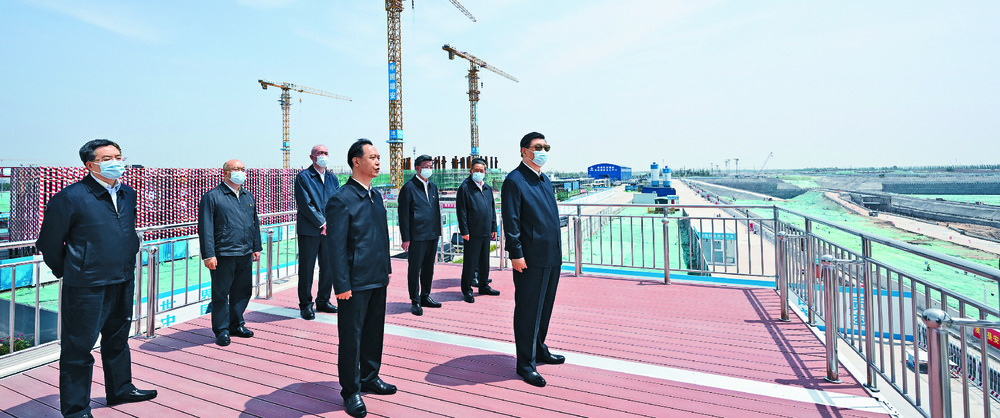
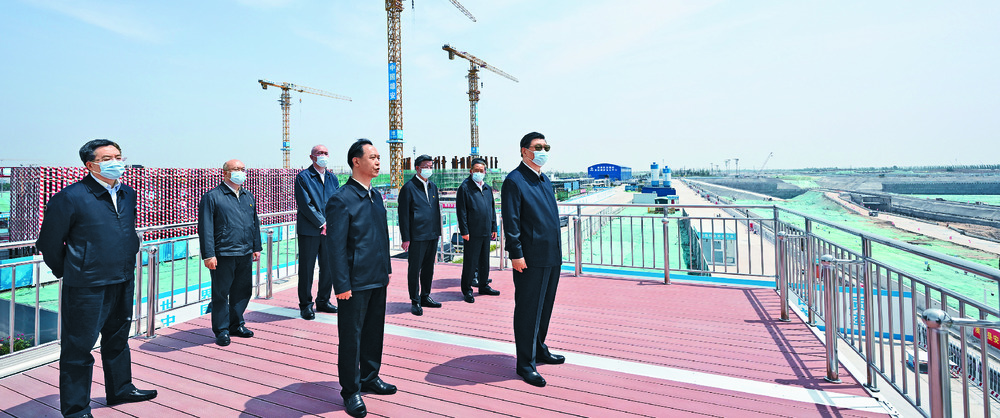
Nevertheless, the pace could pick up now that Xi has once again urged state-owned enterprises and financial institutions to relocate there, stressing yet again that Xiongan has a key role to play in easing Beijing's burden while becoming a beacon of innovation and high-tech hub in the new millennium.
Located in Hebei province about 105 kilometers southwest of Beijing and Tianjin, Xiongan was launched to great fanfare by Xi in April 2017.
To be built from scratch as a rival to Shanghai and Shenzhen, Xiongan is billed as a smart and eco-friendly city with excellent transportation links as well as an innovation hub bustling with high-tech players at the cutting edge of technology.
It is also expected to ease the pressure on overcrowded Beijing by absorbing non-essential functions, while spearheading the transformation of the surrounding Beijing-Tianjin-Hebei region.
MEGA PLAN
Xiongan comprises three counties of Xiong, Rongcheng and Anxin. Covering over around 100 square kilometers in its initial stage, the city will eventually encompass 2,000 sq km - roughly the size of Shenzhen, or twice the area of Hong Kong.
It will play host to a range of companies relocating from Beijing including research institutes, medical, industrial and financial institutions, universities, biotech and innovation specialists, and state-owned enterprises, several of whom including Sinochem have already made their move.
Four top universities are building campuses; four more - including Peking University's Guanghua School of Management - are considering expanding into Xiongan, and Tsinghua University is planning to build a hospital there, Caixin reports.
Hundreds of thousands of workers have been building the city and while progress has been significant, Xi wants the pace to quicken.
Earlier this month, in his third visit to Xiongan since its launch and first since 2019, Xi said it was "nearly a miracle" that Xiongan has emerged from ground zero in just six years, while calling on more firms to relocate to the "national project of millennial significance."
He said firms should move their operations immediately, adding that Beijing was first and foremost a political center and not a "melting pot" of factories in alleyways and street vendors.
Beijing's explosive population growth has led to traffic congestion, environmental degradation and high housing costs since the 1980s. Its population has more than doubled over the last couple of decades to 21.8 million in 2022 and the city's woes have been blamed on a lack of foresight and concentration of resources which led to an influx of firms and unfettered growth.
In 2016, Beijing choose Tongzhou district and Xiongan as two sub-centers in a 20-year urban plan with the former in southeast Beijing to become the municipal administrative center and other functions to be carried out by Xiongan.
Some 12,000 civil servants have already moved to Tongzhou with another 30,000 slated to go in the future, and investments are projected at over 100 billion yuan (HK$112 billion) a year, reaching 2 trillion yuan by 2035.
STARTING FROM SCRATCH
But in rural Xiongan, virtually everything is being built from scratch including a new high-speed rail link that was launched in 2020, while issues likes flooding from a lake and resettling its residents have posed challenges.
Meanwhile, property speculation quickly cooled as all property transactions were banned a day after Xiongan's plan was launched and neighboring cities implemented similar curbs which were only removed after the market slumped last year.
Home prices at Langfang, a city between Beijing and Xiongan, nearly halved in five years to 11,195 yuan per sq m in July last year, Caixin cited data from real estate services firm Anjuke.com.
Xiongan, meanwhile, resumed sales of new homes earlier this year in a reversal of its rent-only policy, though buyers are still subject to many limitations. New homes now cost around 14,000 yuan per sq m, compared to 6,000 yuan per sq m before the plan was unveiled, but still much cheaper than the 60,000 yuan per sq m for an old home in Beijing.
TAKING STOCK
The frenzy over Xiongan-related stocks did not last long either amid slow construction progress, Sino-US tensions, economic downturns and a sluggish property market.
Beijing-based cement producer BBMG Corporation's (2009) shares soared 35 percent when Xiongan's plan was launched but the gains largely evaporated by the end of the year as trading volumes dwindled.
Xi's latest visit also failed to lift BBMG's stock, currently 80 percent lower than its 2017 peak.
Also, Anhui Conch Cement (0914) and China National Building Material (3323) have both declined by 17 percent since the start of this year, though China Communications Constructions (1800) has jumped over 27 percent on the back of China's increased infrastructure investment.
Xiongan's gross domestic product last year was estimated to be below 40 billion yuan, which was less than 1 percent of Beijing's, and 0.033 percent of the country's GDP. In comparison, Shenzhen accounted for 0.06 percent of total GDP when it was established as a special economic zone in 1980, and Shanghai's Pudong district for 0.37 percent in 1992.
GROWTH CHALLENGES
Xiongan would need to grow at a notional rate of 15.77 percent on average for 30 years to catch up with Shenzhen's GDP of 3.24 trillion yuan in 2022, according to The Standard's calculation - more than three times faster than China's target of 5 percent in 2023.
More than 510 billion yuan has been invested so far in Xiongan, while Morgan Stanley's 2017 estimate has projected about 2 trillion yuan in the first 15 years for new infrastructure and resettlement of existing residents.
To many, though, Tongzhou and Xiongan is a bit like old wine in new bottles.
Back in 1950, Liang Sicheng - known as the father of modern Chinese architecture - and architect Charles Chen Chan-siang came up with a proposal that the old parts of the capital be preserved as a cultural center and a new town to the west of the city be built as an administrative center.
But the Liang-Chen Proposal, as it was called, was never taken up and the capital expanded, Soviet-style, as a political and economic hub.
Now, seven decades on, the blueprints have been redrawn, and Xiongan's fortunes are expected to shine.
Concept stocks, however, are likely to remain quiet amid the new push from Xi.
Francis Kwok Sze-chi, the vice chairman of the Hong Kong Institute of Financial Analysts and Professional Commentators says it's not a good time to bet on these stocks given the weak market sentiment, and he advises investors be conservative, at least for now.
Everbright Securities International securities strategist Kenny Ng Lai-yin agrees.
It would be hard for these securities to jump in the short run, he says. "After all, Xiongan is a long-term development plan and the mainland property market is still quiet."