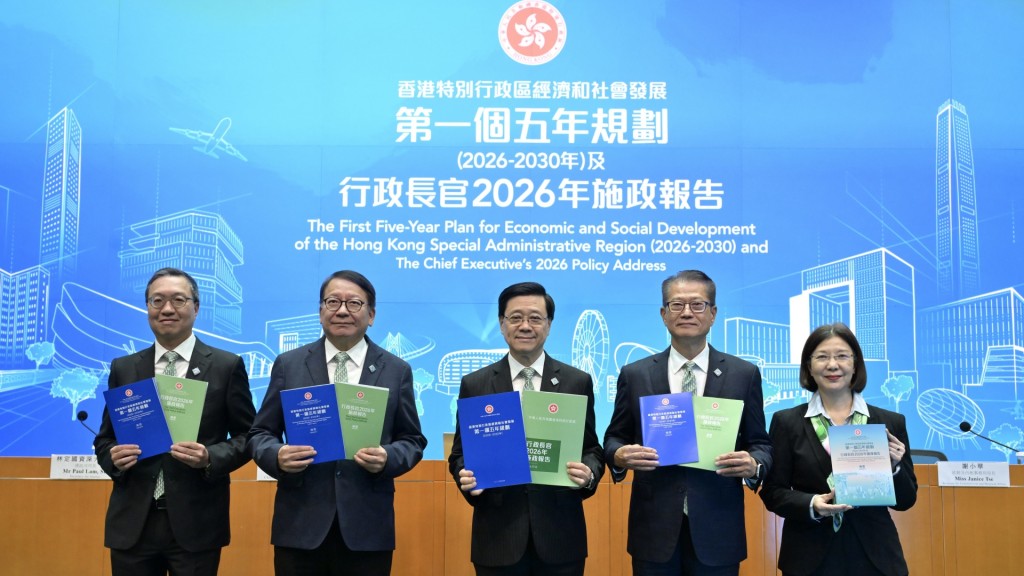
Hong Kong’s appeal to foreign investors is no longer limited to traditional sectors such as finance, technology, and science, but is expanding into sports and the creative industries, as the city’s first Five-Year Plan lays out a more diverse and visionary roadmap for its future development.
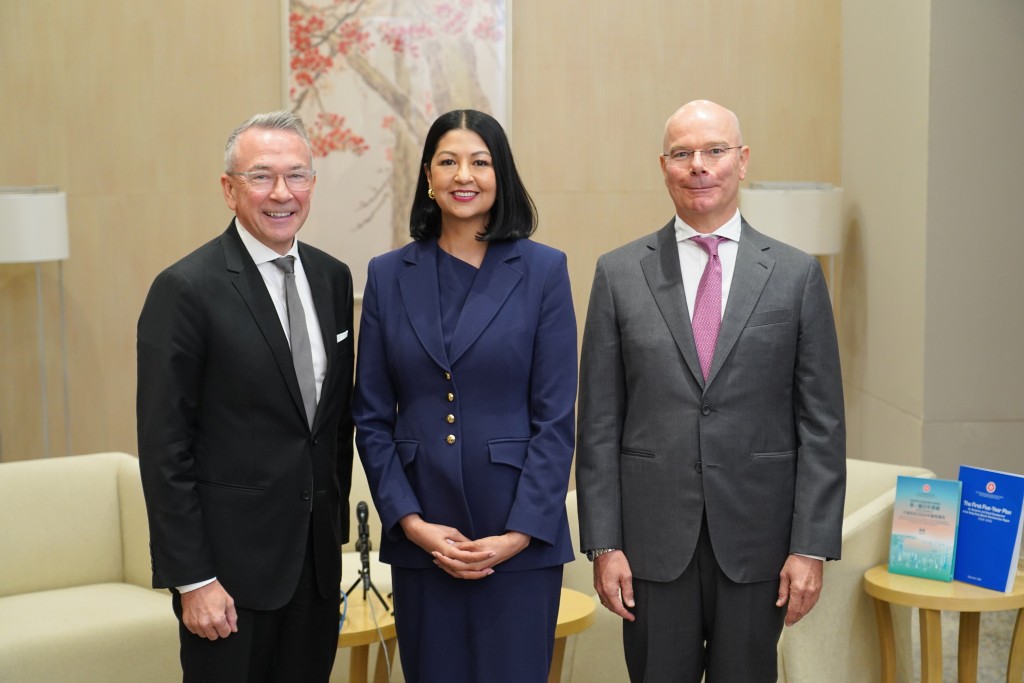
The multi-year plan gives certainty for multinational companies, said Paul McComb, executive director of the British Chamber of Commerce in Hong Kong, noting that there is already a 20 percent rise in UK business registrations in Hong Kong in a group interview after the government published the plan and Policy Address 2026 last Wednesday.
“It’s a direction of travel,” McComb said, as it has unlocked interest among technology, life sciences, biotechnology and creative firms in the Hong Kong-Shenzhen Innovation and Technology Park and Cyberport. Hong Kong’s location links businesses to mainland China, Central Asia, the Middle East, ASEAN and Africa, while anchoring China’s 15th Five-Year Plan and the Northern Metropolis development, he added.
European companies, including British ones, already form the largest business community in Hong Kong, thanks to its strong foundations, said Johannes Hack, chairman of the European Chamber of Commerce in Hong Kong.
He said the plan will further reinforce the city’s regulatory framework and common-law system, and opportunities are especially strong in sustainability – four of the five hard commitments relate to it – as well as education and life sciences.
Mary Simpson, chief executive of the Australian Chamber of Commerce in Hong Kong, described the city as a super-connector, launchpad and intellectual-property base for Australian firms entering the Greater Bay Area through finance, law and logistics. Priority sectors include artificial intelligence, green technology, critical minerals, and medical technology.
She noted that Hong Kong hosts the world’s second-largest Australian community of about 100,000 people and is strong in public-private partnerships, liveable-city planning, education and healthcare. Construction firm Leighton Asia is already active in the Northern Metropolis.
While the plan mapped out a promising storybook for diverse development, Simpson stressed that the Northern Metropolis must operate as a genuine economic engine with integrated housing and jobs, not merely a real-estate project. Universities, tech firms and healthcare facilities should be clustered with residential areas to create a livable region.
She said the chamber has encouraged Australian companies to explore opportunities at the APEC Finance Ministers’ Meeting 2026 or through visits next year, following earlier delegations of medtech, fashion and food-and-beverage firms. She also called for mutual recognition of professional qualifications to attract talent from Australia and elsewhere.
McComb advocated a public-private partnership approach to de-risk major infrastructure investment in the Northern Metropolis. Beyond infrastructure, he said, Hong Kong remains a place to live, work and play. Mega events such as the British rock band Coldplay concert, Rugby Sevens and the Hong Kong Football Festival 2026 at Kai Tak Stadium underscore its international character.
He also highlighted Hong Kong’s cultural strengths, citing the Hong Kong Ballet under internationally recognized director Septime Webre as an example of the city’s creative talent on the global stage.
“Sports is part of our national identity,” Simpson echoed. She said it is encouraging to see that part of the plan mentions sport and culture, noting that Hong Kong has qualified to debut in the opening match against Australia in the Rugby World Cup 2027 in Perth, Australia.
For the European counterpart, Hack pointed to the German Swiss International School’s partnership with Borussia Dortmund to launch the BVB International Academy Hong Kong.
To put the Five-Year Plan forward, Hack said there will be a lot of explaining to do, and that’s very much the function of what they, as a Chamber of Commerce, should be doing for their members.