Mainland Chinese companies maintained momentum for going global, with Hong Kong serving as their premier international business hub, Citi executives said.
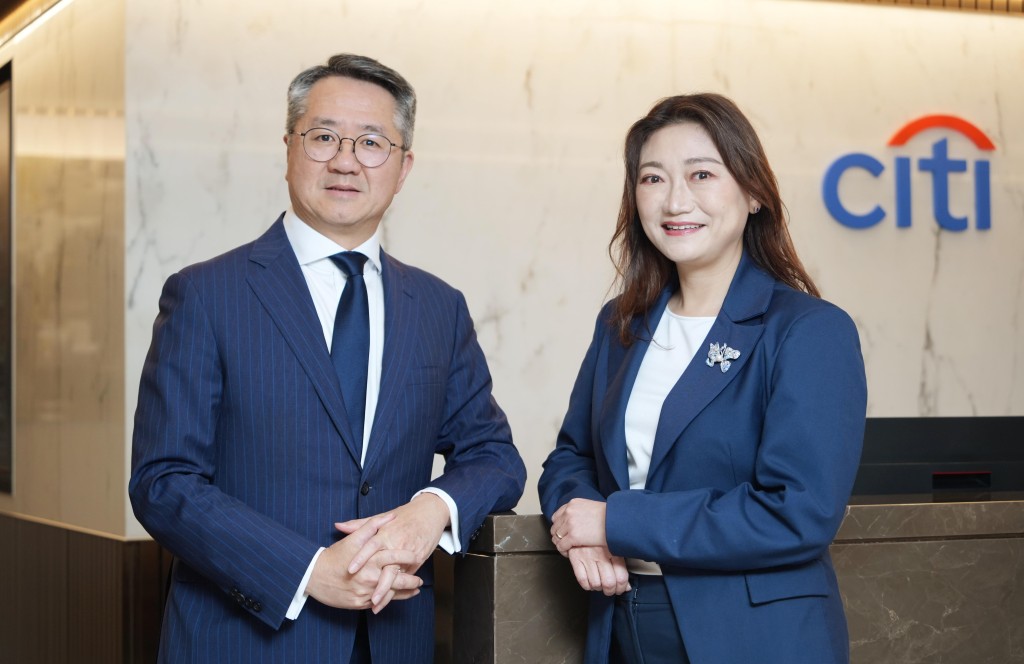
An increasing number of companies from mainland China are adopting a dual-hub strategy, anchoring headquarters in mainland China while leveraging Hong Kong to manage treasury and liquidity activities and raise funds to support overseas expansion, said Aveline San Pau-len, Citi Hong Kong chief executive officer and head of banking.
San noted that the Hong Kong-China corridor is the largest, most active business corridor across Citi's global network in terms of revenue, with the growth reaching 20 percent year on year in the first half of 2026.
For Citi Hong Kong, more than half of revenue from non-Hong Kong institutional clients is generated from mainland China, she added.
As the Hong Kong government recently released an action plan to promote the development of corporate treasury centers, which includes upgrading tax concessionary measures, it has sparked a notable surge in client interest and inquiries about CTCs, San said.
Citi also saw a growing trend of companies opening offshore yuan accounts and integrating the yuan into their multi-currency liquidity management structures, following the strong policy support for the yuan's internationalization announced at the annual Lujiazui Forum in June, she noted.
Yuan settlement accounted for 33.5 percent of China's total goods trade in March-April 2026, up from 11.5 percent at end-2017, according to Citi's research.
Backed by Hong Kong's position as the world's largest offshore yuan business hub, Citi helps multinational corporations procure goods from suppliers in China using yuan, which not only reduces financing costs but also mitigates foreign exchange volatility risks faced by Chinese exporters, San said.
In terms of financing, Citi has helped Chinese clients raise about US$40 billion (HK$312 billion) in global capital markets in 2025, while the amount has already reached over US$30 billion year to date, said Zhang Wenjie, Citi China CEO and head of banking.
Citi also participated in Alibaba's recent HK$80 billion share sale, as well as the firm's issuance of a zero-coupon convertible bond that raised US$3.2 billion in 2025, Zhang added.
As mainland companies stepped into the 3.0 phase of global expansion that centers on the globalization of entire ecosystems, leading companies are bringing whole industry value chains overseas, spanning industries from green energy and healthcare to digital, technology and communications, Zhang noted.
With physical presence in over 90 markets and operations across more than 180 countries and jurisdictions, Citi serves as a vital bridge to help Chinese companies to expand globally and facilitate multinational corporations' entry into the vast Chinese market, he said.
Beyond Hong Kong, Citi’s China-Asean corridor is a key revenue driver, while Latin America has emerged as one of the most dynamic markets for Chinese firms’ overseas expansion, Zhang said.
He pointed out that consumer and retail companies from mainland China are actively expanding into these two markets, benefiting from the rapid growth of the middle class and strong consumer demand in these regions.
Regarding external uncertainties, Chinese companies’ expansion into the Middle East has slowed due to regional conflicts, while the China-US corridor saw first-half revenue rise by 44 percent despite tariff risks, reflecting the resilience of Chinese firms, the bank said.
“Clients are taking a long-term view,” San said, “Sentiment on economic growth and business prospects in both Hong Kong and mainland China is more positive than before.”
Besides, Citi plans to set up new China Desks in Europe and Brazil, Zhang said.
Its current China Desks, located in Hong Kong, Singapore, Dubai, New York, London and South Africa, are staffed by experienced Mandarin-speaking bankers to support Chinese companies operating overseas, he added.