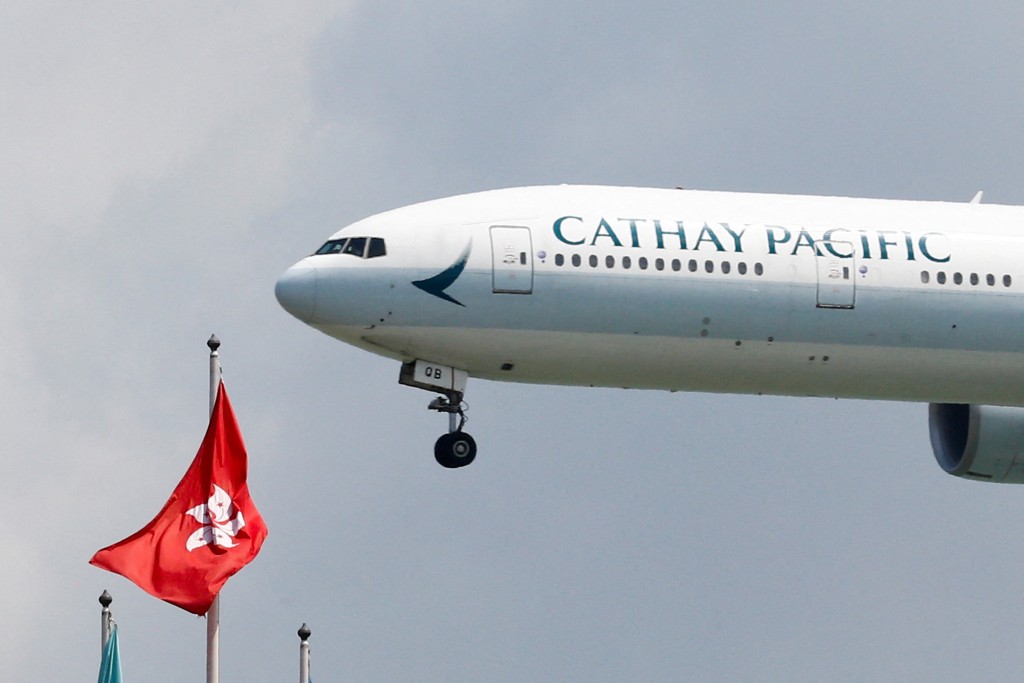
Cathay Pacific Airways (0293) said aviation fuel prices are expected to remain volatile in the second half of 2026, and it has no plans to cut capacity to reduce costs, while it maintains its current fuel hedging strategy.
The Hong Kong air carrier posted a record first-half net profit of HK$6.24 billion since 2010, surging 71 percent year on year.
Lavinia Lau, Cathay’s chief customer and commercial officer, said the company will maintain its fuel hedging strategy by reviewing fuel surcharges bi-weekly based on oil price movements, noting that the hedging has offset half of the increase in fuel cost in the second quarter.
Cathay’s chief executive Ronald Lam expressed optimism about Cathay Pacific’s performance in the second half of the year, expecting strong demand in both passenger and cargo traffic.
He noted that more transit traffic shifted to Hong Kong due to the Middle East war, where Cathay’s load factor reached 87.5 percent, the highest since 2005. It also helped it to stay on track to achieve its target of approximately 10 percent passenger capacity growth this year. Lam said the company will increase flights on specific routes in response to demand.
On the cargo front, Lam said the company remains cautiously optimistic about cargo, expecting the AI boom to support its business, especially during peak season in the second half of the year.
Lam also highlighted that Cathay’s overall staff turnover is at a “very low level”. The company currently employs 35,000, and Lam said it plans to hire about 3,000 people this year to fill the vacancies from natural turnover.
Cathay said its low-cost carrier HK Express has significantly narrowed its losses and is putting it firmly on the path toward a turnaround. Lam noted the airline had diversified its network into Southeast Asia and the Chinese mainland, reducing its traditional heavy exposure to the Japanese market.
Looking ahead, Lam said Cathay is committed to investing around HK$150 billion in fleet, cabin, and lounge products, and digital innovation, with a 10-year goal of adding 150 new aircraft and expanding its network to 150 destinations.