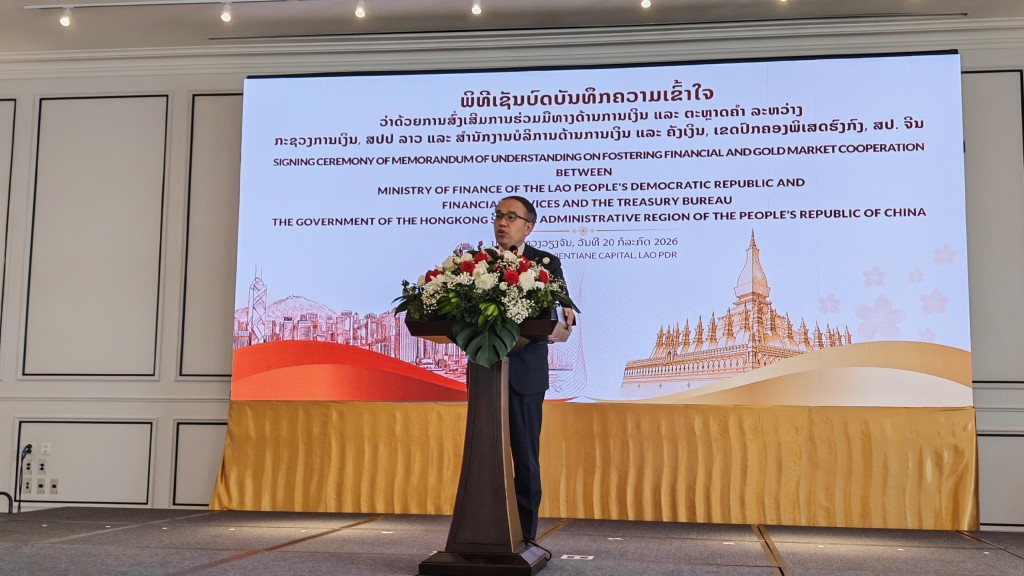
Hong Kong and Laos signed a Memorandum of Understanding (MOU) on Monday to foster gold market co-operation and realise a seamless, efficient, and trusted gold corridor that benefits producers, refiners, traders, and investors in both economies.
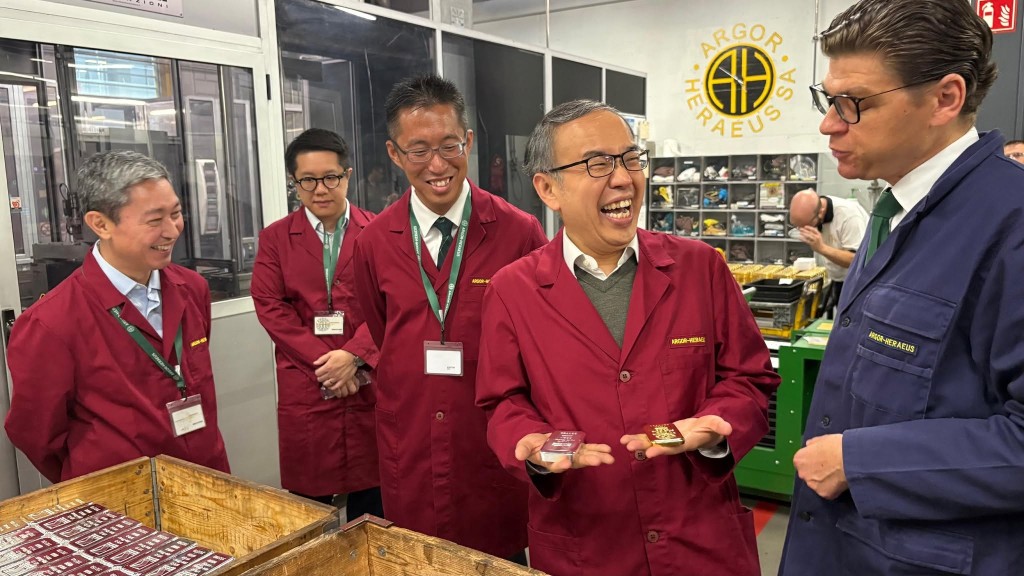
Christopher Hui Ching-yu, Secretary for Financial Services and the Treasury, who signed the MOU with Laos Deputy Prime Minister and Minister of Finance Santiphab Phomvihane, said the partnership will promote physical gold flows by facilitating access for qualified Lao gold owners to Hong Kong's accredited refining network. It will also encourage the use of refined gold bars meeting international standards in the Hong Kong market.
The agreement will strengthen financial market linkages, leveraging Hong Kong's capital markets and infrastructures, to provide Lao market participants with liquidity, efficient price discovery, and international capital. The two sides will also pursue joint international promotion across Belt and Road partner countries.
Collaboration will further foster talent development and fintech collaboration including tokenisation solutions, enhance regulatory collaboration on anti-money laundering (AML) and best practices, and promote a conducive business environment.
Hui noted that Hong Kong's competitive tax regime - with no sales tax nor import duty on investment-grade gold, and no capital gains tax - positions the city as an efficient hub.
Co-operative activities will be flexible and practical, including the exchange of best practices, joint projects, workshops, and exchange visits. Each side may involve relevant regulators, institutions, and industry representatives as appropriate, he said.
Hui added that Hong Kong is accelerating its development as a leading gold trading, clearing, and reserve hub, with a new central gold clearing and settlement system having commenced trial operations earlier this month.
To support this, the government announced a comprehensive package of targeted initiatives including a co-operation initiative with the Shanghai Gold Exchange, the launch of a new HAU price ticker, expansion of storage capacity to beyond 2,000 tonnes in three years, diversification of gold investment products such as exchange-traded funds (ETFs) and futures, exploration of tax incentives, co-ordinated insurance arrangements, and the establishment of an industry-led trade association.