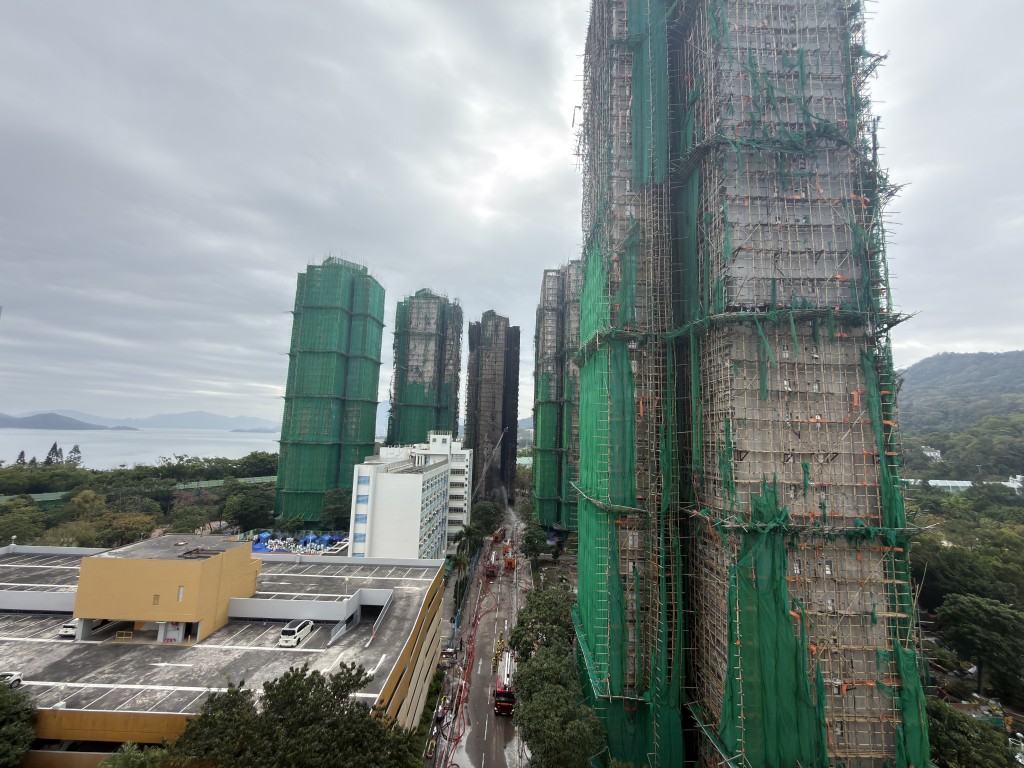
Claim losses from the devastating Tai Po fire will add pressure to underwriting results in the city's property and casualty insurance sector, prompting insurers to rethink their risk retention and pricing policies, said S&P Global Ratings.
Affected by several extreme weather events, such as Super Typhoon Ragasa and black rainstorms this year, Hong Kong's P/C insurers already face diluted earnings, while claims losses from the fire at Wang Fuk Court will further erode their underwriting margins, the rating agency said.
However, the firm noted that the impact would be manageable relative to insurers' capital positions.
It estimated that retained losses from the recent fire could raise the P/C insurance sector's net combined ratio by 2 to 3 percentage points to 97 to 98 percent this year, compared with 93.2 percent in 2024.
As a net combined ratio of less than 100 percent indicates underwriting profits, the sector will likely still report underwriting profits, said S&P.
The firm pointed out that China Taiping Insurance (Hong Kong) could face relatively larger claims than other primary insurers, as it underwrote Wang Fuk Court's insurance for property damage and third-party liability related to its renovation, while reinsurers are likely to bear the brunt of these losses.
In addition, primary insurers are expected to rethink expanding inward reinsurance on property risks, as such expansion may heighten earnings vulnerability to large losses and natural catastrophes, the company said.
This came as amid recent events like the burning scaffolding on a Central office building this October highlighted the risks associated with scaffolding materials and construction practices in Hong Kong, such as the burning scaffolding on a Central office building this October, it added.
Last year, the P/C insurance sector's overall reinsurance utilization was about 35 percent, among which property line usage was higher at nearly 60 percent, according to S&P.