Read More




Hong Kong stocks dip at open
5 hours ago

John Lee and CY Leung lead pallbearers for Tung Chee-hwa
20-09-2026 15:54 HKT



The US Federal Reserve is expected to lower its interest rates twice more before the middle of next year, bringing the interest rate down to around 3.5 percent, higher than market expectations, according to Allianz Global Investors on Monday.
Christiaan Tuntono, Senior Economist with Allianz Global Investors explained that the US economy is not in recession, and the Federal Reserve is expected to be cautious about rate cuts due to lagged effects from the inflation as well.
He pointed out that with declining US rates and a strong yuan, China has room for further interest rate cuts.
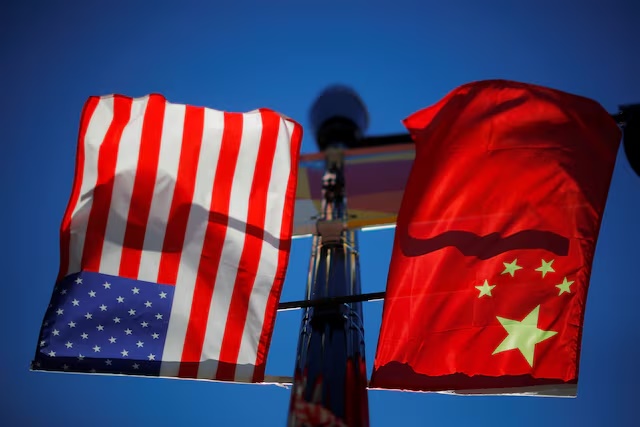
Regarding trade war negotiations, Tuntono believes that China, with its dominant position in the global supply chain, may be the only economy that can stand up and discuss trade negotiations with the US with leverage for countermeasures, while most other economies are in a more passive position.
Wilfred Sit, Chief Investment Officer Equity Asia Pacific with Allianz Global Investors, addressed the increased needs to diversify assets recently, as most investors are very heavily invested in US equity. He highlighted that China can be a risk diversifier if one has a lot of exposure in US equities because the Chinese and Asian equity market has a low correlation of only 0.3 with US equities.
Looking ahead to the Chinese stock market, Sit believes policy support and pension reforms can serve as catalysts to encourage citizens to invest more of their savings and boost consumer confidence.
The overall economic environment in the Asia-Pacific region remains relatively stable, but the growth-inflation mix is expected to weaken in the coming year due to trade war tariffs, low inflation rates and room to ease fiscal and monetary policies, Tuntono noted.
He explained that tariff rates are still heightened compared to two years ago despite recent “trade deals,” which poses a challenge for the region as it is highly dependent on exports, especially to the US markets.
However, Tuntono believes that Asia will still outgrow other regions as many Asian central banks have room to ease policies and cut rates. Worsening macro conditions in the US with a weakening labor market is also expected to cast downward pressure on the US dollar, which could strengthen Asian currencies, benefitting commodity prices.