Read More





ImmD crackdown targets moonlighting domestic helpers arresting 17
19-05-2026 17:52 HKT

One dead, four injured in Jordan flat fire, 200 residents evacuated
22-05-2026 00:48 HKT
Investors in Hong Kong have continued to rotate from bond funds into equity funds since late 2020, with thematic and sustainable funds amongst the most popular, according to Morningstar research.
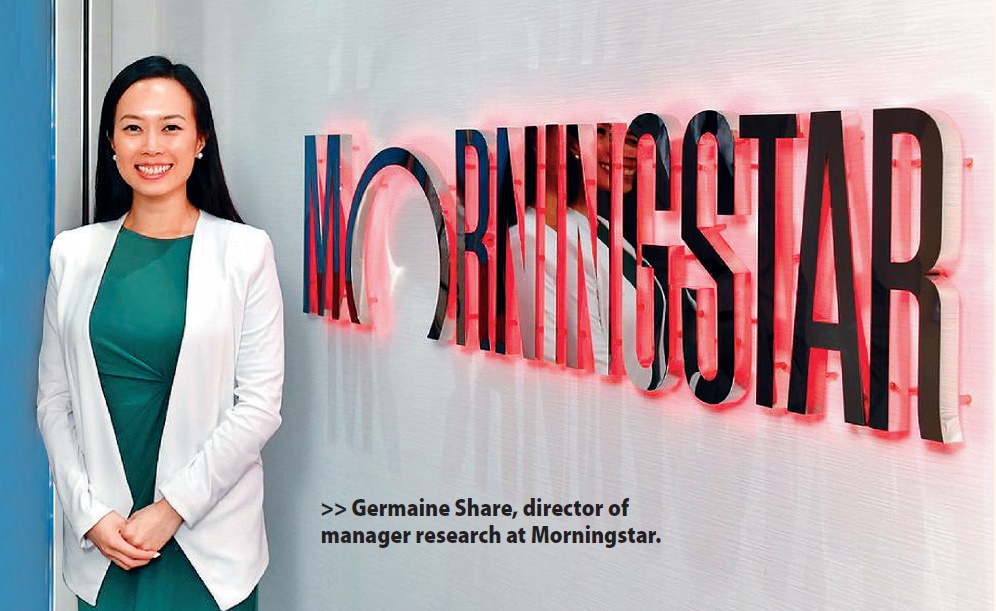
Broadly speaking, the world economy has been gradually recovering from the impact of the pandemic, which is supportive for equities, Germaine Share, Morningstar's director of manager research notes.
"In Hong Kong, and generally in Asia, investors have been attracted to technology-themed products, with the popularity of the ARK ETFs a case in point. Funds sporting environmental, social, and governance (ESG) related themes e.g. renewable energy, also enjoyed great success thanks to investors' increasing focus on ESG factors," Share remarks.
But when it comes to investing in thematic funds, it is important for investors to understand if a theme is a valid strategy for the long-term, or it's just a short-term fad, she stresses. Similarly, facing a growing menu of ESG funds, the key is to identify products with the characteristics that best suit investors' preferences and investment goals.
Morningstar considers that sustainable investing is not just a buzzword, but a structural trend that is turning mainstream as investors become increasingly aware of ESG issues, especially in the wake of the COVID-19 crisis. Global ESG fund assets reached a record high of almost US$2 trillion as of March 2021, a 105% jump from a year earlier. In Asia, there is an even stronger growth in terms of product launches and investor interests.
In addition to looking for capital appreciation and returns, Share points out that some investors have been placing a bigger emphasis on an investment vehicle's ESG merits when deploying their capital due to their personal preferences. Some also believe that investments with a sustainability focus would ultimately lead to stronger and more sustainable returns.
Share notes that Hong Kong has been at the forefront of ESG disclosure in Asia as the regulator standardized the disclosure for green or ESG funds to enhance the comparability among such products, as well as hosting a dedicated webpage that lists the green or ESG funds that comply with the requirements.
Through its acquisition of Sustainalytics, which is widely known for its security-level ESG Risk Ratings, Morningstar has developed a set of tools to help investors identify ESG-related risk exposure within stocks, funds and portfolios.
In addition, they have launched the Morningstar ESG Commitment Level in 2020 to help investors identify the funds and asset managers that are seen as best-in-class in the context of ESG investing. It is a qualitative analysis undertaken by Morningstar analysts to reflect the extent to which strategies and asset managers are incorporating environmental, social, and governance factors into their investment process. For both strategies and asset managers, the Morningstar ESG Commitment Level is expressed on a four-tier scale running from best to worst: Leader, Advanced, Basic, and Low.
Share expands on the three key aspects in this assessment: process, resources, and asset managers.
For process, they evaluate the nature and extent of the ESG process relative to the overall investment process; how well the ESG process is incorporated into investment research and decision-making; and the consistency with which it is implemented. Strategies that score highly should tightly incorporate ESG factors into their investment processes, spanning initial screening, security selection, risk management, and portfolio construction.
For resource, they assess the quality of ESG specialist personnel involved in managing the strategy or available to support the strategy's management. They also assess the extent of ESG data available to a strategy's analysts and managers and how it is incorporated into systems that allow it to be incorporated in the investment decision making process.
For asset managers, they evaluate the firm's commitment to ESG investing, and whether they have the right ESG expertise, reliable ESG data, and robust tools and systems in place. They also evaluate the firm's engagement and proxy voting program.
An illustrious example, Share says, is Fidelity Sustainable Asia Equity Fund, which was formerly known as Fidelity Asia Focus before it formally adopted a sustainability mandate in February 2021. "We consider this a compelling sustainability offering that benefits from strong resources and an investment approach with well-embedded ESG factors," she adds. "It earns a Morningstar ESG Commitment Level of Advanced."
Share attributes Fidelity's success to the two managers' strong ESG expertise. In addition to the strong focus on corporate governance, lead manager Dhanajay Phadnis had already been excluding firms with material exposure to tobacco and coal-fired power plants a couple of years ago. To help with further engagement on portfolio holdings and prospective investments, director of sustainable investing Flora Wang was also appointed as the strategy's assistant portfolio manager since Feb 2021. The two managers are well supported by Fidelity's vast analytical resources.