Read More
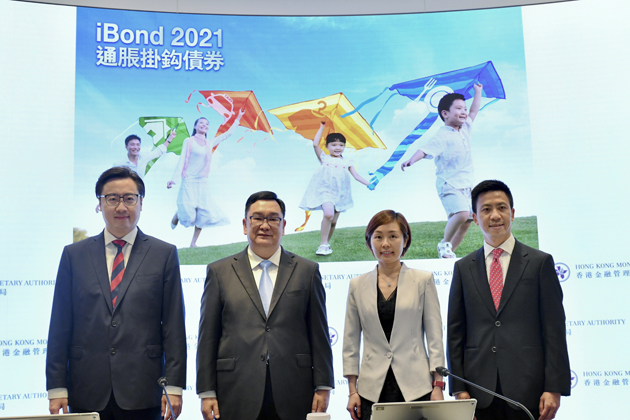
As the new batch of inflation-linked retail bonds, or iBonds, will open for subscription by Hong Kong residents tomorrow, analysts suggest investors apply for no more than five board lots per person amid rising inflation.
ADVERTISEMENT
SCROLL TO CONTINUE WITH CONTENT
Kenny Ng Lai-yin, a securities strategist at Everbright Sun Hung Kai, says that investors could make use of family member headcount to subscribe for up to five board lots of iBonds each, using a huge crowd strategy to increase the success rate.
Local brokers are rushing to promote for the new bonds, which aims at attracting newcomers to open accounts and trade other investments via the platforms later. But analysts do not suggest using margin financing. The iBonds are not overwhelming initial public offering, says Dickie Wong Tak-kei, executive director of research at Kingston Securities, which usually do not offer lucrative return for short-term investment.
For the previous batch of iBonds (4239) issued in December last year, 196,391 out of 456,380 investors applying for one to three units were allocated the full amount. The remaining 259,989 got three board lots each. Among them, 230,930 received one additional unit after a ballot.
The iBonds, freezing HK$38.36 billion, climbed to HK$104 in the grey market before the first trading day when it closed at HK$102.75, worse than expected and suggesting the worst debut performance among the first seven batches of iBonds. It paid the minimum coupon at 2 percent on May 17, realizing a profit of HK$99.73 interest per board lot of HK$10,000 for the past half year.
This is compared with another government's bond with an issuance size of HK$15 billion targeting seniors aged 65 or above, or silver bond, which pays minimum 3.5 percent annual interest.
The SAR government has issued seven batches of iBonds since 2011. However, the coupon rate of the bonds dropped from a range between 3.38 percent to 6.08 percent for the first batch to a range between 1.02 percent to 2.58 percent for the latest one.
The issuance size of the eighth batch of iBonds is HK$15 billion, but could be increased to HK$20 billion. Hongkongers can subscribe in HK$10,000 increments via placing banks, securities brokers, or the Hong Kong Securities Clearing Company.
The subscription of the three-year bonds will end at 2:00 pm on June 11, and the trading debut is slated for June 24.
The iBond half-yearly interest payments are linked to the average inflation measured by the Composite Consumer Price Index, which means investors will be paid higher than 2 percent if inflation exceeds the guaranteed interest rate.
As a low-risk investment that hedges inflation risk, the minimum interest rate of 2 percent is attractive, says Ng, adding that he expects an enthusiastic market response and one would be allocated around two units this time.
Also, Wong projects a growth of between 3 percent and 4 percent in bond prices on market debut amid rising inflationary fears, and investors could consider cashing out if the bonds surge over HK$105 apiece on the first trading day, which may amount to the interest for the three years.
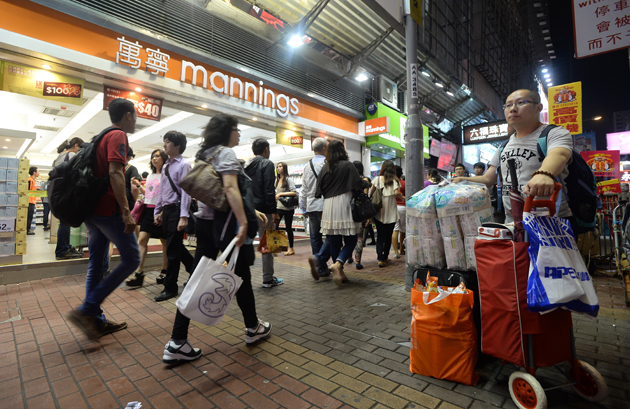
The heavy demand for iBonds comes from Hong Kong's rising consumer prices, as the city is seeing a falling unemployment rate. Hong Kong's CPI has been growing for the last four months. April's figures jumped by 0.7 percent year-on-year, from 0.5 percent in March.
Gary Ng, an economist at the French investment bank Natixis, predicts that Hong Kong's average inflation will accelerate from 1 percent in the first half of 2021 to 3.7 percent in the second half due to the low base from the previous year and the rebound in demand.
Meanwhile, Hong Kong's jobless rate has dropped by 0.4 percentage points to 6.4 percent from February to April, reflecting the broad economic rebound and the more specific improvement in catering services, Gary Ng adds.
It means the government could phase out the support measures gradually, such as subsidies on public rents, utilities and transport, which exert upward pressure on consumer prices, Gary Ng says. He believes that the government may not roll over the rent waiver for public housing as Hong Kong's inflation is likely to rise further in the second half of 2021.
Hong Kong's inflation is expected to be 2.4 percent in 2022 and 2.2 percent in 2023, says Gary Ng.
Meanwhile, another driver attracting Hongkongers to the iBonds could be the low interest rates. In comparison, saving rates in Hong Kong are negligible largely due to the low-interest-rate environment and flush liquidity in the local banking system, despite a few banks increasing the three-month Hong Kong dollar deposit rate to around 3 percent last week.
The aggregate balance, a measure of cash in the local banking system, has been hovering at a high level for the past six months after topping a record high of HK$450 billion.
To attract customers, promotions have been launched for the iBonds. In addition to 10 fee waivers, Futu Securities offers one share of Apple - worth around US$126.90 (HK$989.82) - to new customers who apply for the iBonds via its platform.
Rival Bright Smart Securities (1428) provides a one-month commission-free discount and 11 fee waivers to new subscribers.
Also, subscription discounts are available in banks, mainly waiving fees, of which Hong Kong and Shanghai Banking Corporation provides seven fee waivers.