Read More
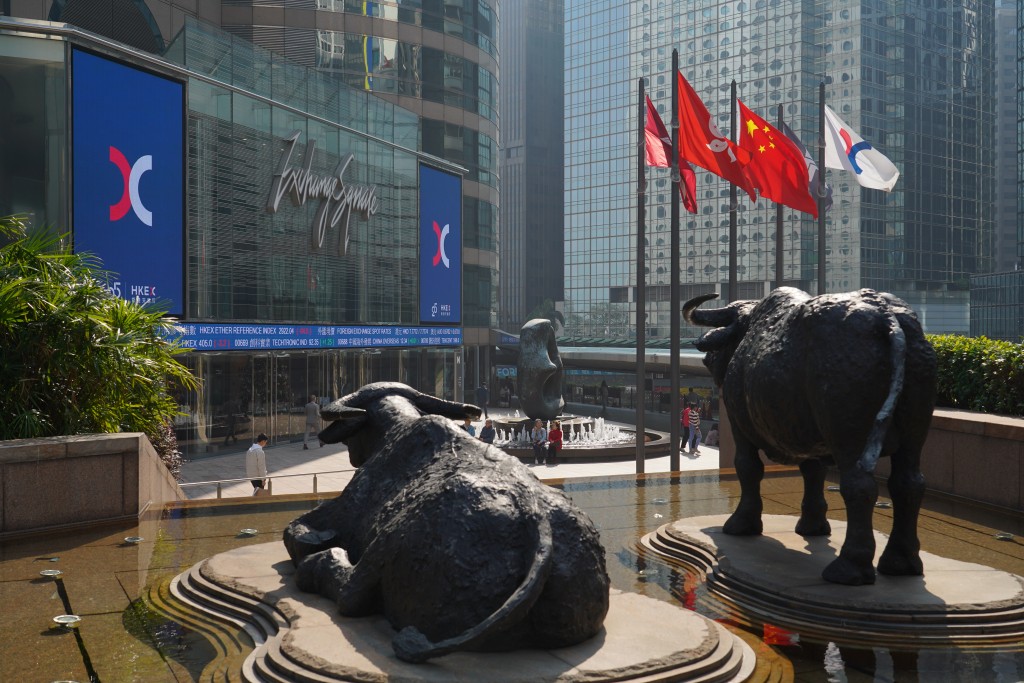
Hong Kong’s interbank liquidity is falling toward its lowest level since the global financial crisis, as a wide gap between local and US interest rates forces the Asian financial hub to use frequent market interventions to defend its currency’s value.
ADVERTISEMENT
SCROLL TO CONTINUE WITH CONTENT
The city’s aggregate balance is set to drop to HK$49.2 billion (US$6.3 billion) on Thursday when the Hong Kong Monetary Authority settles its earlier purchase of HK$6.9 billion to keep the local dollar’s peg to the US currency intact. The key gauge of interbank liquidity already has shrunk about 90 percent from its peak in 2021.
Selling in the Hong Kong dollar has persisted this month as local interest rates remain far below their counterparts in the US, where the Federal Reserve has been aggressively tightening policy for over a year. As the HKMA keeps intervening to defend its currency, pressure will grow on local borrowing costs to rise, posing a threat to the nascent recovery in the city’s property market.
“As the balance drops toward zero, which is possible and not an issue as this was the case before the global financial crisis, Hibors will eventually have to rise and catch up with US rates,” said Stephen Chiu, chief Asia FX & rates strategist at Bloomberg Intelligence, referring to the Hong Kong Interbank Offered Rate. “Only a quick reversal in the Fed’s policy stance could help avoid this, yet this remains unlikely.”
The deep discount that Hong Kong interest rates have against their US peers has generated a boom in a so-called carry trade that involves borrowing at low rates in the local currency and lending at high rates in greenbacks. In addition, the Hong Kong dollar has also come under pressure from hedge funds that periodically bet on a collapse of the currency’s peg, attempts that the HKMA has so far succeeded in foiling.
A rise in Hibor, which is the city’s mortgage-pricing benchmark, will worsen the burden on home buyers and encourage property developers to liquidate their inventories at lower prices, said Samuel Tse, an economist at DBS Group Holdings Ltd. “This is not good news for the recovering economy.”
(Bloomberg)
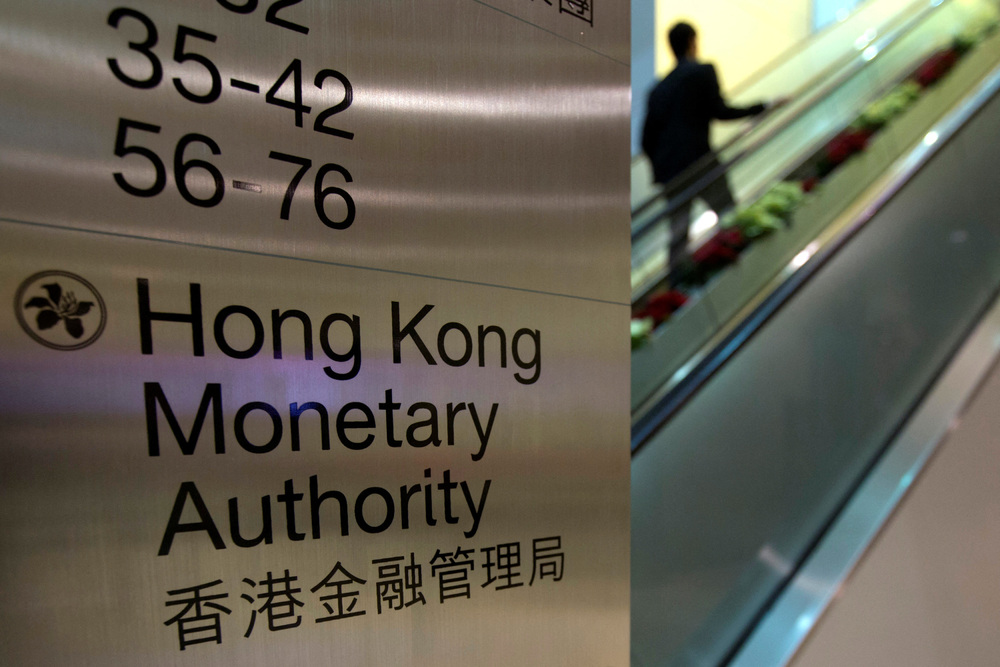
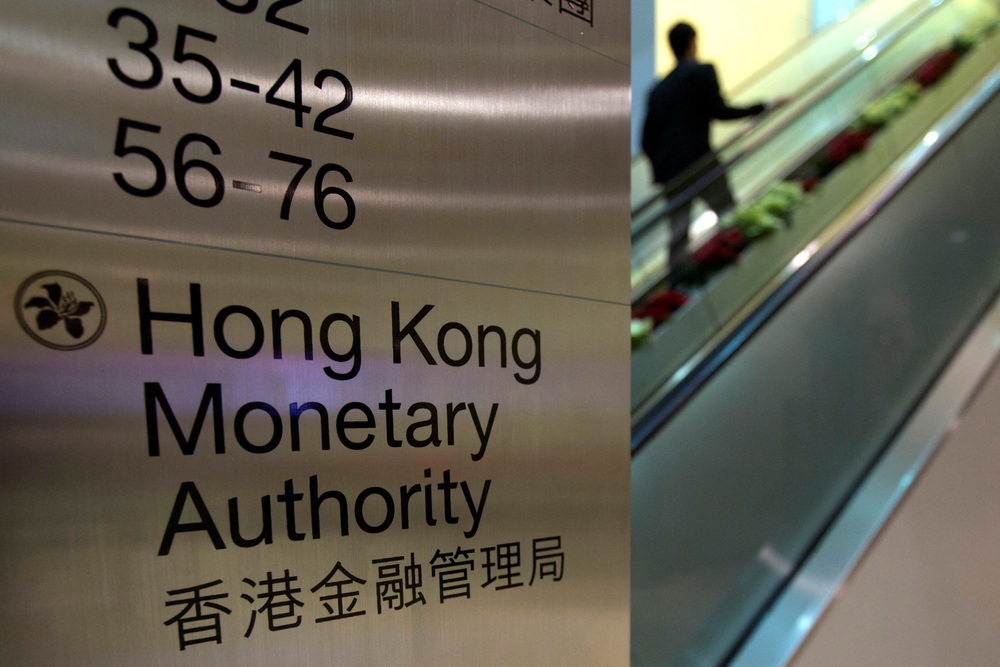
A security guard walks past a directory board of Hong Kong Monetary Authority (HKMA) in Hong Kong. (Reuters)