The coronavirus pandemic has cast a shadow over the global art market, putting art events and tradings on halt, while the crisis is expected to accelerate the shift to an online operating model in the event-driven industry.
Global art transactions had shrunk even before the epidemic.
The total art market sales in 2019 slid by 5 percent from a year ago to US$64.1 billion (HK$500 billion), the first drop in three years, dragged by Sino-US trade tensions and slower economic growth, according to the Art Basel and UBS Global Art Market Report.
Museums and galleries have shut down worldwide as governments tighten curbs on large group gathering. Major auction house Christie's has closed all offices in Europe and the United States. In Hong Kong, Sotheby's rescheduled its spring auctions last month to July and transferred a part of activities to New York.
The financial market rout has also forced investors to reallocate their assets, with some of them trading their art collections at discounts for liquidity to meet margin calls, Bloomberg reported citing collectors and art loan lenders.
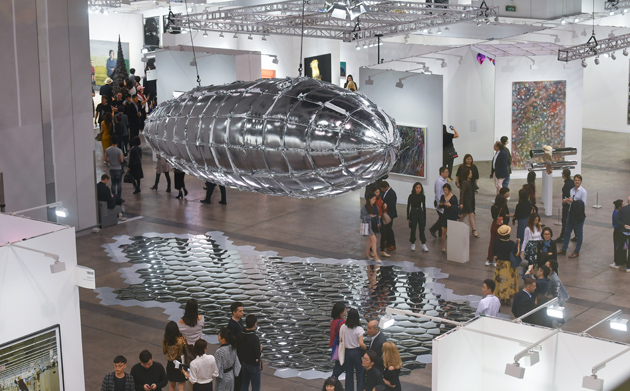
Art Basel Hong Kong became the first major event to launch online viewing rooms amid a subdued market, after canceling its physical version. The fair attracted 88,000 attendees last year, a record 10 percent growth over a year before. The digital-only edition recorded over 250,000 visitings this year as it was free of charge, data from the art fair shows.
Among the artworks exhibited on the first VIP day this year, a US$2.6 million painting by Marlene Dumas at David Zwirner Gallery was sold. But half of the 30 galleries did not book sales that day and few of them sold more than five artworks. That compares with a first-day average VIP sales volume of five artworks and a total sales value of over US$30 million last year.
"While nothing can replace the experience of seeing art in person, we hope that this initiative can bring some support and visibility to all the galleries and their artists affected by the cancelation of our March show," said Adeline Ooi, Asia director of Art Basel.
Most of the other big events are expected to face a similar outcome, says Adrian Zuercher, head of Asia Pacific asset allocation at the chief investment office of UBS Global Wealth Management.
He notes that the art market was not too much impacted during the first two months this year, as major markets outside China had hardly talked about the virus and operated as normal, but the pandemic started to take a global toll beginning this month.
The art market may remain partially shut down over the next one or two months, he forecasts, but there may be a significant pickup from the second quarter, boosted by the "pent-up" demand in the recovery term of the macroeconomy after the virus situation stabilizes.
Although some people may hold back with some of their spendings, collectors' interest has not changed and they are looking at online markets, waiting a little bit longer for their next purchases, he says.
"A lot of millennials started to shift their focus and bought art already online, and that probably will grow," he adds.
The UBS Investor Watch and Arts Economics HNW Survey, which interviewed 1,300 high net worth collectors, shows that nearly half of the respondents used online platforms to purchase art either often, or always, and 36 percent of them have spent over US$50,000 for individual work.
Particularly, millennial collectors, who spent six times more than baby boomers and led art market sales last year, were the most regular users of the online channel, with only 8 percent having never bought online, according to the report.
Zuercher points out that this may even be a more sustainable impact from the epidemic, which could basically improve the trend over the next few years as well.
"But, on the other hand, I also don't think that art fairs will go away because art is also a social event and social happening. So you probably need both channels."
Meanwhile, it makes artworks even more interesting for some investors in a zero interest rate world, Zuercher says.
With less opportunity to generate interests, people will buy financial assets of course, but they may be considering artworks as a store of wealth, he says.
In terms of the Hong Kong market, the HNW survey shows millennials made up 40 percent of collectors in the city, while auctions are their most preferred sales channel, followed by art fairs and dealers.
Zuercher notes that despite impacts from the political disruption last year and the technical recession, the art market tends to be less sensitive to domestic problems.
"People are not changing their habits or interest [in art investment] because of that," he adds.