Akeso, a mainland clinical-stage biopharmaceutical company, has filed the application for an initial public offering on the Stock Exchange of Hong Kong.
The company has completed its series D financing in November last year, the fourth round of venture capital funding in which a number of investors agreed to subscribe for around 91 million preferred shares at a subscription price of US$1.3849 (HK$10.80) per share.
Akeso completed the first three rounds of financing by March last year, raising a total of 580 million yuan (HK$649 million). It introduces Morgan Stanley and J.P. Morgan as its jointed IPO sponsors.
The Guangdong-based drugmaker seeks to address global unmet medical needs in oncology, immunology and other therapeutic areas. It has developed an antibody drug pipeline covering over 20 drug development programs, including 10 antibodies in clinical-stage development, six bispecific antibodies, and four antibodies with Investigational New Drug approvals from the US Food and Drug Administration.
Three of the company's antibodies are in advanced clinical-stage development, including the potential next-generation, first-in-class bispecific PD-1/CTLA-4 immumo-oncology backbone drug (AK104), says Akeso in the prospectus.
It expects to submit the new drug application for its Penpulimab (AK105), a monoclonal antibody that is being jointly developed by the company and Sino Biopharmaceutical (1177), during the first half this year at the earliest.
Founded in 2012, Akeso has developed an end-to-end Akeso Comprehensive Exploration platform, which encompasses drug discovery and development functions including target validation, antibody drug discovery, and development.
Akeso out-licensed its CTLA-4 antibody (AK107), which can be used as a treatment for cervical cancer, to American pharmaceutical company Merck for a total consideration of US$200 million, which made it the first China-based biotech company to out-license a fully internally-discovered monoclonal antibody to a global pharmaceutical company, according to Frost & Sullivan.
With no products approved for commercial sale, the company has not generated any revenue from product sales and incurred operating losses during the past three years.
The net loss for the first half of last year expanded by 1.8 times from a year ago to 115.7 million yuan. Almost all of the operating losses were resulted from research and development expenses, administrative expenses and finance costs, says Akeso.
Akeso's revenue mainly consisted of upfront and milestone payments in connection with the out-licensed products, according to the prospectus.
Akeso had no revenue in the first six months last year, compared with 939,000 yuan a year ago. Financial prospects depend on the success of its clinical-stage and pre-clinical stage product pipeline, it warns, anticipating that it will continue to incur net losses for the foreseeable future.
Even if it is able to commercialize any approved drug candidates, the drug candidates may become subject to national or other third-party reimbursement practices or unfavorable pricing regulations, which could harm its business and prospects, Akeso says.
Akeso intends to use 75 percent of the funds for research and development and commercialization of its products, including the clinical trials, preparation for registration filings and planned commercial launches of AK104.
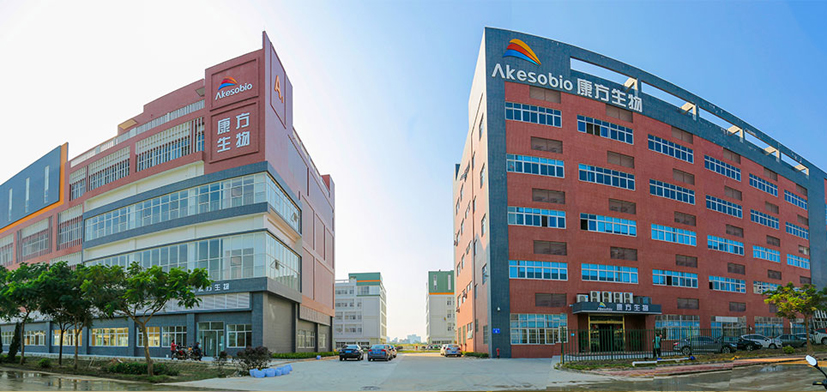
And 15 percent of the proceeds will be used for the development of manufacturing and research and development facilities in Guangzhou and Zhongshan. The rest is planned for general corporate and working capital purposes.