Read More







ImmD crackdown targets moonlighting domestic helpers arresting 17
19-05-2026 17:52 HKT

One dead, four injured in Jordan flat fire, 200 residents evacuated
22-05-2026 00:48 HKT
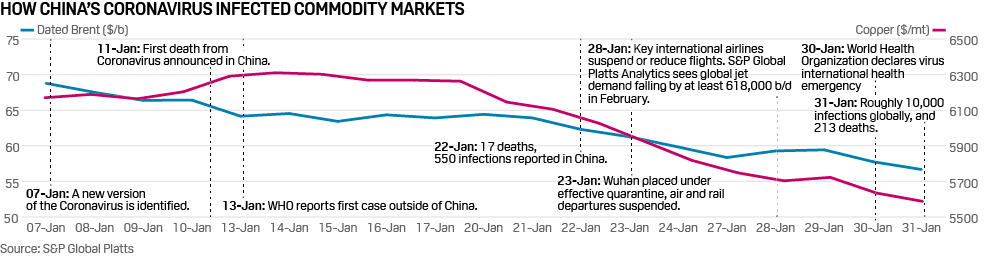
China's commodity prices collapsed on the first day of trading after the Lunar New Year break as investors returned to markets gripped by fear over the impact the Wuhan coronavirus will have on demand in the world’s biggest consumer of raw materials.
Bloomberg reports that China's three major commodity exchanges were hit by an unprecedented bout of selling as they reopened for trading.
Metals, energy and agriculture futures were all hammered, with China’s benchmark iron ore contract falling by its daily limit of 8 percent.
Copper, crude and palm oil also sank by the maximum allowed, while shares in commodity producers tumbled as stock markets reopened. Investors have deserted raw materials markets around the world from copper in London to palm oil in Kuala Lumpur over fears about the economic fallout from the virus.
“Investors are fleeing from commodities and seeking risk-aversion assets,” said Chen Tong, an analyst with Tianjin-based First Futures. “Everything from consumption to logistics have stagnated with 31 Chinese provinces and regions announcing the highest level of public health emergency and so the market is basically bearish across the board.”
Iron ore slumped to 606.50 yuan a ton in Dalian, the lowest since early December. Steel reinforcement bar opened at its downside limit to trade at the lowest since December 2018 and domestic oil futures saw the biggest decline since their debut in March 2018.
The sell-off on commodities exchanges was repeated across China’s financial markets, with stocks plummeting by the most since an equity bubble burst in 2015.
Bond yields dropped the most since 2014 and the yuan weakened to the cusp of 7 per dollar.
The Chinese companies that mine, refine and smelt the nation’s raw materials weren’t spared the rout.
Jiangxi Copper Co., the biggest copper smelter, tumbled by its daily limit of 10 percent in Shanghai, while Baoshan Iron & Steel tumbled by 8.5 percent. PetroChina Co., its biggest energy company, lost almost 10 percent.