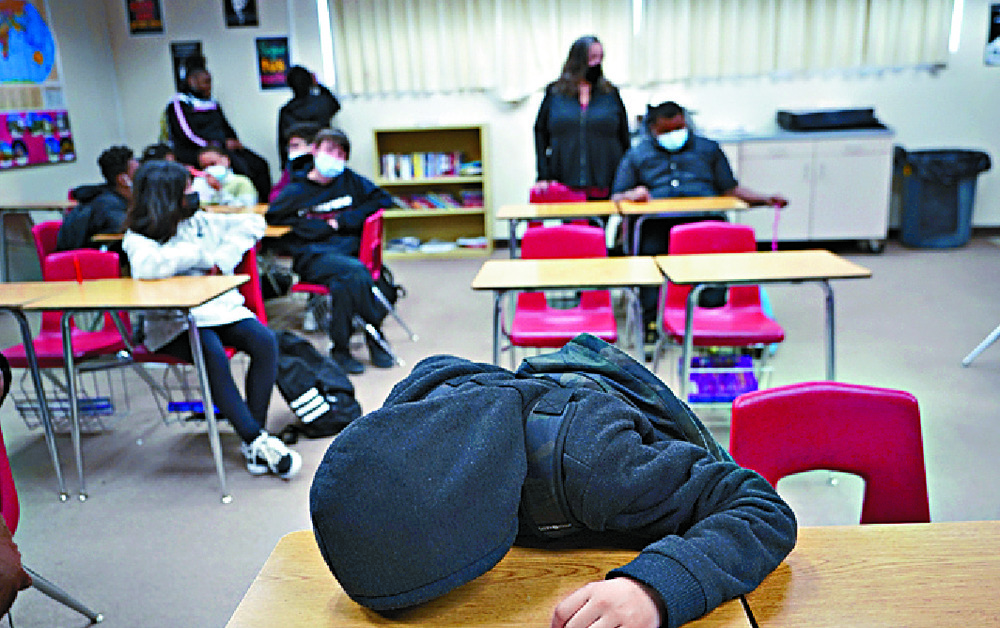
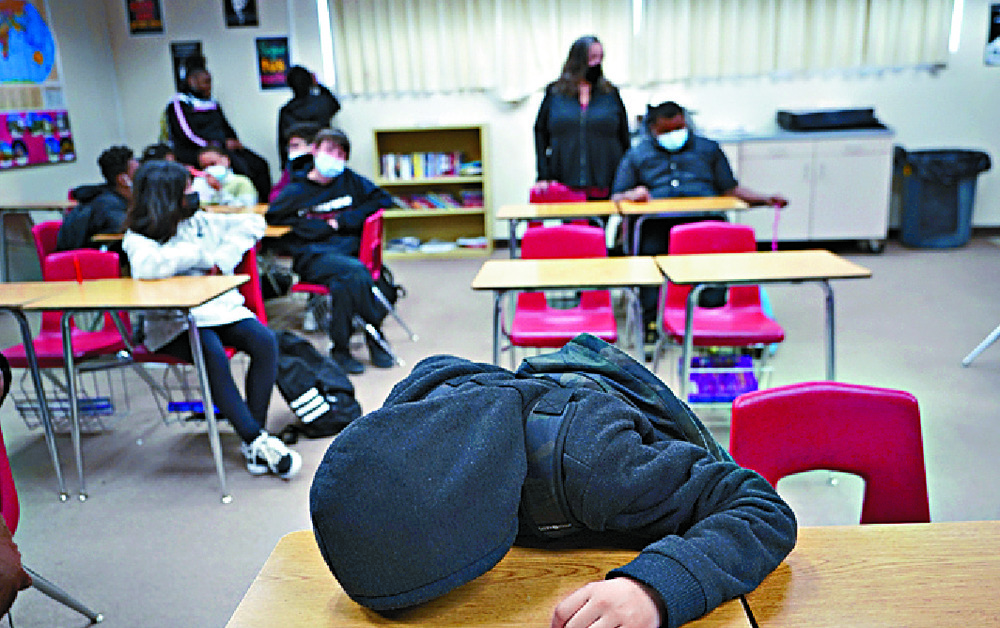
As benito luna-herrera teaches his seventh-grade social studies classes, he is on alert for signs of inner turmoil. And there is so much of it these days.
One of his 12-year-old students felt her world was falling apart. Distance learning had upended her friendships. Things with her boyfriend were verging on violent. Her home life was stressful. "I'm just done with it,'' the girl told Luna-Herrera during the pandemic, and shared a detailed plan to kill herself.
Another student was typically a jokester and full of confidence. But one day she told him she didn't want to live anymore. She, too, had a plan to end her life.
Since the pandemic started, experts have warned of a mental health crisis facing American children. That is now playing out at schools in the form of increased childhood depression, anxiety, panic attacks, eating disorders, fights and thoughts of suicide at alarming levels, according to interviews with teachers, administrators, education officials and mental health experts.
In low-income areas, where adverse childhood experiences were prevalent before the pandemic, the crisis is even more acute and compounded by a shortage of school staff and mental health professionals.
Luna-Herrera, who teaches in a high-poverty area of the Mojave Desert, is among a small but growing number of California teachers to take a course called Youth Mental Health First Aid. It teaches adults how to spot warning signs of mental health risks and substance abuse in children, and how to prevent a tragedy.
The California Department of Education funds the program for any school district requesting it. It is operated by the National Council for Mental Wellbeing.
Experts say while childhood depression and anxiety have been on the rise for years, the pandemic's unrelenting stress and grief amplified the problems.
For children, the issues with distance learning were not just academic, said Sharon Hoover, codirector of the National Center for School Mental Health.
Child abuse and neglect increased during the pandemic. For children in troubled homes, distance learning meant they had no escape. Those who lacked technology or had spotty internet connections were isolated even more than their peers and fell further behind academically and socially.
Many children bounced back after the extended isolation, but for others it will take longer. "We can't assume that 'Okay, we're back in school, it's been a few months and now everyone should be back to normal.' That is not the case,'' said Hoover.
Returning to school after months of isolation intensified the anxiety for some children. Teachers say students have greater difficulty focusing, concentrating, sitting still and many need to relearn how to socialize and resolve conflicts face-to-face.
Kids expected to pick up where they left off but some found friendships, and their ability to cope with social stress, had changed. Educators say they also see a concerning increase in apathy and a lot less empathy.
"I have never seen kids be so mean to each other in my life,'' said Terrin Musbach, who trains teachers in mental health awareness and other social-emotional programs in the Del Norte unified school district.
"There's more school violence, there's more vaping, there's more substance abuse, there's more sexual activity, there's more suicide ideation, there's more of every single behavior that we would be worried about in kids.''
In early 2021, emergency room visits in the United States for suspected suicide attempts were 51-percent higher for adolescent girls and 4-percent higher for adolescent boys compared to the same period in 2019.
The Youth Mental Health First Aid course helps distinguish typical adolescent ways of dealing with stress - slamming doors, crying, bursts of anger - from warning signs of mental distress.
Red flags include when a child talks about dying or suicide but the signs can be more nuanced like "I can't do this anymore'' or I'm tired of this,'' said Tramaine El-Amin, a spokeswoman for the National Council for Mental Wellbeing.
Changes in behavior could be cause for concern: a child who stops an activity they were passionate about without replacing it with another one; a typically put together child who starts to look regularly unkempt; a student whose grades plummet or who stops handing in homework; a child who eats lunch alone and has stopped palling around with their friends.
It's about awareness. And that Sandy Hook promise: if you see something, say something.
That did not happen with Taya Bruell.
The 14-year-old was a bright, precocious student who had started struggling with mental health issues at about 11, according to her father, Harry Bruell.
She was hospitalized at one point for psychiatric care but kept up the trappings of a model student: she got straight As, was co-leader of her high school writing club and in her spare time taught senior citizens to use computers.
For a literature class, Taya was assigned to keep a journal. In it, she drew a disturbing portrait that showed self-harm and wrote about how much she hated her body and was hearing voices she wanted to silence.
Her teacher read the assignment and wrote: "Taya, very thorough journal. I loved reading the entries. A+''
Three months later in February 2016, Taya killed herself. After her death, Taya's parents discovered the journal in her room and brought it to the school, where they learned Taya's teacher had not informed the school counselor or administrators of what she had seen. They don't blame the teacher but will always wonder what if she had not ignored the signs of danger.
"I don't think the teacher wanted to hurt our daughter. I think she had no idea what to do when she read those stark warning signs,'' said her father.
He believes legislation to require teacher training in behavioral health will save lives. It teaches you to raise the alarm, and not just walk away, which is what happened to Taya.''
Associated Press