The stress of living in the city has only increased since the outbreak of Covid-19, making reconnecting with nature a glorious prospect, not only for a breath of fresh air but also a calmer state of mind.
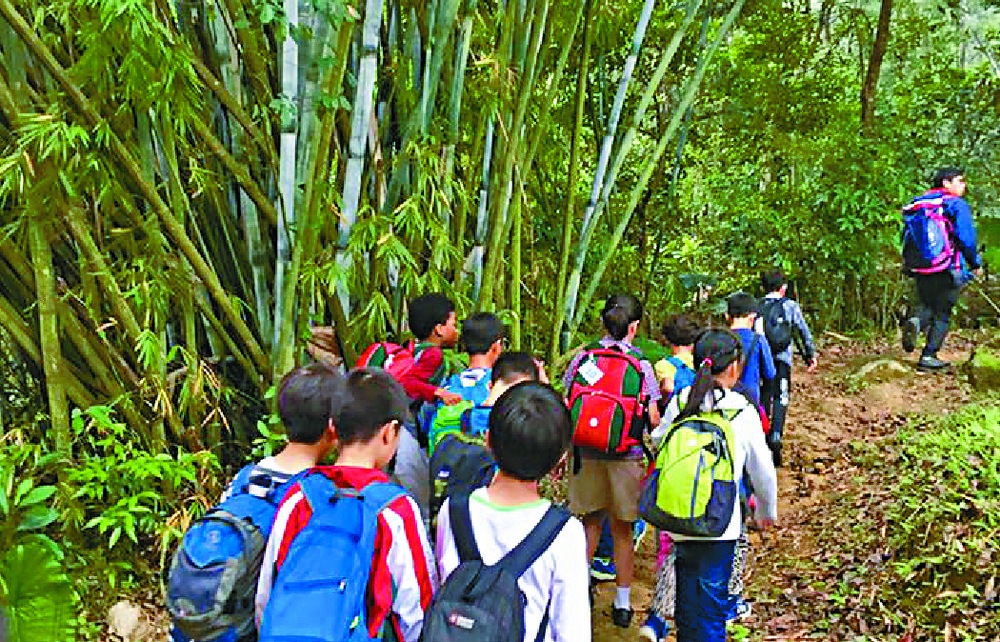
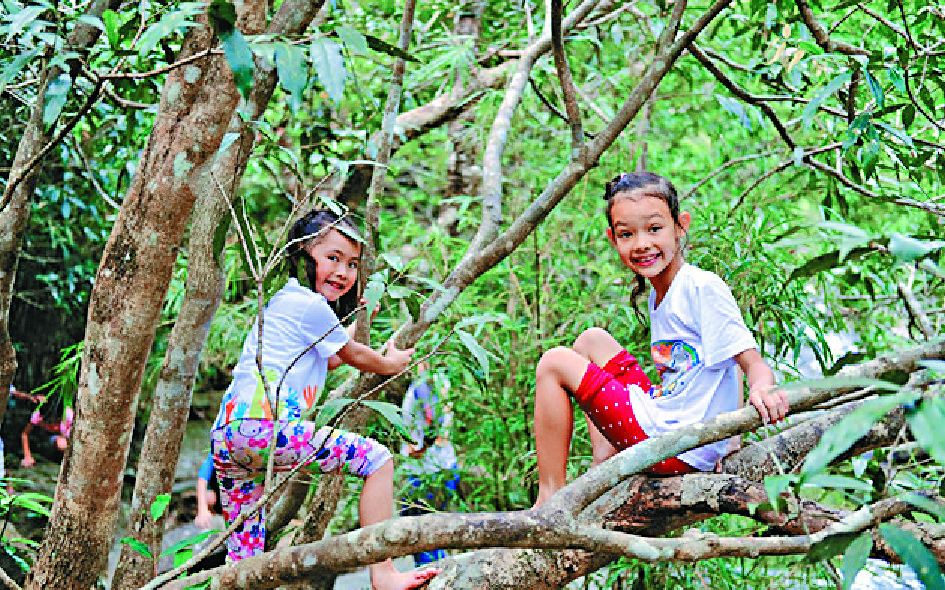
For children, exposure to the outdoors and nature is crucial to their growth. That's why International College Hong Kong in the New Territories is taking advantage of its location close to the natural environment to set up outdoor learning.
It uses a forest school syllabus to foster its students' development.
"ICHK is focused on students being able to flourish and to grow as individuals - the importance of outdoor education, the importance of students developing all-round, not just focusing on academics," said head Derek Pinchbeck.
The campus for ICHK's nursery and primary school is in Hong Lok Yuen, Tai Po, which sits in the middle of country parks like Pat Sin Leng and Tai Mo Shan -the go-to hotspots for a short green escape from the city.
This means the school is able to provide the day-to-day experience of being outdoors and have outdoor learning be a central part of students' lives rather than a peripheral extra, he added.
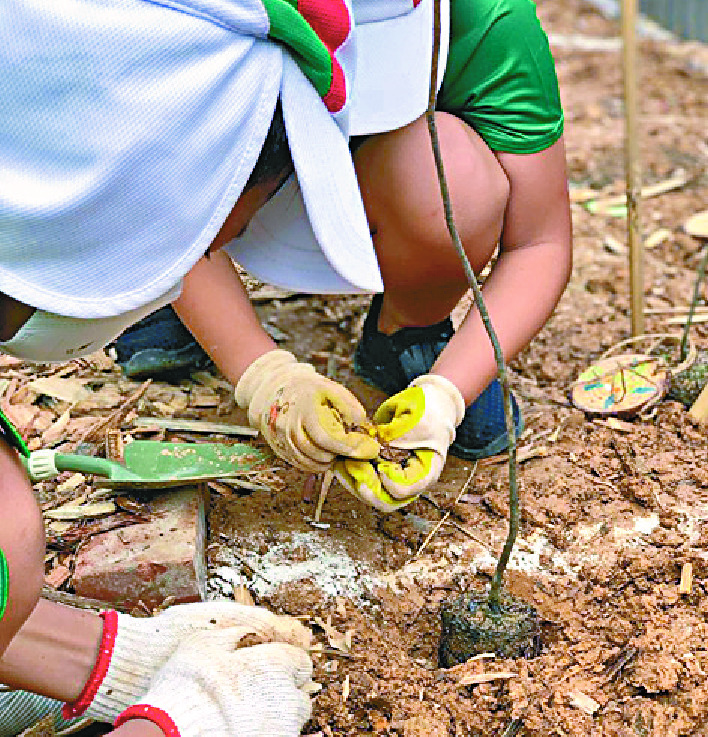
To accompany its outdoor learning program, the school teamed up with Nature Makers Lab last year to set up the first Miyawaki forest in Hong Kong - a 120-square-meter space inside its campus.
A Miyawaki forest is a method designed for plants to grow 10 times faster than a natural forest would in the wild, while serving as a biodiversity hotspot for local plants and animals.
With the capacity for three to four trees to be planted per sq m, it takes two to three years of care before a Miyawaki forest is mature enough to be self-sufficient.
And this is precisely the period that students are involved in.
In ICHK's forest, more than 300 plants and 50 native species have been planted, and students take care of it by weeding and mulching, monitoring its growth and observing the biodiversity it attracts.
"The students are seeing an ecosystem, a sustainable system, developing before their eyes over a period of time," said Pinchbeck.
"So by being able to do a long-term inquiry into it, they've started to find out about nature and also have those experiences you only get by being outside."
ICHK's outdoor learning leader Chau Ho-mei said the mini forest also allowed him to observe students' interaction with nature and their feedback firsthand.
"The students were very keen to get involved, to get their hands dirty and they are excited to see the growth of the plants that they planted in the next two to three years, taking ownership for particular plants," he said.
"The mini forest has been a catalyst for the students' enjoyment and engagement with the outdoors."
This is also in line with the aim of the school.
"Our outdoor learning program focuses a lot on developing resilience, confidence, self-management skills, they always have to work with other people," said Chau. "All of these skills are transferable in their life and of course, developing their connection with our earth is really important too."
Apart from academics, the school is also concerned with building social, emotional and physical aspects.
A key mission of ICHK is to be a happy, healthy community in which everyone flourishes, Pinchbeck noted.
"When they are learning outdoors, in places that maybe they wouldn't have been before, it's part of the academics, learning about the natural world and gaining knowledge and skills around it. They are bringing back collaborative and social skills into the classroom," he said.
charlie.ng@singtaonewscorp.com