By now, generative AI has proven itself more than a passing fad. From chatbots writing essays to algorithms generating code and visuals, the technology has infiltrated nearly every sector. But while most AI platforms are designed for solo use—your private brainstorm partner, your silent assistant—a team from The Education University of Hong Kong (EdUHK) is asking a radical question: What if AI was less about isolation and more about connection?
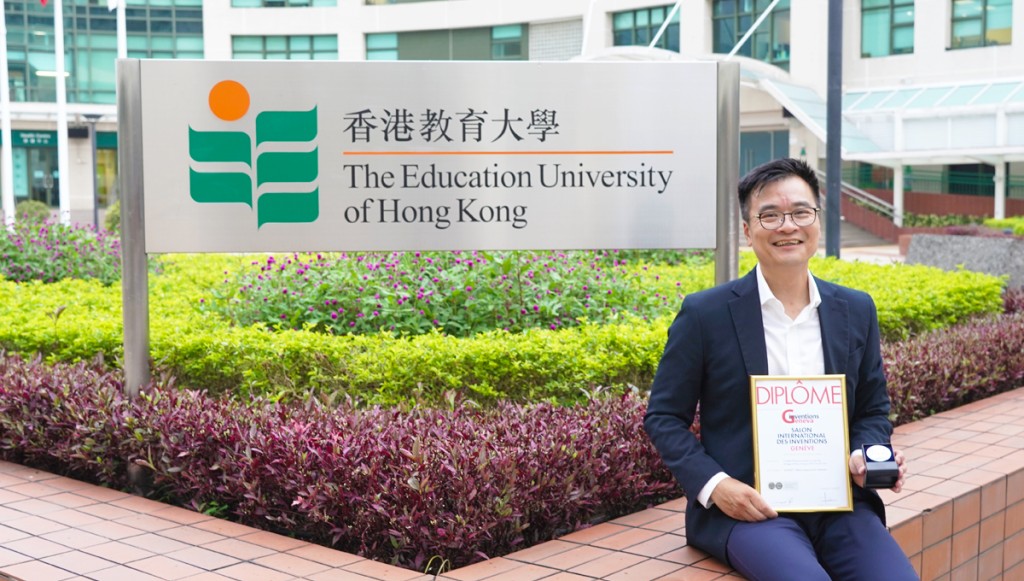
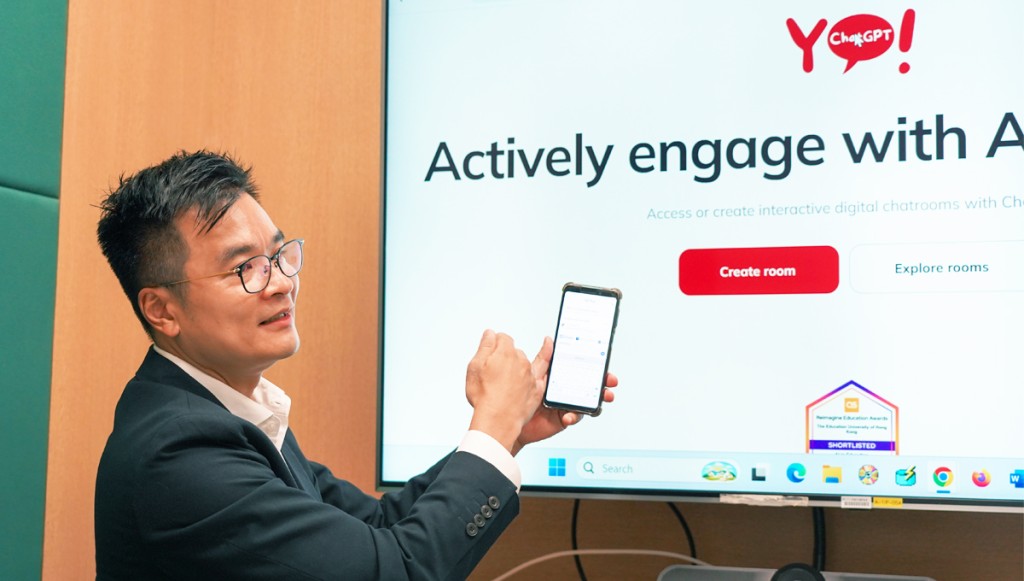
That vision gave rise to YoChatGPT!, a collaborative AI-powered chatroom developed by Dr. Ting Sze Thou Fridolin and his team.
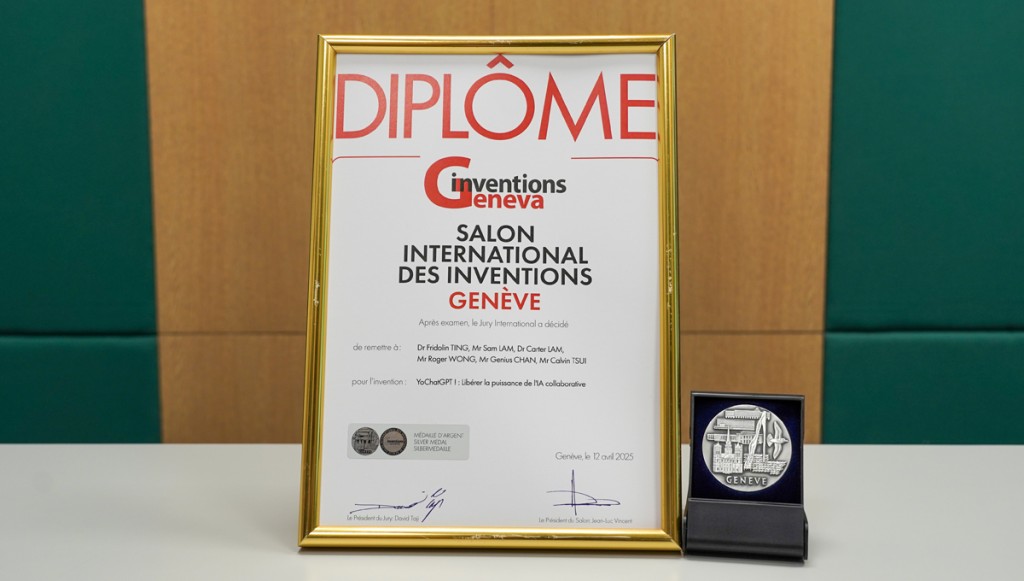
This collaborative platform that’s turning AI into a space for group learning, creative co-thinking, and peer-to-peer discovery. It’s an ambitious idea, and one that recently earned the project a Silver Medal at Inventions Geneva 2025.
“When ChatGPT emerged in 2022, I realized it was difficult to teach students how to actively use generative AI together,” Dr. Ting recalls. “They couldn’t prompt alongside me, or see each other’s responses from genAI on one screen. That’s why we built YoChatGPT!”
At its core, YoChatGPT! fuses the casual familiarity of a group chat with the power of large language models (LLMs) like GPT or DeepSeek. Within these AI-enhanced chatrooms, whether they’re students, teachers, or professionals users can co-prompt, co-learn, and co-solve problems, either live or across time zones.
The result is something that mainstream platforms haven’t quite cracked: true collaboration with AI as a partner, not a solo act.
“We designed it like a WhatsApp or WeChat group, but with the added dimension of AI,” explains Dr. Ting. “Everyone can explore a topic together, with the AI offering insights along the way. It’s a fundamentally different experience.”
Beyond chat functionality, the platform is loaded with features like Retrieval Augmented Generation (RAG) and support for multiple LLMs, offering users tailored perspectives based on their own materials—be it lecture notes, curriculum guides, or draft essays. “Just like students benefit from multiple textbooks or teachers, they also learn better from multiple AI models,” Dr. Ting notes.
Among its most creative tools is the Personalized Concept Prompt—a formula that helps students grasp difficult academic concepts by linking them to their personal interests. “A student who loves basketball and struggles with physics can ask: ‘Please help me understand vectors by relating it to basketball.’ It makes abstract ideas suddenly relatable,” he says.
While education remains the starting point, the platform is scaling into broader sectors—from law and medicine to marketing and research. To meet the demands of these high-stakes fields, YoChatGPT! is developing enterprise-grade, on-premises deployments with human-in-the-loop verification for sensitive outputs. “This ensures both privacy and accountability,” says Dr. Ting.
Looking ahead, the team plans to expand YoChatGPT! into domain-specific territories: AI for scientific collaboration, marketing campaigns, even drug discovery. “Whatever the next generation of AI models brings, we’ll integrate them into our collaborative framework,” he adds.
What’s striking about YoChatGPT! isn’t just its technology—it’s the philosophy behind it. In a digital world obsessed with optimization and individual output, Dr. Ting and his team are betting on something far older and more human: collective intelligence. “We’re just at the beginning,” he says. “As more people discover how generative AI can be used in group settings, we want to be there to support that journey.”