Read More
New technologies are being used to move Sha Tin Sewage Treatment Works to a cavern – the largest cavern project in Hong Kong so far, Secretary for Development Michael Wong Wai-lun said.
ADVERTISEMENT
SCROLL TO CONTINUE WITH CONTENT
The Sha Tin sewage treatment works will be relocated from Ma Liu Shui, Sha Tin, to caverns at Nui Po Shan of A Kung Kok, a process scheduled to be completed in 2031. The first part of the project will complete in 2022 on schedule.
Two new technologies, building information modelling (BIM) and design for manufacture and assembly (DfMA), are mentioned in the blog of Wong.
The BIM helps in generating a three-dimensional presentation of construction designs and site plans, which allows workers to find potential bugs and troubleshoot easier.
The DfMA shortens the building time for the temporary bridge covering A Kung Kok street, which is used for delivering the sludges. The bridge allowing construction vehicles to enter and exit the site, will minimize traffic impact as the street is a main route for transport to/from Ma On Shan.
The relocation project progresses in three stages. The first stage of site preparation and accessing tunnel construction commenced in February 2019. Excavation and detonation are now in progress. The relocation is expected to complete on schedule in 2022, according to Wong.
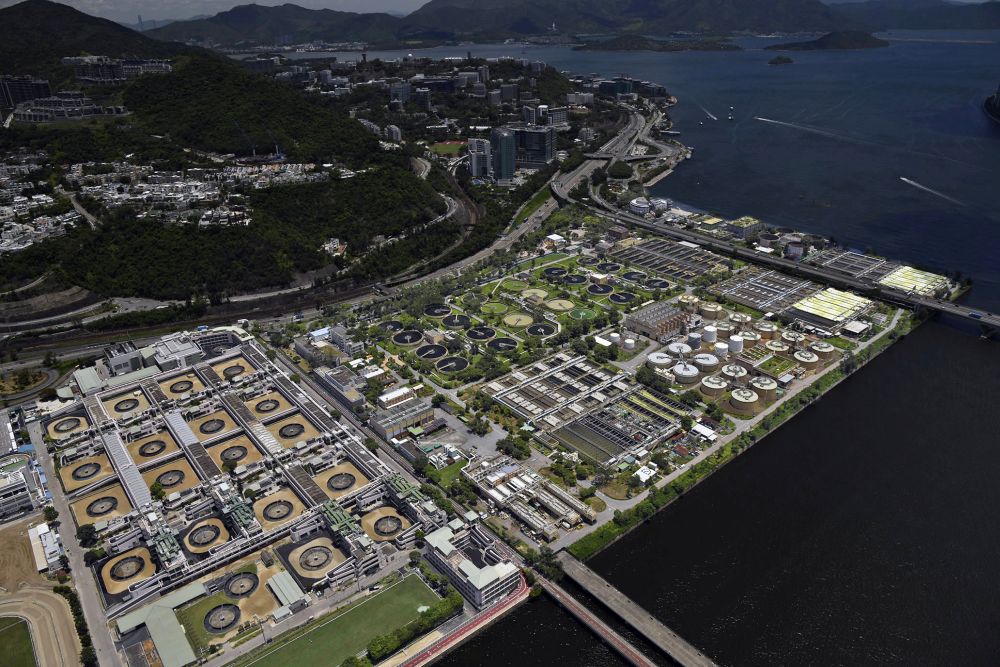
STSTW, occupying 28 hectares of land, is the largest secondary treatment facility, handling 250,000 cubic meters of sewage per day. The relocation can release the existing site for other beneficial uses.
The caverns serve as barriers, fully covering the facility while maintaining the view of the environment. The area suits for large caverns construction as the site is built of hard granite with no obvious weak zones and faults.
It will occupy 14 hectares of land, which is 15 times larger than the Stanley sewage treatment works.
Capacity remains the same with less land occupied. Advanced sewage and sludge treatment technologies will be introduced, said Wong.
The drainage service department will also carry out odour control measures to suppress odour emission.
Community liaison groups (CLGs) were set up to communicate with local stakeholders and community, reporting on progress and construction arrangement of the caverns project.
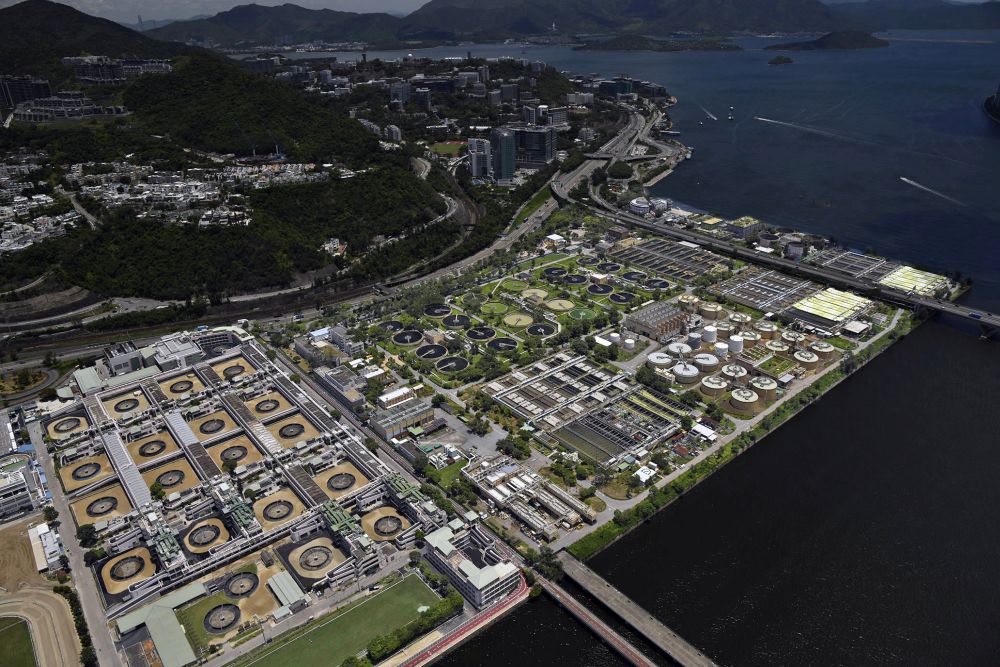
Sha Tin Sewage Treatment Works.