News shared on social media and by word-of-mouth moved faster than China’s censors, but the government is quickly making sure it keeps the upper hand.
Twenty-five-year-old Sibyl was out in Shanghai last Saturday night when a friend scrolling through the microblogging site Weibo saw photos of a vigil for the victims of a deadly fire in Xinjiang taking place nearby. She decided to go.
“I just wanted to record the mourning,” said Sibyl, an employee in the media industry whose Chinese name is being withheld to protect her safety. She arrived close to midnight and saw dozens of people standing silently in a circle, surrounding candles and hand-written signs commemorating the tragedy, which some blamed on strict Covid-19 barriers that may have hampered rescue efforts.
The crowd kept growing, Sibyl said, choking up as she recounted the events. After more than an hour, police tried to seal off the area, telling new arrivals to turn around. But some people refused, insisting that they had a right to join.
That’s when the chanting started, Sibyl said.
It began with a few people saying, “I want freedom, not PCR tests!” According to Sibyl, it soon got more radical. “No CCP!” a person shouted, referring to the Chinese Communist Party led by President Xi Jinping. That was a step too far for some, but the atmosphere was getting more heated.
That Shanghai vigil -- and dozens of other gatherings that took place all around the country -- quickly became more than just a way of honoring the dead. Through word of mouth or social media apps whose censors were overwhelmed, Chinese citizens were exploiting cracks in the Great Firewall — the country’s version of the internet that is largely sealed off from the rest of the world. It was all “like a dream,” said a Shanghai woman in her 40s who took part and asked not to be identified. “I never thought in my lifetime I would see this happening in China.”
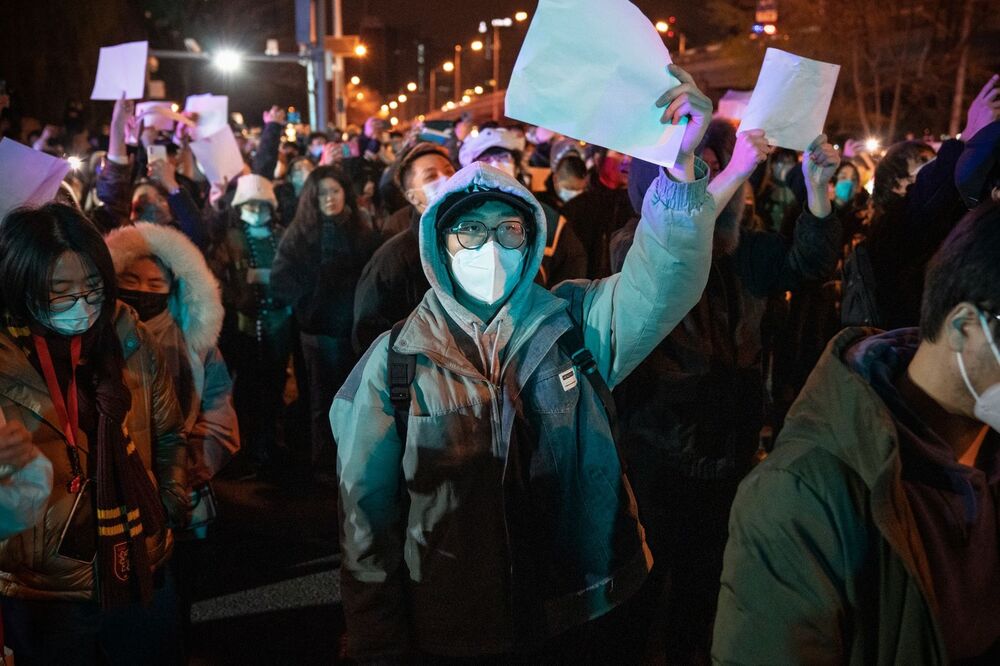
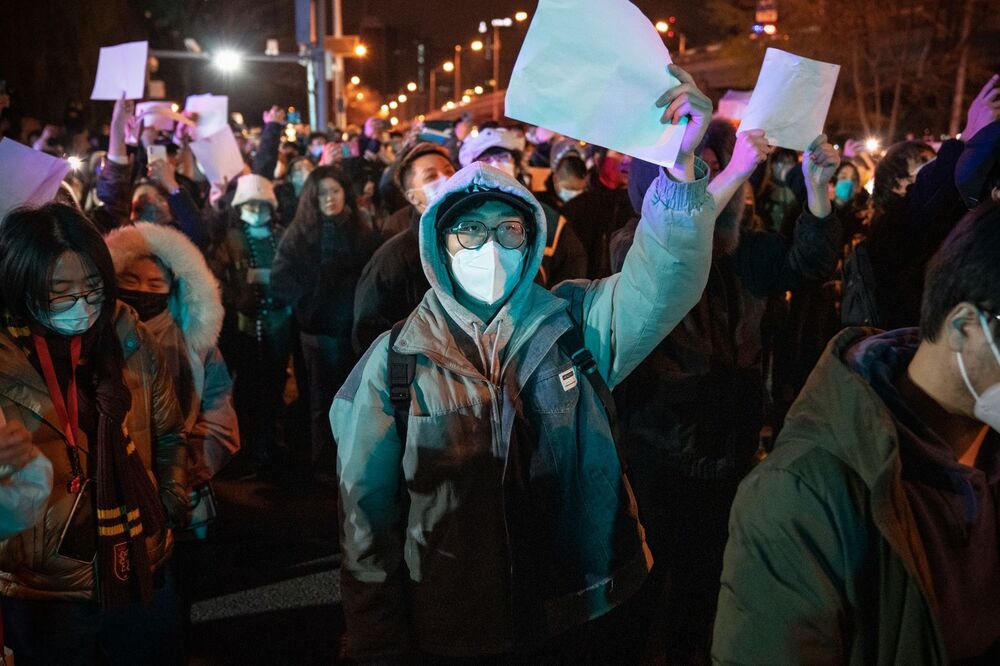
Demonstrators shared photos, slogans and news about gatherings that were turning into protests -- and sending a message all the way to Xi just weeks after he secured a norm-defying third term as China’s leader. Shattered by nearly three years of strict and constantly shifting Covid controls and lockdowns, anger was starting to boil over.
Whether those protests continue remains to be seen. China’s government has reacted quickly: police have flooded the streets and health officials are signaling that it’s time to ease up on the harshest Covid restrictions. Still, residents of an area of Guangzhou locked down for a month clashed with police in the southern city on Tuesday night. That same day, China’s top law enforcement body pledged to crack down on “hostile forces” and their “sabotage,” saying that “illegal and criminal acts that disrupt social order” won’t be tolerated.
Even if this weekend is quiet, a second tragedy like the one in Xinjiang or another event that generates widespread outrage could spark additional rounds of demonstrations. Former leader Jiang Zemin’s death, reported Wednesday, could also give people another reason to gather in public.
Last Saturday, as the crowds grew from dozens to hundreds in some locations, China’s online censors were under siege. Some posts remained accessible for hours before being deleted. Savvy protesters sought to evade restrictions by using coded language, suggesting to friends they “go for a walk” in areas where people were thought to be gathering.
Chinese citizens outside the country also played a role.
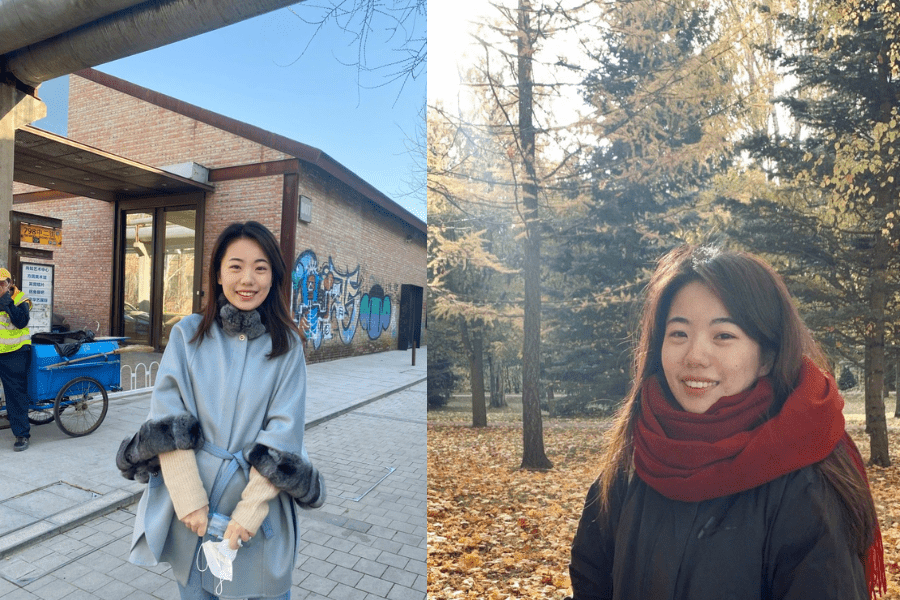
Joan, a 25-year-old Chinese woman who was traveling in Southeast Asia at the time of the demonstrations, said she sent screenshots of posts from Instagram, which is banned in China, to friends in the country via WeChat.
“I saw that some of my contacts were voicing their grievances and I thought maybe they would want to go,” she said. Joan -- whose name has been altered for the safety of her and her contacts -- said she felt empowered and that several friends ended up attending events because of her messages, while other contacts reached out about how to download virtual private networks (VPNs), which mask where the user is logging on from.
Meanwhile on Twitter, a fierce war for attention was brewing. Many who could access the prohibited app turned to @whyyoutouzhele, which became a crucial aggregator of real-time protest information.
The anonymous owner of the account, which has more than 777,000 followers, has been sharing video clips and text messages about the protests across the country almost non-stop. Bloomberg has been unable to independently verify the account’s content. In a letter addressed to government employees, the account’s owner wrote: “This is only a personal account, but whenever a mass incident breaks out, those at the scene are all my reporters.”
Other Twitter users reported getting flooded with spam messages such as escort service ads if they tried searching for the names of major cities. Protesters have also raised concerns about potential ‘phishing’ operations by police, especially in Telegram chat groups with thousands of people.
If the government was initially surprised by the outbreak of protests, it didn’t take long to start pushing back.
After a decade in power, Xi has seen protests erupt previously, but typically over local issues: workers frustrated with factory bosses, or rural farmers angry about land development. Earlier this year, protesters frustrated about a banking scam took to the streets in Henan and Anhui provinces demanding their money.
But last weekend’s gatherings -- though generally involving at most hundreds of people -- were national in scale. The Australian Strategic Policy Institute, which has been tracking the demonstrations, estimated there have been 51 protests across 24 cities since the fire in Xinjiang. Those taking to the streets or public square include students at Xi’s alma mater, Tsinghua University, and people in Wuhan, where Covid first emerged about three years ago. No one knows what might come next.
“If we don’t see specific demands coalescing in the next couple of days, the protests might lose steam,” said Hanzhang Liu, an assistant professor at Pitzer College in California who specializes in Chinese politics. The decentralized and grassroots nature of the protests is a challenge to its sustainability, especially in the face of state security, she added.
Xi’s grip on power isn’t in doubt, but the government isn’t taking any chances. Pulling from a playbook the Communist Party has honed for decades, the government quickly deployed a big stick-and-small carrot approach: Police flooded protest zones starting Monday to make sure demonstrators didn’t gather for a third night. They stepped up spot checks of mobile phones, reportedly deleting photos of protests and checking for apps like Twitter and YouTube. Some people were taken away by police.
One protester reported getting called by police to go into the station and sign a written statement on their whereabouts and activities on the night of a demonstration in Beijing.
"Organized action is very unlikely to emerge," said Yan Long, assistant professor of sociology at the University of California, Berkeley. "The government has effectively demolished the civic infrastructure such as networks of journalists, non-governmental organizations and human rights lawyers in recent years."
In a move widely seen as an attempt to assuage complaints about Covid policies, officials on Tuesday said they would bolster vaccination among senior citizens, a key hurdle to a broader opening. They also said local authorities must respond to and resolve “reasonable” Covid requests from the public in a timely manner while reducing the inconvenience caused by outbreaks. On Wednesday, officials in Beijing said they would allow some virus-infected people to isolate at home, avoiding a dreaded stay in makeshift quarantine facilities.
One option authorities don’t have for now is the ability to go after protest leaders. In most cases, there don’t appear to be any. And against the government’s juggernaut of police, censors, cameras and threats, none are likely to surface. Instead, people seem to be motivated by years of pent-up frustration and grief sparked by the deaths in Xinjiang’s capital -- some 4,000 kilometers (2,500 miles) from Shanghai.
People realize that the tragedy in Xinjiang could be repeated in any other city in China, Wu Guoguang, senior research scholar at the Stanford Center on China’s Economy and Institutions, wrote in an opinion piece for Voice of America. “There is no need for organization or mobilization when people have this kind of sympathy and empathy -- the Chinese people will voluntarily stand on the streets to echo and support each other.”
That is unlikely to deter the government’s efforts to ensure the protests end.
Hu Xijin -- the former editor-in-chief of the state-backed Global Times -- wrote on Twitter that the statement by the Communist Party’s Central Political and Legal Affairs Commission to crack down on “hostile forces” effectively “conveyed a clear message of warning.” “The protesters must have understood it. If they repeat those protests, the risks will increase severely,” he wrote.
For some, the threats are enough to give them pause.
The Shanghai protestor who called last weekend’s events “a dream” says she won’t go out again for now. She thinks the demonstrations will fizzle, saying most Chinese have no “Plan B” in the face of the government’s crackdown and can't depart the country if it escalates.
Even if no further protests take place, the spontaneous show of anger and resistance against Xi’s signature policy has posed a new challenge.
“People discovered that they weren’t alone in their discontent with the zero-Covid policy or even with the government,” said Pitzer College’s Liu. The experience of the protests has likely sharpened people’s understanding of civil disobedience and the strategies and tactics that come with it, she added.
“This has definitely been a moment of awakening and empowerment,” said Liu.
(Bloomberg)
Demonstrators hold blank signs during a protest in Beijing. (Bloomberg)