A Cultural History of Asian Art in the Long Nineteenth Century, a conference organized by the University of Hong Kong Department of Art History that presents a new interpretation of the history of the arts of Asia across the last 2,500 years, will be held in June. The conference will be focusing on the transformative nineteenth century and gathering leading scholars to share new perspectives on Asian art during a period of dramatic change, innovation, and cultural exchange.
Presentations at the conference emphasized Asian viewpoints, exploring how diasporic communities, minority elites, and trans-oceanic connections influenced the continent’s visual and material culture.
The event highlighted a wide array of topics—from painting and photography to architecture and performance—spanning East, West, South, Southeast, and Central Asia. Other themes included urban development, cultural circulation, and the evolving relationship between art, nature, and society. Particular attention was given to the influence of artisans and patrons navigating the complexities of the nineteenth century.
The conference will be open with a keynote, 'Iran: Modernity, Photography and the Painter’s Dilemma,' delivered by Sussan Babaie, the professor of the Arts of Iran and Islam at The Courtauld, University of London.
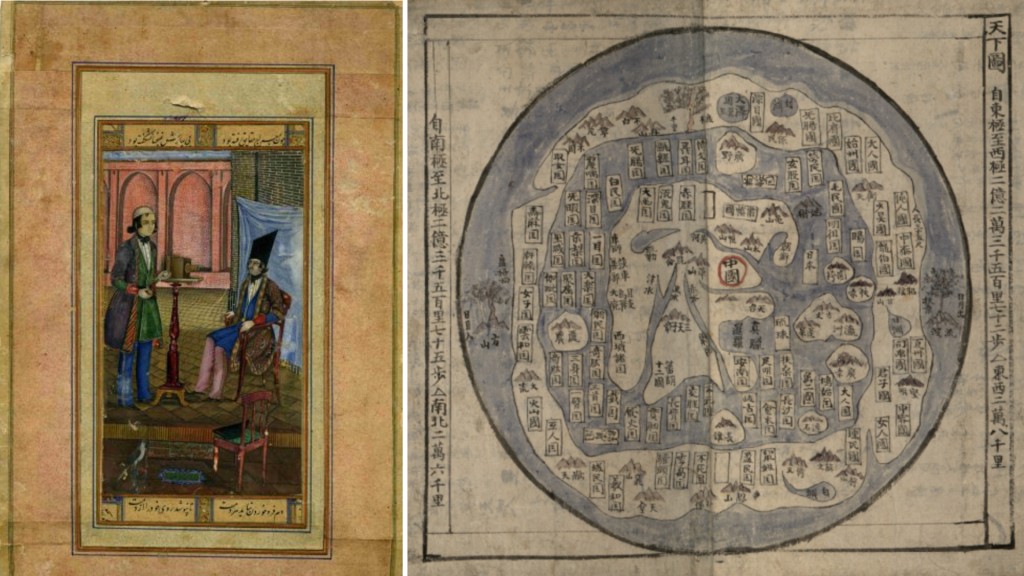
The keynote will explore how photography’s arrival in nineteenth-century Iran sparked new artistic debates, rather than simply replacing traditional portraiture. Drawing on a unique 1850s painting of an Iranian photographer at work, she argued that artists in Iran and India were already rethinking concepts of likeness and reality before the advent of photography, challenging assumptions about the impact of European technology on Asian art.
The closing keynote, 'On Heroic Maps: Imagining "China" in Premodern Geo-bodies and Modern Historiography,' will be given by historian Stephen Whiteman, also from The Courtauld.
Whiteman’s presentation will focus on examining famous historical maps of China, exploring how both Asian and European perspectives have shaped ideas in depicting “China” at that time. He highlighted the importance of cartographic icons in constructing national histories and considered how cultural history can offer alternative narratives.
Conference: A Cultural History of Asian Art in the Long Nineteenth Century
Date: 23 & 24 June 2026 (Tuesday & Wednesday)
Venue: Room 4.36, Run Run Shaw Tower, Centennial Campus, HKU
Admission: Free seating, first come first served
Registration: https://hku.au1.qualtrics.com/jfe/form/SV_e4ZCP9MlCBnHgZE
Programme Details
Opening Keynote
23 June 2026, 18:00-19:15
Iran: Modernity, Photography and the Painter's Dilemma
Speaker: Sussan Babaie
Panel 1
24 June 2026, 09:30-11:00
Urbanity
Postcards, Hotels, and Hospitable Minorities: Armenian and Parsi Urbanity Networking a British Empire
Speakers: Talinn Grigor, Preeti Chopra
Panel 2
24 June 2026, 11:15-12:45
Performativity
Khmer Royal and Noble Chedey (stupas) as Markers of Family Lineage and Politics at the Time of Shifting Political Regimes
Speakers: Boreth Ly and Suppya Hélène Nut, Kit Brooks
Panel 3
24 June 2026, 14:30-16:30
Circulation and Materiality
(Mis)Translating James Gibbs: Neoclassical Mosques and the Architecture of a Muslim Cosmopolitanism in the Indian Ocean World
Speakers: Sugata Ray, Hala Auji, Yeewan Koon
Ending Keynote
24 June 2026, 18:00-19:15
On Heroic Maps: Imagining 'China' in Premodern Geo-bodies and Modern Historiography
Speaker: Stephen Whiteman