K11 Artus recently donated HK$1 million to the K11 Craft & Guild Foundation, honoring its commitment to give 1 percent of its annual room revenue to the foundation.
ADVERTISEMENT
SCROLL TO CONTINUE WITH CONTENT
Said Alvin Lo, a board member of the foundation: "With the donation, we will continue our mission as cultural crafters with a wide range of ongoing activities, including craft researches, craftsmen incubation and public educational programs."
K11 Craft & Guild was founded in 2019 as a charity for arts and culture, with a focus on the conservation of Chinese craftsmanship, which is on the brink of extinction.
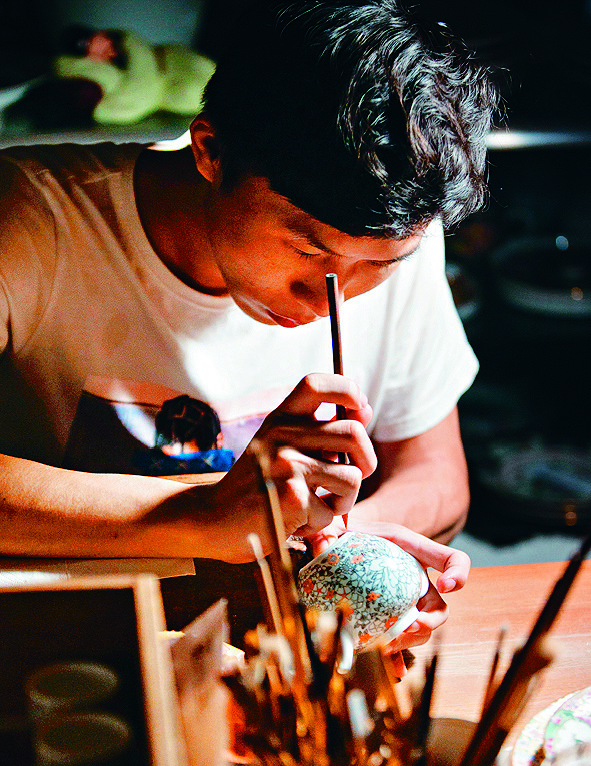
These crafts include guangcai, or enamel porcelain from the Canton region, which dates back to the Ming Dynasty and is listed as a national intangible cultural heritage.
By collaborating with K11 Artus, artisans are able to show their works while making a living at the same time.
The foundation hopes to educate the public on the value of this artisanship so it can be integrated into modern day living.
"People often feel that traditional craftsmanship is something that belongs in museums, and that crafts are old fashioned and not connected to everyday life," said Lo. "We are trying to change this perception and show that traditional crafts are functional items that can be used every day."
There are about 100 practicing guangcai artisans in Guangzhou and Hong Kong.
Guangcai was first invented during the Ming Dynasty, but was popularized in Western society as a major Chinese export to Europe during the 19th and 20th centuries.
During the Qing Dynasty, Guangzhou was the only legal port for exports to Europe. As a result, guangcai artisans conformed to market demand and combined Chinese tools and craft with a Western touch. For example, since the boom was during the Rococo period in the West, guangcai uses more gold compared to other Chinese ceramic crafts.
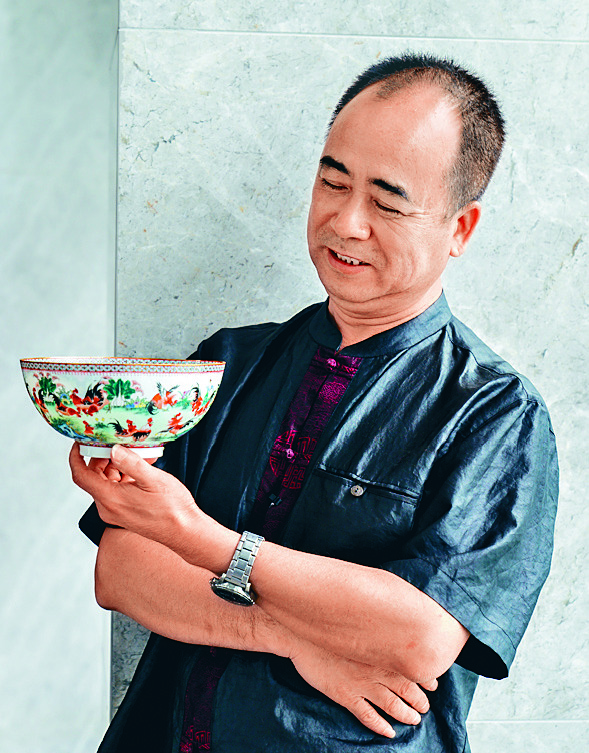
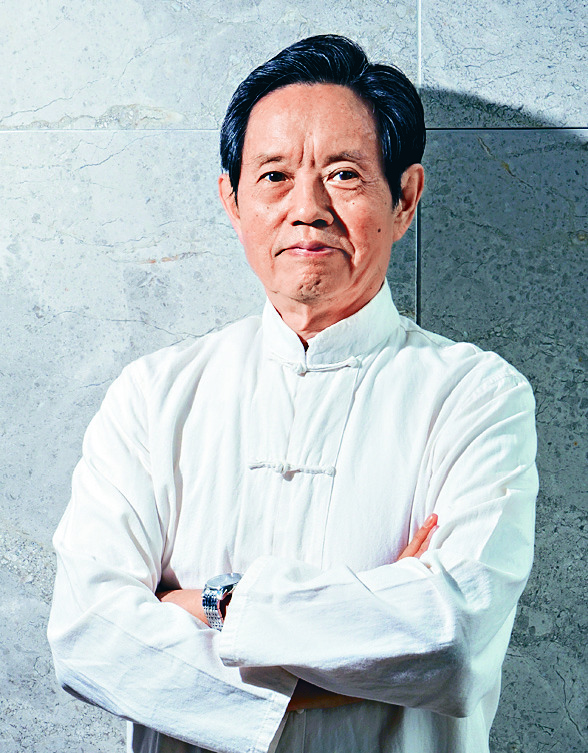
"It fits the aesthetics of both the West and the East and is a hybrid of cultures," said Tan Guanghui, an artisan supported by the foundation. Nicknamed "Rooster King" because of the exquisite quality of his rooster motifs, he started creating guangcai 40 years ago, when he was sent to the Guangzhou Zhijin Canton Porcelain Factory as a trainee under China's planned economy.
Now a national-level inheritor of the intangible cultural heritage of guangcai porcelain, he believes that while the craft has been evolving in its more than 300-year history, there is a distinctive style that is unique and loved by aficionados.
"After hundreds of years of development, I think the future development of guangcai cannot deviate from tradition - vitality can be found only if you innovate and develop based on a solid foundation," he said, adding that he is not against innovation. In fact, he creates large-scale works, which differ greatly from the more traditional small guangcai pieces.
"You have to rejuvenate the craft by integrating modern aesthetics into traditional crafts, which leads to more potential markets."
Another guangcai master, Xu Enfu, believes that working with the K11 Craft & Guild Foundation will help to spread awareness, especially to the younger generation.
"Guangcai has a place in the world. Art has no borders and porcelain is just a carrier."
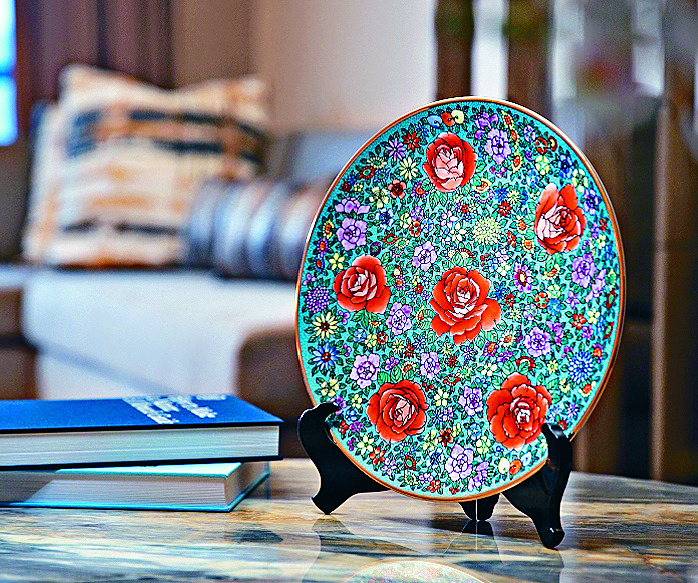
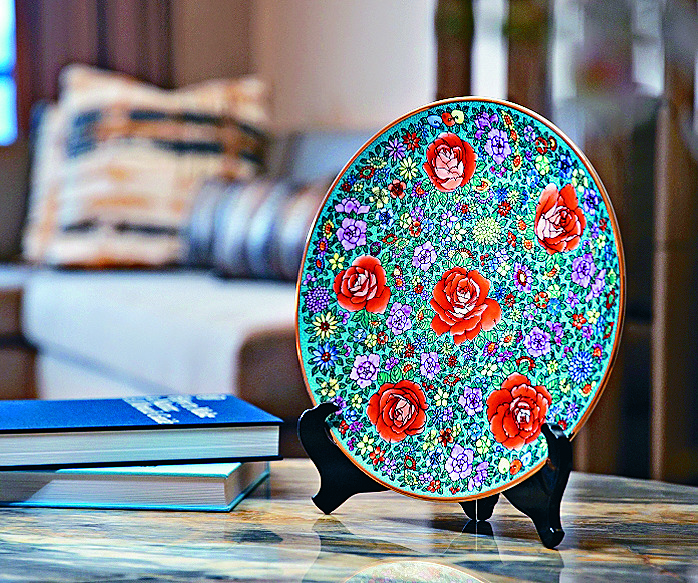
The provincial-level inheritor of the craft was commissioned by K11 Artus to create the guangcai manhua rose plate, a limited-edition piece of in-room decor, for K11 Artus last year.
"K11 Artus residents can purchase these works, with the proceeds going to support artisans and promote their craft," said Cecilia Lo, K11 Artus general manager.
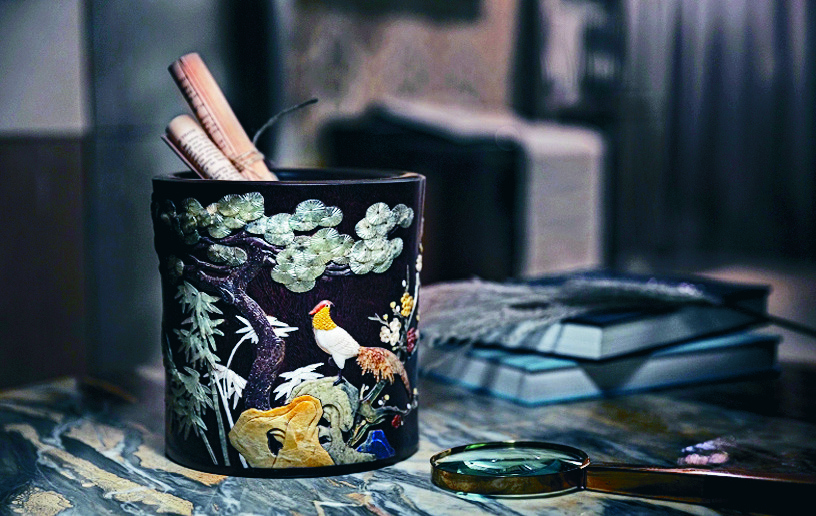
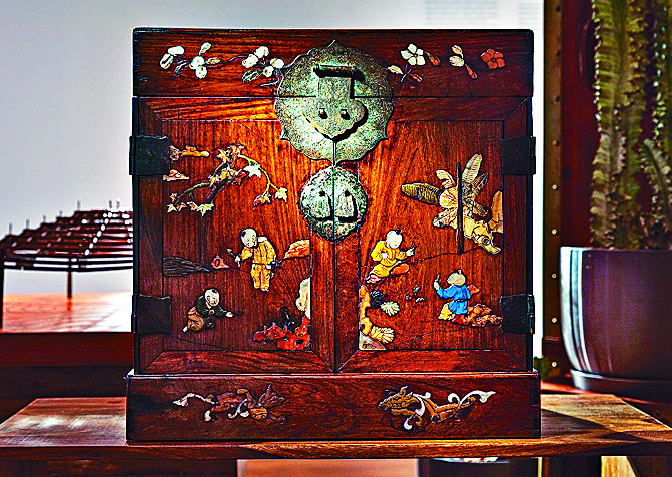
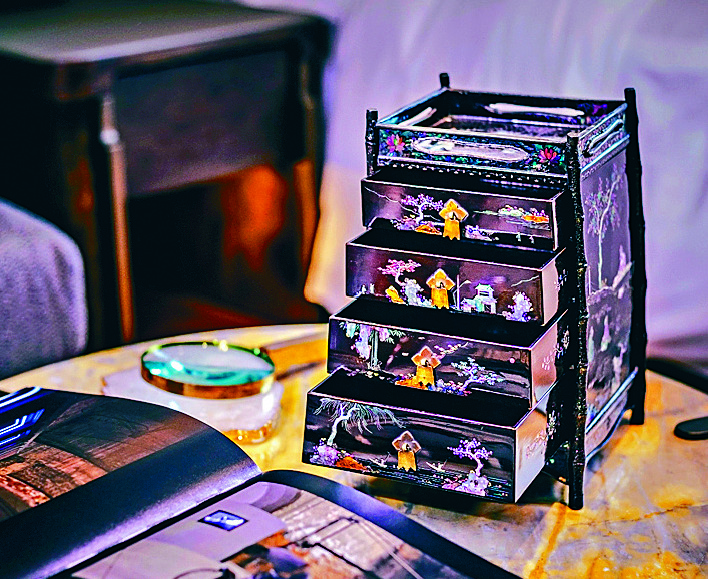
Guangcai pieces and other artisanal objects - such as baibaoqian wooden furniture, which is inlaid with semiprecious stones - are featured in K11 Artus' public space.
The foundation and the hotel are presenting A Treasure Expedition in one of their rooms, placing traditional Chinese craft pieces in a contemporary setting. It is open to the public until next year.