Read More





UK set to break record for hottest May day
10 hours ago






Trump says US will not 'rush into a deal' with Iran, as criticism mounts
24-05-2026 23:51 HKT


HK movie producer Raymond Wong Pak-ming convicted of insider dealing
22-05-2026 17:10 HKT


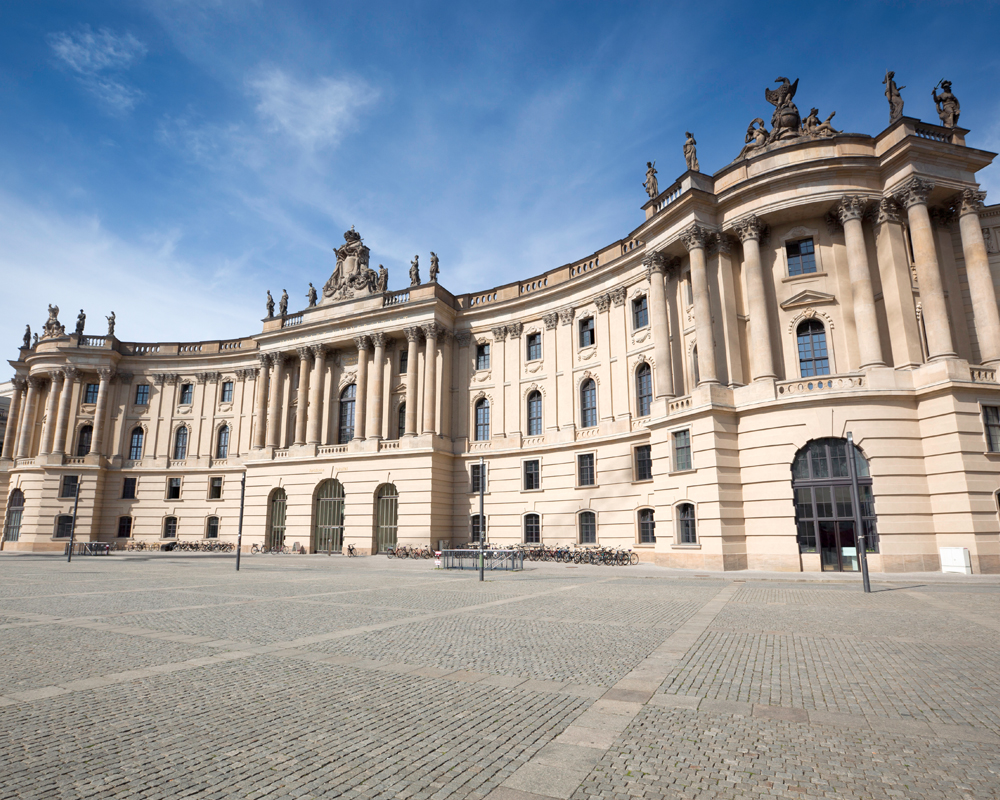
When people speak of Universities, the ones that spark into our mind may be “Harvard”, “Stanford”, or “Cambridge”, these are the prestigious research universities all over the world. The modern universities as we know today are research universities. Research universities emphasize on research, freedom in academics and an aggregate of teaching and research. They owe a great deal to the blueprint of the Humboltian model of Higher Education, originated in Prussia (now part of Germany) in the 19th Century.
When people speak of Universities, the ones that spark into our mind may be “Harvard”, “Stanford”, or “Cambridge”, these are the prestigious research universities all over the world. The modern universities as we know today are research universities. Research universities emphasize on research, freedom in academics and an aggregate of teaching and research. They owe a great deal to the blueprint of the Humboltian model of Higher Education, originated in Prussia (now part of Germany) in the 19th Century.
The Humboldtian model of Higher Education is an ideology developed by Wilhelm von Humboldt, a Prussian philosopher influenced by the Enlightenment. The ideals of Enlightenment draw attention to rationality, critical thinking and the pursuit of knowledge for an individual’s own sake. Humboldt’s ideas towards tertiary education resulted in the establishment of The University of Berlin (now Humboldt University of Berlin) in 1810, the first modern university in the world.
The Key Features of the German University Model:
1. To nurture autonomous individuals: The Humboldtian model believes that learning in tertiary education is a lifelong process of human development instead of training particular vocational or practical skills. It also emphasized the importance of a broad, liberal arts education, fostering a spirit of intellectual curiosity and promoting the development of holistic individuals.
Although certain fields of knowledge such as Humanities are more directly associated with rationality and critical thinking than others, it is important to recognize that no discipline is inherently superior. By encountering diverse areas of study, students acquire different inspirations that broaden their understanding of the world and provide the basis to develop as a holistic being. It is vital to remember that attending a university is a continuous journey of personal growth instead of skill-training.
2. Academic Freedom: Another key feature of the Humboldtian model is the presence of academic freedom. It is defined by the right of teaching and communicating knowledge independent from external social, economic and political factors. To explain further, universities are separate entities from authorities, churches and government. Individuals have the liberty to question fundamental phenomena and express opinions without disturbances. This freedom not only benefits individuals, but also society as a whole, as it allows for the free exchange of ideas and promotes the advancement of knowledge.
3. Unity of Teaching and Research: Scholars are not solely responsible for teaching, instead they are also the veterans in their respective research fields. The model believes that teaching and researching are mutually reinforcing and driven by passion. By integrating research into the teaching process, scholars share their latest findings with their students, thereby keeping the curriculum current and relevant. Students may also propose fresh insight to scholars, further enhancing the ongoing research.
The German University Model has stretched over Europe and ultimately the globe throughout the centuries. The first research university established in Asia is the University of Tokyo, established in 1877, spotlighted on academic research and graduate education. Until the present, there are over 1000 research universities over the globe, each acknowledging Humboldt’s ideal of education- pursuit of knowledge of their own sake, unity of teaching and research, academic freedom, contributing to the world’s collective wisdom.
Overall, the Humboldtian model of Higher Education has revolutionized modern universities worldwide, and its impact can be felt in the pursuit of knowledge and academic freedom today.
-------
Bibliography:
Anderson, R. D. (2004). European universities from the enlightenment to 1914. Oxford University Press.
Ash, M. G. (2006). Bachelor of What, Master of Whom? The Humboldt Myth and Historical Transformations of Higher Education in German-Speaking Europe and the US. European Journal of Education, 41(2), 245–267. http://www.jstor.org/stable/3700114
Humboldt’s educational ideal and modern academic education. Danube Rectors’ Conference. (2010). Retrieved April 2023, from http://www.drc.uns.ac.rs/presentations/05_DS/03-Prof.Dr.HeinrichKern.pdf
Reimer, G. (n.d.). Wilhelm von Humboldt’s Gesammelte Werke [ed. by K.H. Brandes]. Google Books. Retrieved April 2023, from https://books.google.com.hk/books?vid=0vJesZuBLviuRlv-&id=ZUUCAAAAQAAJ&dq=Wilhelm%2Bvon%2BHumboldt&redir_esc=y#PPP14,M1
---------------------------------------
With a passion to help youngsters identify their strengths and needs, the ASPiRERS aims to inspire them and consolidate their thoughts into real achievements. Want to know more? Come visit us to talk to us. Or initial a meeting with The Aspirers.