Read More




Sudan's army launched air strikes yesterday on a paramilitary force's base near the capital, Khartoum, in a bid to reassert control over the country after a power struggle erupted into clashes that left dozens of civilians and fighters dead.
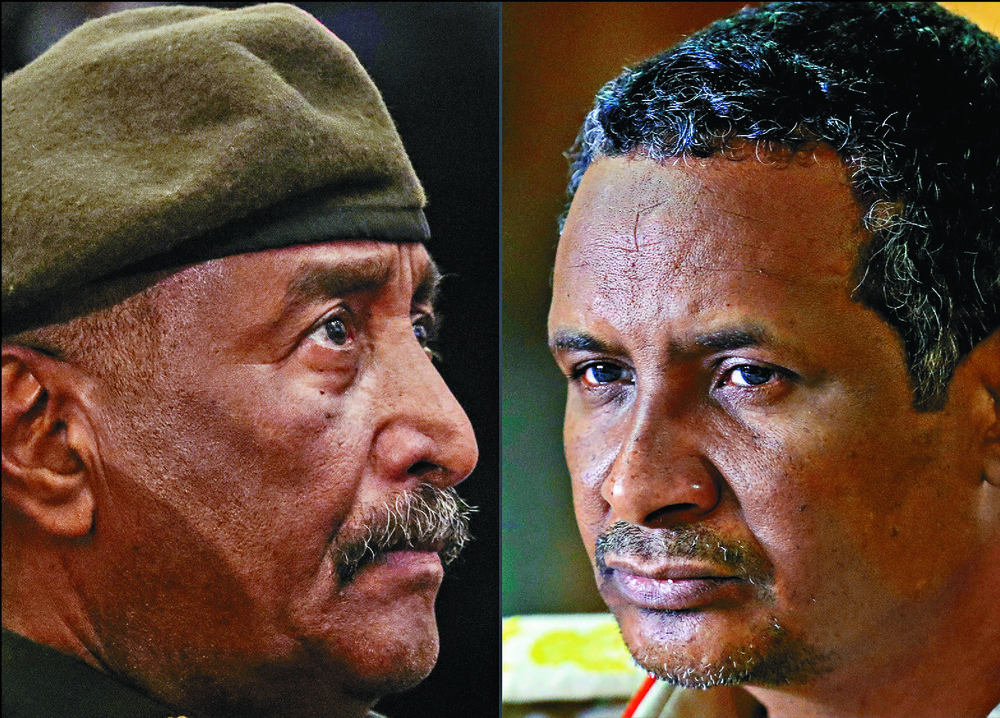
The fighting that broke out on Saturday between army units loyal to General Abdel Fattah al-Burhan and the Rapid Support Forces led by deputy leader Mohamed Hamdan Dagalo, known as Hemedti, is the first such outbreak since they joined forces to oust president Omar Hassan al-Bashir in 2019.
Besides Khartoum, fighting involving armored vehicles and warplanes raged in the adjoining city of Omdurman and in flashpoints.
The rivals are believed to have tens of thousands of fighters each in the capital alone.
The Sudan Doctors' Syndicate said at least 56 civilians were killed and close to 600 people wounded, including civilians and fighters.
At the end of a day of heavy fighting on Saturday the army struck a base belonging to the RSF in Omdurman.
And both the military and the RSF claimed they had control of Sudan's airport and other key installations in Khartoum, where fighting raged continuously.
Khartoum residents also reported explosions from heavy artillery throughout the night.
Architect Tagreed Abdin said power was out in the capital and people were trying to conserve phone batteries. "We can hear air strikes, shelling, and gunfire," she added. At least one plane fired a missile.
The army also said yesterday "the hour of victory is near."
That came a day after the RSF said it had seized the presidential palace, the army chief's residence, the state television station and airports in Khartoum, the northern city of Merowe, El Fasher and West Darfur state. The army rejected the claims.
The military and RSF, which experts say is 100,000 strong, have been competing for power as political factions negotiate forming a transitional government after a 2021 military coup.
The fighting followed rising tensions over the RSF's integration into the military. The disagreement over the timetable for that delayed the signing of an internationally backed agreement with political parties on a transition to democracy.